

Traveling With Methylene Blue: TSA Rules, Liquid Limits, Heat, and Time Zones
Quick Answer
Yes, you can travel with methylene blue. TSA lists both vitamins and pills as allowed in carry-on and checked bags, with the final call left to the officer at the checkpoint (TSA, Vitamins). Capsules are the easy format. Liquid is where people get caught, because carry-on liquids are limited to containers of 3.4 ounces (100 mL) or less (TSA, Liquids Rule).
- Capsules can go in either bag. Keep them in the original labeled bottle.
- A 120 mL bottle of liquid is over the 3.4 ounce limit, so under the standard rule it belongs in your checked bag.
- Heat and light are the bigger risks on a trip. A closed car on a sunny 72 F day reached 117 F inside within an hour in one Stanford study (McLaren, Null and Quinn, Pediatrics, 2005).
- If you pick up any medicine while you are away, check it first. The FDA label for methylene blue injection carries a boxed warning about serotonin syndrome with serotonergic drugs and opioids.
Important: This is not medical advice. If you take any prescription medication, check it against the full adverse medications list and talk with your healthcare provider before using methylene blue.
Article Outline
| |||||||||||||||||||||||||||||||||||||||
Can You Bring Methylene Blue on a Plane?

For capsules, the short answer is yes. TSA's "What Can I Bring?" list marks vitamins as allowed in both carry-on and checked bags (TSA, Vitamins), and it says the same for medications in pill form (TSA, Medications (Pills)). Both pages add one line worth remembering: the final decision rests with the TSA officer on whether an item is allowed through the checkpoint.
So there is no special form to fill out and no rule against bringing a bottle of methylene blue capsules on a domestic flight. What helps is making the bottle easy to identify. A blue capsule in an unlabeled bag looks like anything. A sealed bottle with a printed label and a lot number looks like what it is.
| Format | Carry-on | Checked bag | What to watch |
|---|---|---|---|
| Capsules | Yes | Yes | Keep the original labeled bottle |
| Liquid, 3.4 oz (100 mL) or less | Yes, in your quart-size liquids bag | Yes | Leaks and staining |
| Liquid, over 3.4 oz (100 mL) | Not under the standard rule | Yes | Pack it sealed and upright |
Sources: TSA "What Can I Bring?" pages for vitamins and pills, and the TSA liquids, aerosols and gels rule. Rules can change, so check tsa.gov before your trip.
If you fly outside the United States, airport security rules in other countries are set by their own agencies, so check the airport or airline before you pack.
The 3.4 Ounce Rule and Liquid Methylene Blue
TSA's liquids rule allows liquids in travel-size containers of 3.4 ounces (100 milliliters) or less per item in your carry-on, packed in a single quart-size bag. Anything in a bigger container goes in checked baggage (TSA, Liquids Rule).
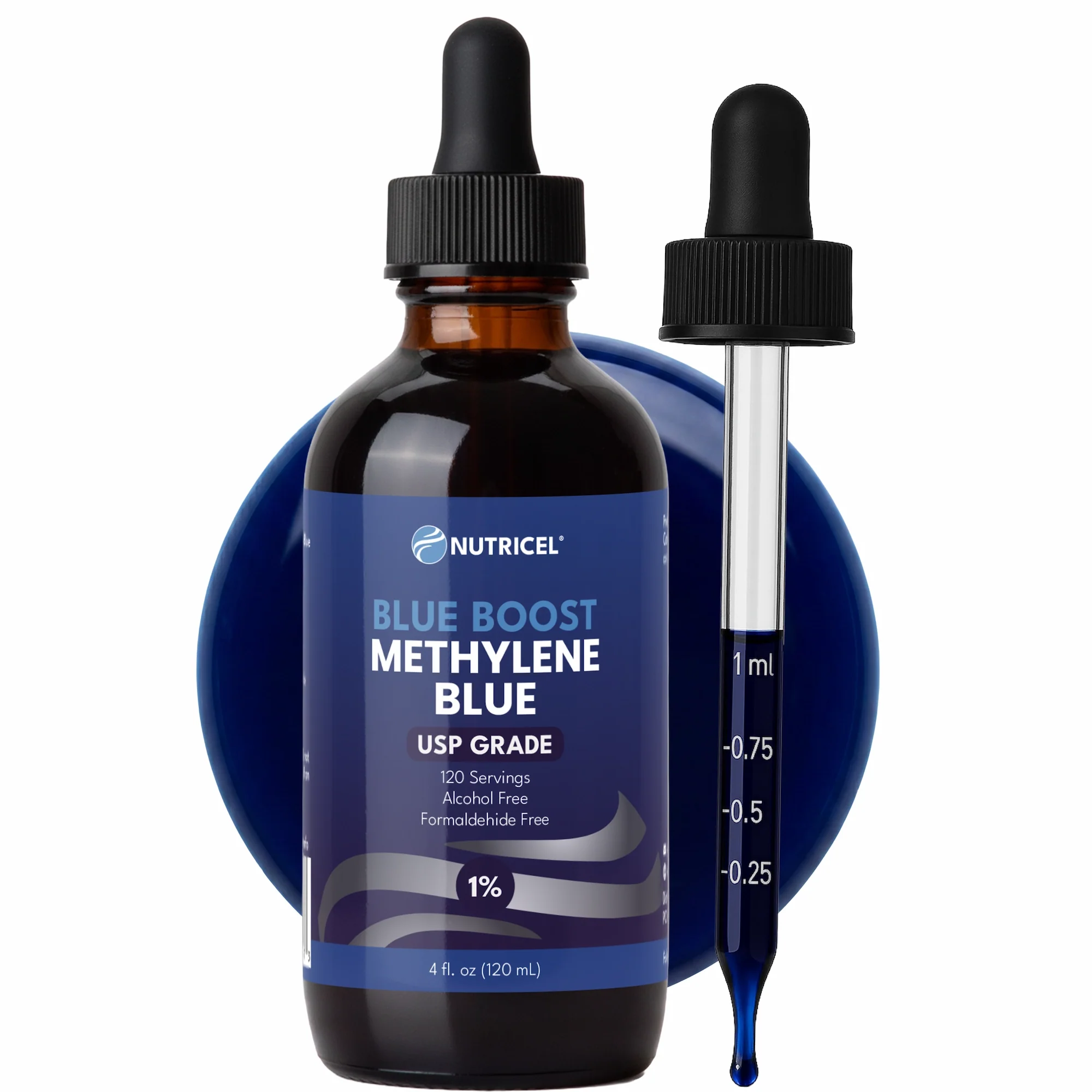
This is the part people miss. Our Blue Liquid bottle holds 120 mL, about 4 fluid ounces, so it is over the carry-on limit even when it is half empty. TSA measures the container, not how much is left inside it.
TSA does allow larger amounts of medically necessary liquids in reasonable quantities, as long as you declare them to the officers at the checkpoint for inspection (TSA, Medical). Whether a supplement counts as medically necessary is not something we can promise you, and it is up to the officer in front of you. If you do not want to risk losing a full bottle at security, the simplest plan is to put it in your checked bag.
If you want liquid in your carry-on: some people move a few days' worth into a small travel bottle of 100 mL or less. If you do, pick an opaque or amber bottle with a tight cap, label it clearly, and expect it to stain. Methylene blue dyes plastic, fabric and skin, which our guide on how to take methylene blue drops covers in more detail.
Capsules skip all of this, which is why a lot of people who use liquid at home switch to capsules for short trips.
Packing It So Nothing Leaks or Stains

A dropper bottle that seeps in your bag is a small problem until it is a blue problem. A few habits keep it contained:
- Tighten the cap all the way and stand the bottle upright in a zip-top bag.
- Put that bag inside a second bag, or in a hard case, away from clothes.
- Pack capsules in the original bottle with the label on. It is easier to identify at security and at customs, and you keep the lot number with the product.
- Bring only what you need for the trip plus a day or two, so a spill or a lost bag does not cost you a full bottle.
- If you use a weekly pill organizer, keep a photo of the original label on your phone.
None of this is medical advice. It is the same packing sense you would use for any liquid that stains, like ink or hair dye.
Heat, Light, and Hot Cars on the Road
Security is a one-time thing. Heat and light are with you the whole trip.
The Provayblue (methylene blue injection) label on DailyMed says to store it at 20 to 25 C (68 to 77 F), with short excursions allowed between 15 and 30 C (59 to 86 F), not to refrigerate or freeze it, and to keep it in the original package to protect it from light. That label is for the hospital injection, not for capsules, but it tells you what the drug itself does not like. For your own product, follow the storage directions on its label.
Methylene blue reacts to light. That light sensitivity is the reason researchers study it as a photosensitizer in photodynamic therapy (Tardivo et al., Photodiagnosis and Photodynamic Therapy, 2005). On a trip, that means a sunny hotel windowsill or a dashboard is the wrong place for the bottle.
Cars are the biggest risk. Researchers at Stanford measured the inside of a dark sedan on 16 clear days with outside temperatures from 72 to 96 F. The inside rose about 40 F on average within an hour, most of that in the first 30 minutes, and even on the coolest day it reached 117 F. Cracking the windows did not slow it down (McLaren, Null and Quinn, Pediatrics, 2005).
| Situation | Better choice |
|---|---|
| Road trip, stopping for lunch | Bring the bottle in with you |
| Beach or pool day | Leave it in the room, in a drawer |
| Hotel room | A drawer or closet, not the windowsill or bathroom counter |
| Checked bag on a long layover | Fine for capsules; for liquid, pack it in the middle of the bag |
Our full methylene blue storage guide covers temperature, humidity and shelf life if you want the details.
Time Zones and Keeping Your Routine

Crossing time zones raises a fair question: do you take methylene blue on home time or local time? We can't give you a dosing schedule, and nobody has studied this exact question in travelers. What we can tell you is to follow the directions on your product label and keep it simple.
Most people pick a fixed point in their day, like breakfast, and keep it there in whatever time zone they land in. If you take any prescription medication on a strict schedule, ask your pharmacist or doctor how to shift it, and ask about methylene blue in the same conversation.
If jet lag is the reason you are reading this, we wrote a separate piece on methylene blue and jet lag that looks at what the research does and does not show.
Crossing Borders and Buying Medicine Abroad
Customs rules for supplements are set by each country, and they differ. Some countries are relaxed about personal amounts and some are strict about what can come in. Before an international trip, check the customs or embassy website for the country you are visiting, and keep everything in the original labeled packaging.
The bigger travel issue is medicine you pick up on the way. People get sick on trips, and they end up at a pharmacy or urgent care in a place where the brand names are different from home. That matters with methylene blue for one reason: it is a potent, reversible inhibitor of the enzyme monoamine oxidase A (Ramsay, Dunford and Gillman, British Journal of Pharmacology, 2007).
A 2011 review found that 13 of 14 reported cases of serious central nervous system toxicity with methylene blue met the criteria for serotonin toxicity, set off by that MAO inhibition interacting with serotonin reuptake inhibitors (Gillman, Journal of Psychopharmacology, 2011). Those cases involved hospital IV doses. The Provayblue label carries a boxed warning about serotonin syndrome with serotonergic drugs and opioids, and the FDA issued a Drug Safety Communication about it in 2011.
Before you take anything new on a trip: tell the pharmacist or doctor that you take methylene blue, ask what the active ingredient is (not just the brand name), and check it against our adverse medications list. Our drug interactions guide explains the categories to watch.
This applies to pain medicine too. The boxed warning names opioids, and if you are prescribed something for pain after an injury on vacation, the doctor needs to know what else you take.
Blue Urine, Sun, and Clinic Visits Away From Home
A few things that are easy to forget until you are far from home:
- Blue or green urine. The Provayblue label describes methylene blue as a blue dye that passes freely into the urine. If you are new to it and starting right before a trip, expect the color change. Our post on why methylene blue turns urine blue explains it.
- Urine tests. The same label warns that it may interfere with any urine test that relies on a blue indicator, such as the dipstick test for leukocyte esterase. If you end up at an urgent care with a urinary complaint, mention it.
- Fingertip oxygen readings. The label also says methylene blue in the blood may make a pulse oximeter read lower than your real oxygen level. That warning is written for hospital IV doses, but it is worth mentioning if a clinic checks your oxygen.
- Sun. Phototoxicity is among the skin reactions listed in the label's adverse reactions section for the injection. If you are planning long days in the sun, bring it up with your healthcare provider.
Source for all four: the Provayblue prescribing information on DailyMed. These are label statements for the prescription injection, which is given at much higher doses than supplements, and we are passing them along so you are not surprised.
Who Methylene Blue Is Not For
The FDA label for methylene blue injection (Provayblue) carries a boxed warning that it may cause serious or fatal serotonin syndrome when used with serotonergic drugs and opioids, and the FDA issued a Drug Safety Communication in 2011 about serious reactions in people taking serotonergic psychiatric medications.
Do not take methylene blue if you are currently using:
- SSRIs, SNRIs, or MAOIs (the FDA label warns of serotonin syndrome)
- Tramadol, linezolid, bupropion, trazodone, or other serotonergic medications
- Opioids, which the Provayblue boxed warning also names
- St. John's Wort, 5-HTP, or SAMe
The Provayblue label also lists glucose-6-phosphate dehydrogenase (G6PD) deficiency as a contraindication because of the risk of hemolytic anemia, so people with G6PD deficiency should not take it. It is also not for pregnant or nursing women or for children, and people with liver conditions should talk with a doctor first.
Review the full adverse medications list and our drug interactions guide, and consult your healthcare provider before starting methylene blue in any form.
Which Nutricel Product Is Right for You
Every Nutricel product uses USP-grade methylene blue and is manufactured in an GMP certified facility in the United States. Lab reports for our capsule formulas are published on our certs page. The difference between the products is the format and what is built in alongside the methylene blue.
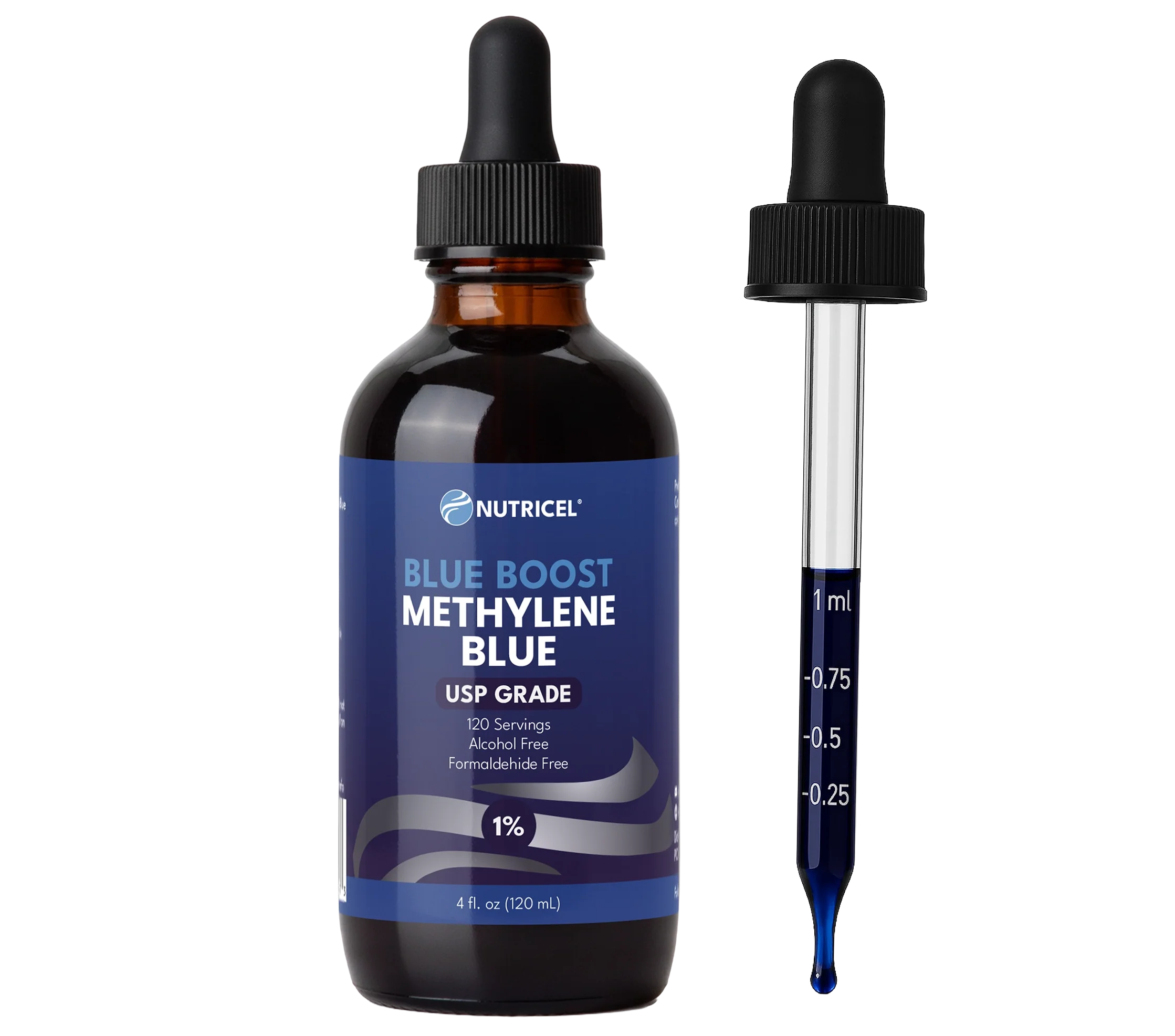
Blue Liquid is a 1% solution (10 mg per mL) in purified water, in a 120 mL amber plastic bottle with a graduated dropper, for people who want to measure their own amount.
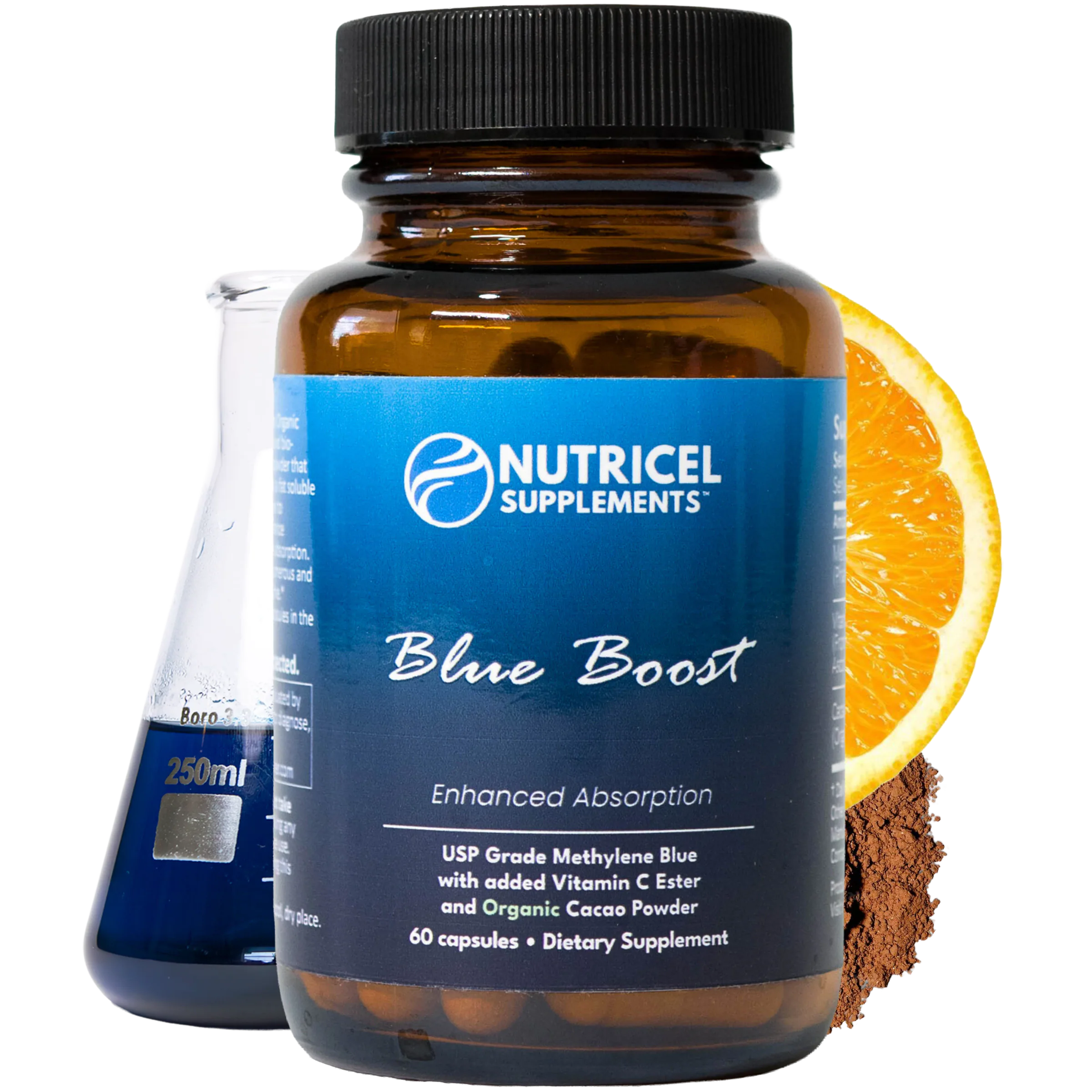
Blue Boost is Nutricel's core formula: 12 mg of methylene blue per capsule with vitamin C ester and organic cacao. No measuring and no staining.
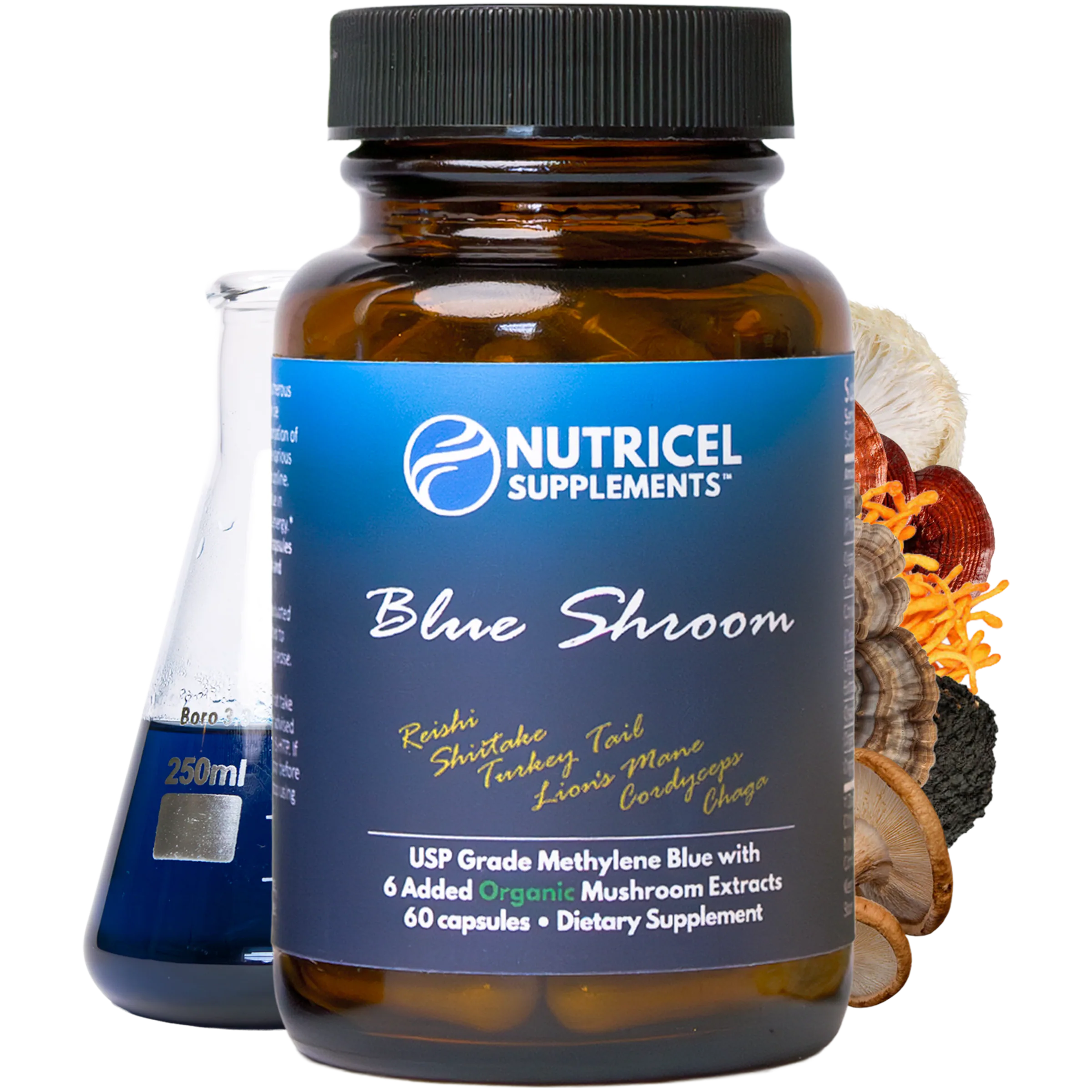
Blue Shroom pairs methylene blue with six organic mushroom extracts including lion's mane, reishi, cordyceps, chaga, shiitake, and turkey tail.
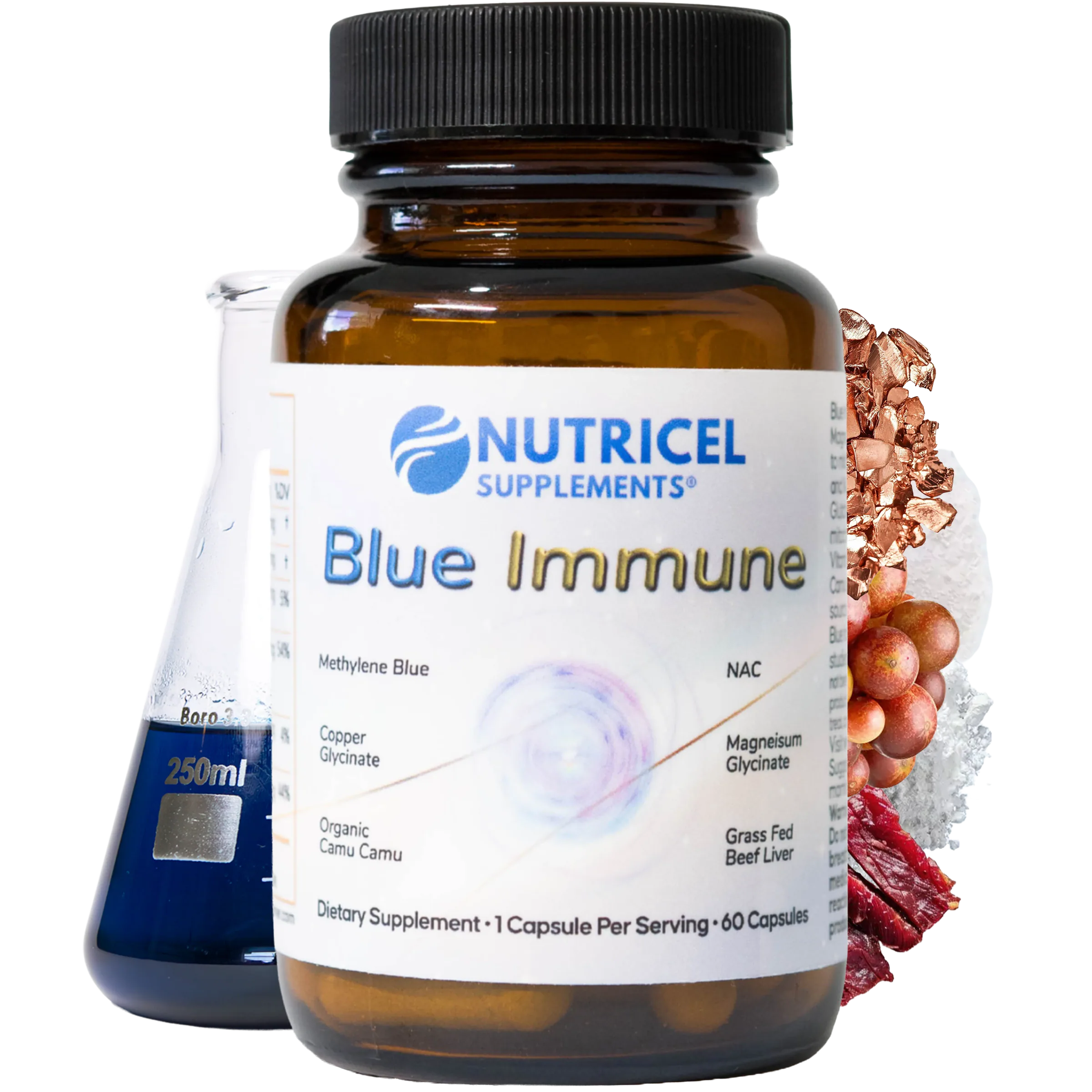
Blue Immune combines methylene blue with copper, magnesium, NAC, grass-fed beef liver, and camu camu for cellular and immune function support.
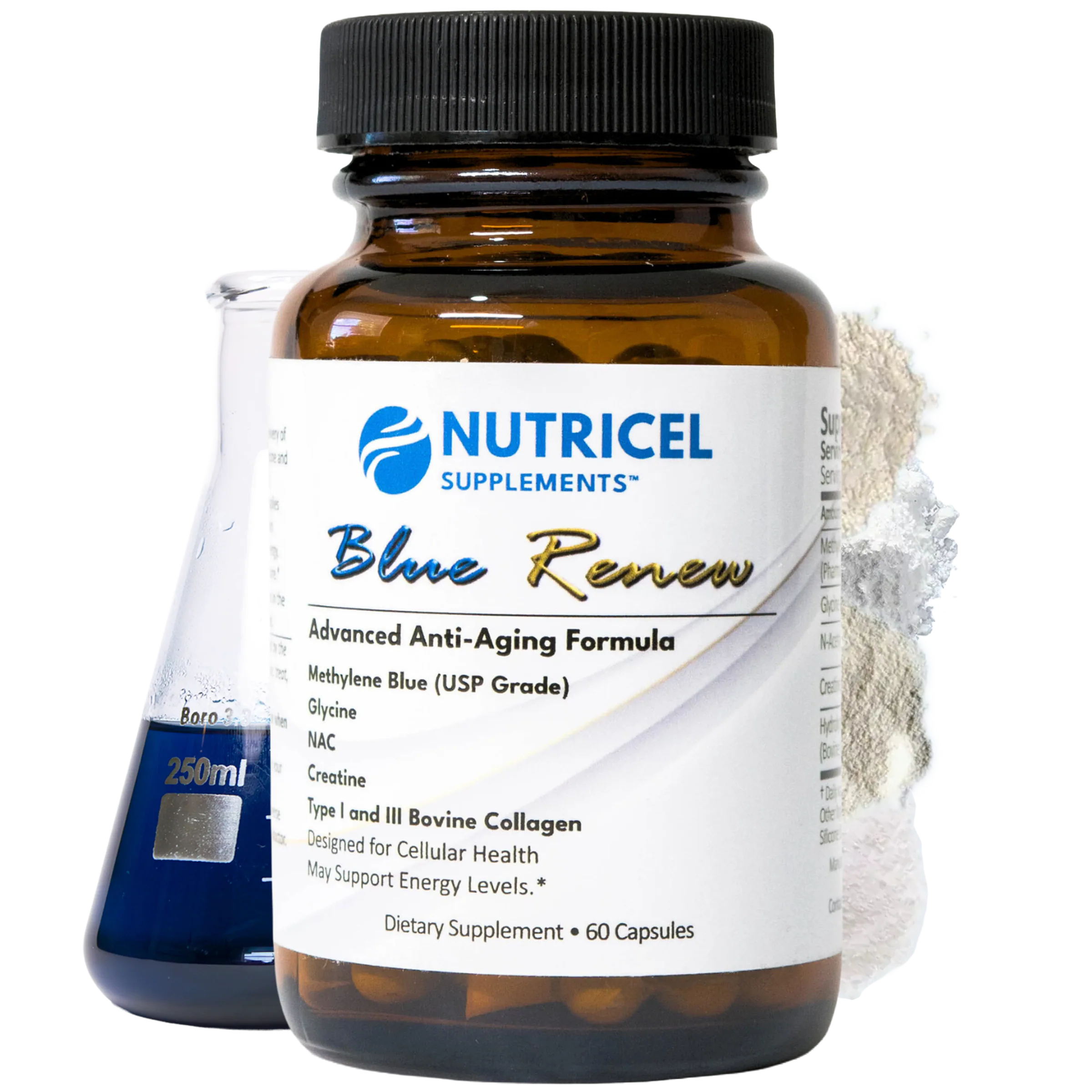
Blue Renew is built around GlyNAC (glycine and N-acetyl cysteine) with collagen and creatine, for healthy aging and brain support.
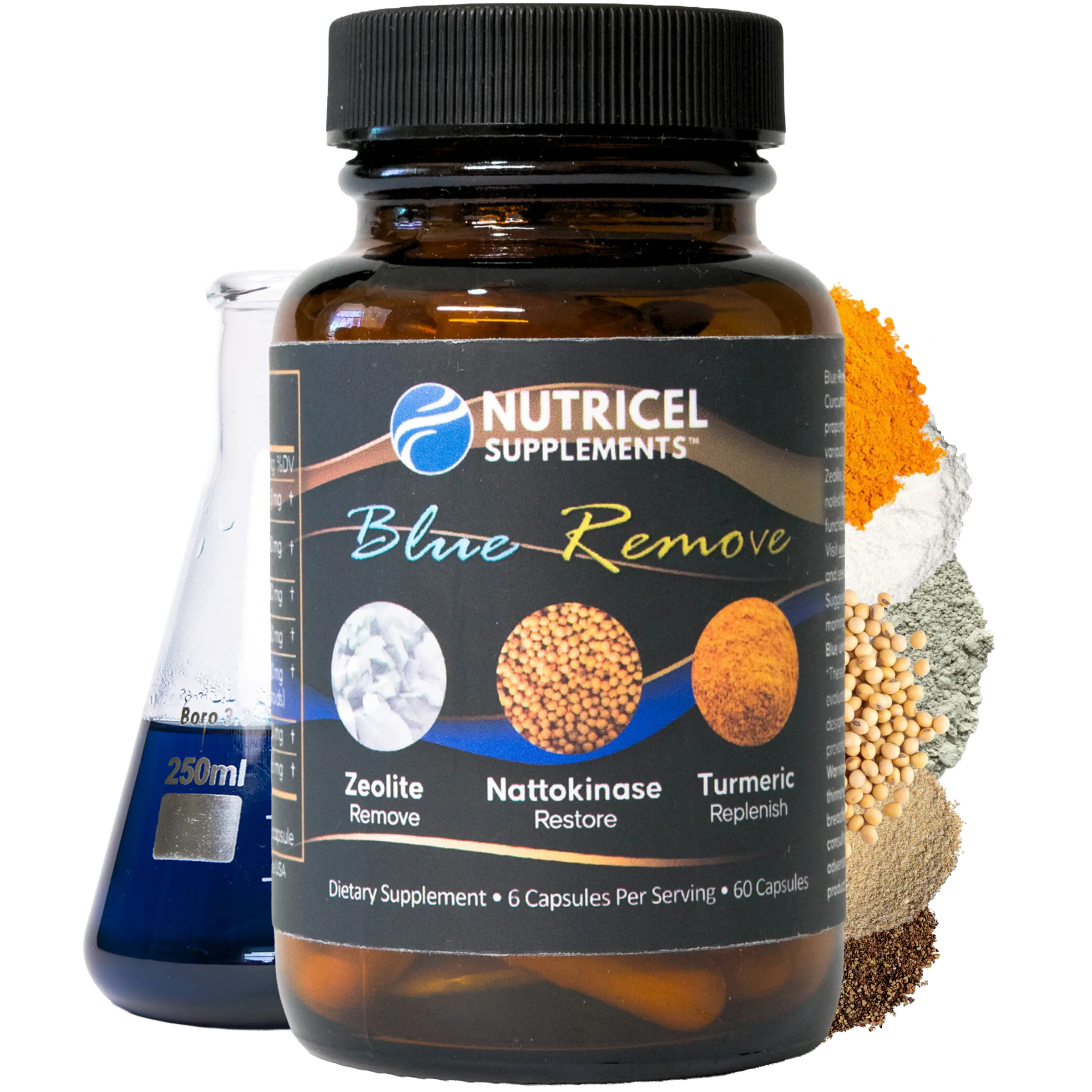
Blue Remove combines zeolite, curcumin, and nattokinase with methylene blue for detox and inflammatory response support.
The Bottom Line
Traveling with methylene blue is mostly about packing, not paperwork. TSA allows vitamins and pills in both carry-on and checked bags, and the only real snag at security is liquid in a bottle over 3.4 ounces.
- Capsules can go in either bag; keep the original labeled bottle.
- A 120 mL liquid bottle goes in your checked bag under the standard rule.
- Double-bag liquid, keep it upright, and expect anything it touches to stain.
- Keep it out of hot cars and direct sun for the whole trip.
- Check any medicine you pick up on the road against the adverse medications list.
If you travel a lot and want the format that gets through security without thinking about it, Blue Boost is our core 12 mg capsule.
Frequently Asked Questions
References
- Transportation Security Administration. Liquids, aerosols and gels rule. Accessed November 2026.
- Transportation Security Administration. What Can I Bring? Vitamins and Medications (Pills). Accessed November 2026.
- Transportation Security Administration. What Can I Bring? Medical (medically necessary liquids). Accessed November 2026.
- McLaren C, Null J, Quinn J. Heat stress from enclosed vehicles: moderate ambient temperatures cause significant temperature rise in enclosed vehicles. Pediatrics, 2005. PMID 15995010.
- Tardivo JP, Del Giglio A, de Oliveira CS, et al. Methylene blue in photodynamic therapy: from basic mechanisms to clinical applications. Photodiagnosis and Photodynamic Therapy, 2005. PMID 25048768.
- Ramsay RR, Dunford C, Gillman PK. Methylene blue and serotonin toxicity: inhibition of monoamine oxidase A (MAO A) confirms a theoretical prediction. British Journal of Pharmacology, 2007. PMID 17721552.
- Gillman PK. CNS toxicity involving methylene blue: the exemplar for understanding and predicting drug interactions that precipitate serotonin toxicity. Journal of Psychopharmacology, 2011. PMID 20142303.
- U.S. National Library of Medicine, DailyMed. PROVAYBLUE (methylene blue) injection prescribing information. Boxed warning on serotonin syndrome, G6PD contraindication, storage, urine test and pulse oximetry warnings.
- U.S. Food and Drug Administration. Drug Safety Communication: methylene blue and serotonergic psychiatric medications. July 2011 (archived).
TSA rules can change. Check tsa.gov before you fly; TSA pages were last checked for this article in November 2026.
About the Author
Sam Carlson, Marketing Developer at Nutricel
Sam is a marketing developer at Nutricel who writes the Nutricel Insights series to help our customers understand methylene blue and make informed choices, translating the published research into plain language. Sam is not a medical professional, and these articles are intended as education rather than medical advice. Every figure in this piece is tied to the sources listed in the references, and the packing tips are general travel habits, not medical guidance. Always speak with your healthcare provider before starting any supplement.
These statements have not been evaluated by the Food and Drug Administration. This product is not intended to diagnose, treat, cure, or prevent any disease. This article is for general education and is not medical advice. Consult your healthcare provider before beginning any supplement, especially if you take medications, are pregnant or nursing, or have a medical condition.
| |||||||||||||||||||||||||||||||||||||||