

Methylene Blue and Alcohol: What the Research Says About Drinking, Hangovers, and Interactions
Quick Answer
There is very little research on methylene blue and alcohol, and the one study in people found no measurable effect either way. In healthy volunteers, methylene blue did not change how fast the body cleared alcohol (Vonlanthen et al., Alcohol and Alcoholism, 2000). The FDA label for methylene blue injection does not mention alcohol at all. Nobody has studied it as a hangover remedy, and the interaction warnings that do exist are about antidepressants and other serotonergic drugs.
- Speeding up alcohol clearance worked in rats, not people. The same 2000 study saw faster alcohol breakdown in rat liver cells and live rats, but not in human volunteers.
- No hangover studies exist. A PubMed search for methylene blue and hangover returned zero results when we checked in November 2026.
- Lab studies raise one open question. In test tubes, methylene blue slowed aldehyde dehydrogenase, the enzyme that clears acetaldehyde after you drink (Helander et al., 1993). No one has tested whether supplement amounts do this in people.
- The label warnings are about other drugs. The Provayblue label carries a boxed warning for serotonin syndrome with SSRIs, SNRIs, MAOIs, and opioids, and warns that methylene blue itself can cause dizziness and confusion.
Important: This is not medical advice. If you drink and take any prescription medication, check it against the full adverse medications list and talk with your healthcare provider before using methylene blue.
Article Outline
| |||||||||||||||||||||||||||||||||||||||
Does Methylene Blue Change How Your Body Handles Alcohol?

Most of what you'll read online about methylene blue and alcohol comes back to one idea: when your liver breaks down alcohol, it shifts the balance between two helper molecules, NAD+ and NADH, toward NADH (Cronholm, Biochemical Pharmacology, 1993). Methylene blue can take electrons from NADH and turn it back into NAD+, which was shown directly in a 1993 lab study (Helander et al., Biochemical Pharmacology, 1993). So researchers wondered if it could help the liver process alcohol faster.
A Swiss team tested that in 2000, first in rat liver cells, then in live rats, then in healthy human volunteers (Vonlanthen, Beer and Lauterburg, Alcohol and Alcoholism, 2000). Here is what they reported:
| Model | What methylene blue did to alcohol breakdown |
|---|---|
| Isolated rat liver cells | Increased it by about 75% |
| Live rats | Increased it by about 30% |
| Healthy human volunteers | No change in how the body handled alcohol, and no change in the NAD+/NADH shift alcohol causes |
Source: Vonlanthen et al., 2000. The abstract does not list the number of volunteers or the exact amounts used.
A longer rat study points the same direction. When rats were fed alcohol for weeks, adding methylene blue to their diet largely prevented the NAD+/NADH shift, but it did not reduce the fat buildup in their livers, and it did not change their blood alcohol levels (Ryle, Chakraborty and Thomson, Biochemical Journal, 1985).
So the theory works on paper and in rats, but it didn't show up in the only human data we could find. Keep that in mind if you've seen methylene blue pitched as something that helps you "process" a night out.
Does Methylene Blue Help a Hangover?

There's no evidence it does. We searched PubMed for methylene blue and hangover in November 2026 and got zero results, not even a case report.
Hangover research in general is thin. A 2022 systematic review in Addiction found 21 placebo-controlled trials covering 386 people, with no two trials testing the same thing, and rated all of the evidence as very low quality (Roberts et al., Addiction, 2022). An earlier review in the BMJ concluded there was no compelling evidence that any conventional or complementary remedy prevents or treats a hangover, and that moderation or not drinking is the most effective approach (Pittler, Verster and Ernst, BMJ, 2005).
There is one link worth knowing about. A 2020 review found that hangover severity tracks with blood alcohol concentration, and that people who clear alcohol faster tend to have milder hangovers (Mackus et al., Journal of Clinical Medicine, 2020). That is probably where the methylene blue hangover idea comes from. The problem is the human study above: in volunteers, methylene blue did not speed up alcohol clearance at all.
Our take: We sell methylene blue, and we still wouldn't tell you to take it for a hangover. The one approach the hangover research backs is drinking less.
The Acetaldehyde Question: What Lab Studies Found

When your liver breaks down alcohol, the first product is acetaldehyde. An enzyme family called aldehyde dehydrogenase (ALDH) then clears it. Two lab studies from 1993 found that methylene blue gets in the way of that second step:
- In test tubes, methylene blue inhibited ALDH from human red and white blood cells and from rat liver, and the effect grew with the amount used (Helander, Cronholm and Tottmar, Biochemical Pharmacology, 1993).
- In isolated rat liver cells given alcohol, the results pointed to methylene blue inhibiting ALDH and acetaldehyde building up as a result (Cronholm, Biochemical Pharmacology, 1993).
Both studies used enzymes or cells in a dish, at concentrations set by the researchers. Neither tested a person taking an oral supplement. The 2000 volunteer study measured alcohol clearance and NAD+/NADH balance, and its abstract does not report acetaldehyde levels (Vonlanthen et al., 2000). Whether a few milligrams of methylene blue changes acetaldehyde after a drink is still an open question.
The Mackus review also notes that, in the studies it covered, acetaldehyde levels were not significantly tied to how bad a hangover felt, while blood alcohol was (Mackus et al., 2020). Until someone tests it in people, caution is the reasonable default.
The Interaction That Matters More: Antidepressants and Serotonergic Drugs
If you search for "methylene blue alcohol interaction," you won't find one on the FDA label. We read through the Provayblue (methylene blue injection) prescribing information on DailyMed and it does not mention alcohol or ethanol anywhere. What the label does carry is a boxed warning: methylene blue may cause serious or fatal serotonin syndrome when used with serotonergic drugs and opioids, and the label says to avoid using it with SSRIs, SNRIs, and MAOIs.
The reason is that methylene blue is a potent, reversible inhibitor of monoamine oxidase A, the enzyme that breaks down serotonin (Ramsay, Dunford and Gillman, British Journal of Pharmacology, 2007). The FDA issued a Drug Safety Communication in 2011 about serious reactions in people taking serotonergic psychiatric medications.
Plenty of people who drink also take an antidepressant, a sleep aid, or a pain medication. If that's you, the first question is whether methylene blue fits with that medication at all, before alcohol even comes into it. Our methylene blue drug interactions guide and the adverse medications list cover the drug side in detail.
Dizziness, Driving, and Your Liver
Two more parts of the label are worth reading if you drink. Both come from the prescription injection, which is given into a vein at a body-weight dose well above what a supplement capsule holds, so read them as cautions about what can happen.
- Dizziness and confusion. Section 5.6 of the Provayblue label says methylene blue may cause confusion, dizziness, and vision disturbances, and tells patients not to drive or operate heavy machinery until those effects have resolved. Alcohol impairs driving on its own, so stacking the two before getting behind the wheel is a bad idea.
- Liver processing. Section 8.7 says methylene blue is extensively metabolized in the liver and that patients with any hepatic impairment should be monitored longer for toxicity and drug interactions. If you have a liver condition, talk with your doctor before taking methylene blue at all.
There is no published research on a safe gap between a drink and a dose of methylene blue. If anyone gives you a specific number of hours, ask where it came from.
If You Drink and Take Methylene Blue
None of this is medical advice, and we can't tell you whether drinking on methylene blue is safe for you. Here is what the sources above support:
- Check your medications first. The serotonin warning on the label is the documented risk. Run every prescription and supplement you take against the adverse medications list.
- Do not use it to sober up. In the human study, it did not change how the body handled alcohol.
- Do not use it as a hangover fix. There are no studies on it, and no hangover remedy has strong evidence behind it.
- Skip driving if you feel dizzy, confused, or have blurry vision, whether from the methylene blue, the drinks, or both.
- Ask about alcohol use separately. We found no human trials of methylene blue for alcohol cravings or withdrawal. If you are trying to cut back or stop, that is a conversation to have with a doctor.
For general background, our posts on whether methylene blue is safe to take orally and oral methylene blue side effects go into what is normal and what is not.
Who Methylene Blue Is Not For
The FDA label for methylene blue injection (Provayblue) carries a boxed warning that it may cause serious or fatal serotonin syndrome when used with serotonergic drugs and opioids, and the FDA issued a Drug Safety Communication in 2011 about serious reactions in people taking serotonergic psychiatric medications.
Do not take methylene blue if you are currently using:
- SSRIs, SNRIs, or MAOIs (the FDA label warns of serotonin syndrome)
- Tramadol, linezolid, bupropion, trazodone, or other serotonergic medications
- Opioids, which the Provayblue boxed warning also names
- St. John's Wort, 5-HTP, or SAMe
The Provayblue label also lists glucose-6-phosphate dehydrogenase (G6PD) deficiency as a contraindication because of the risk of hemolytic anemia, so people with G6PD deficiency should not take it. It is also not for pregnant or nursing women or for children, and people with liver conditions should talk with a doctor first.
Review the full adverse medications list and our drug interactions guide, and consult your healthcare provider before starting methylene blue in any form.
Which Nutricel Product Is Right for You
Every Nutricel product uses USP-grade methylene blue and is manufactured in an GMP certified facility in the United States. Lab reports for our capsule formulas are published on our certs page. The difference between the products is the format and what is built in alongside the methylene blue.
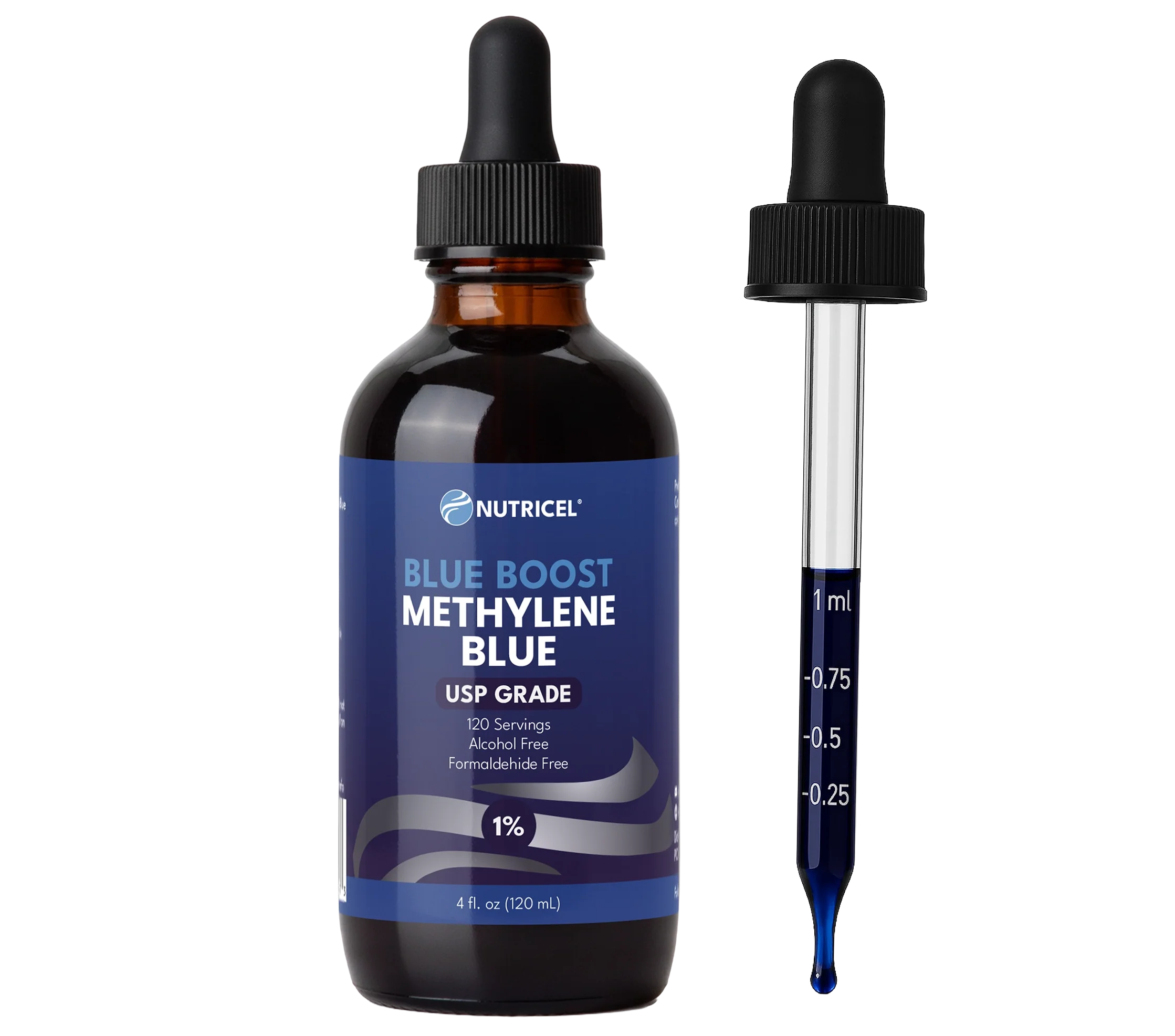
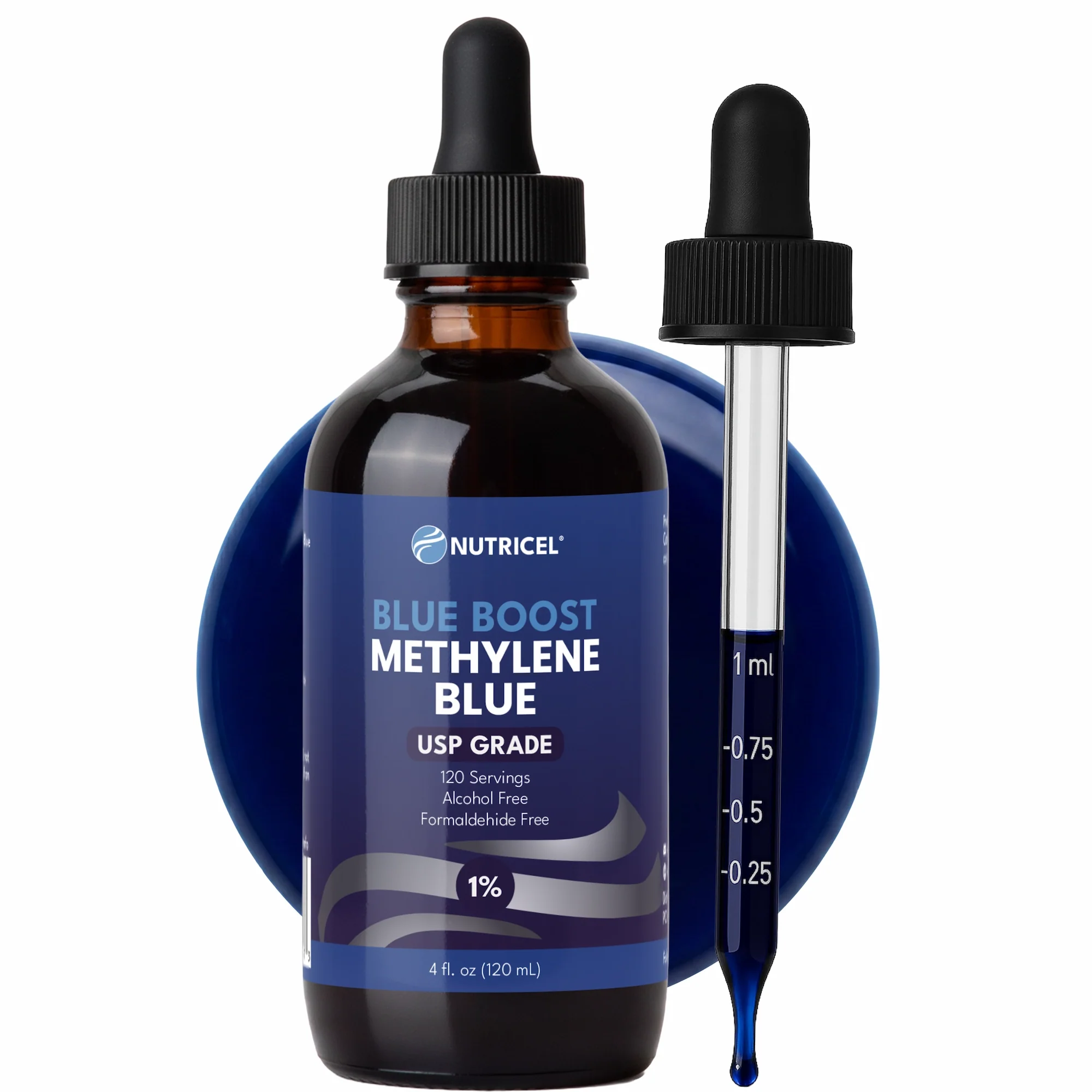
Blue Liquid is a 1% solution (10 mg per mL) in purified water, in a 120 mL amber plastic bottle with a graduated dropper, for people who want to measure their own amount.
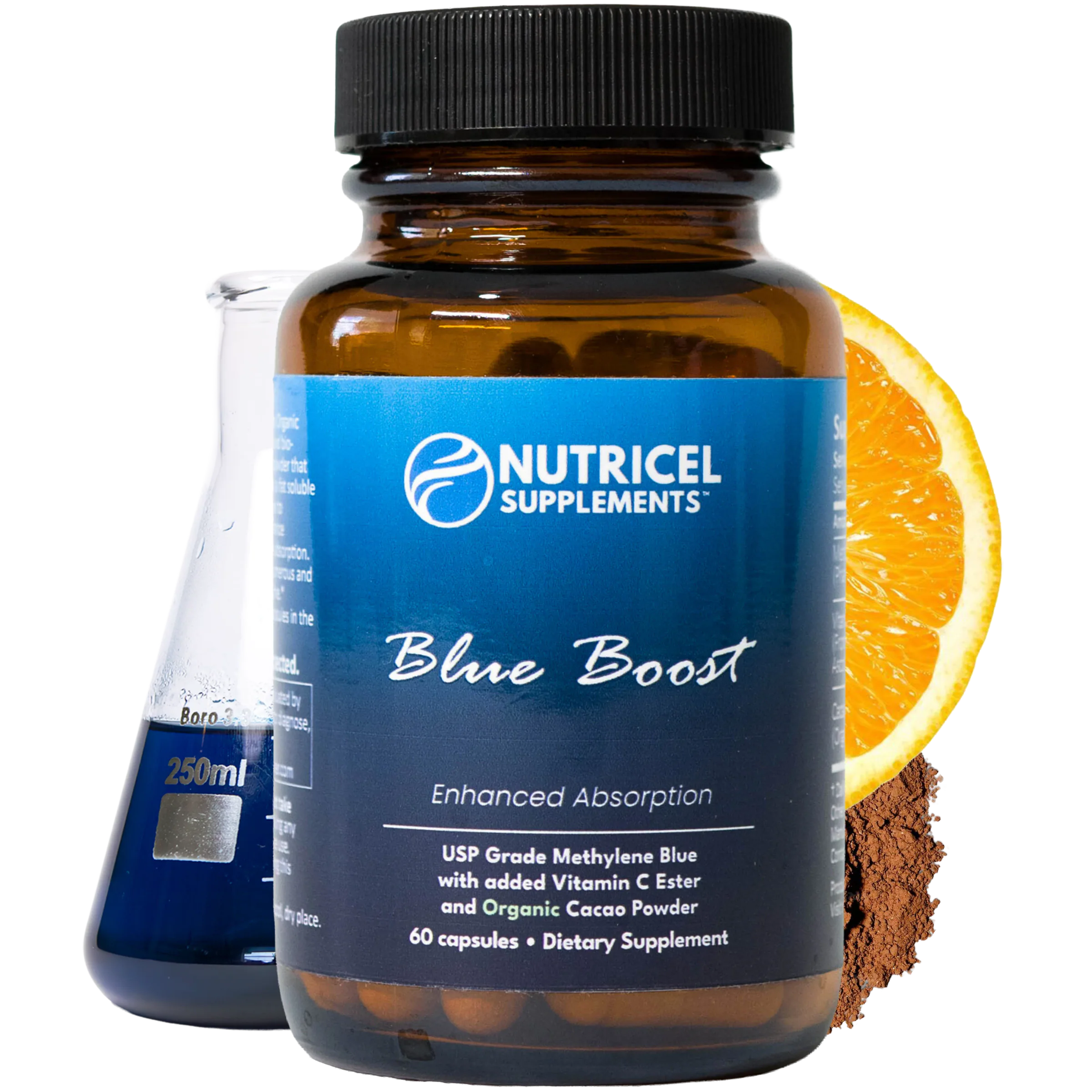
Blue Boost is Nutricel's core formula: 12 mg of methylene blue per capsule with vitamin C ester and organic cacao. No measuring and no staining.
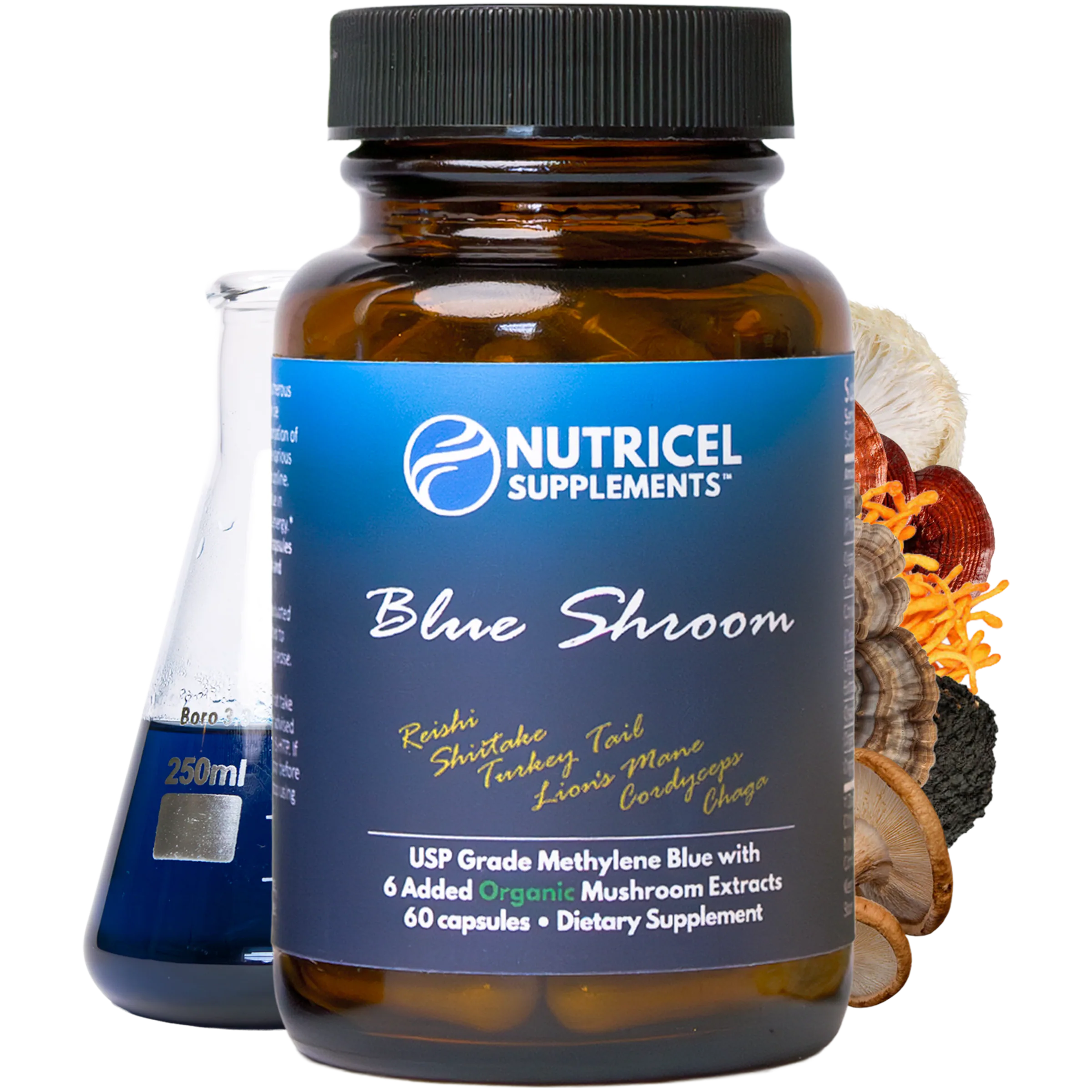
Blue Shroom pairs methylene blue with six organic mushroom extracts including lion's mane, reishi, cordyceps, chaga, shiitake, and turkey tail.
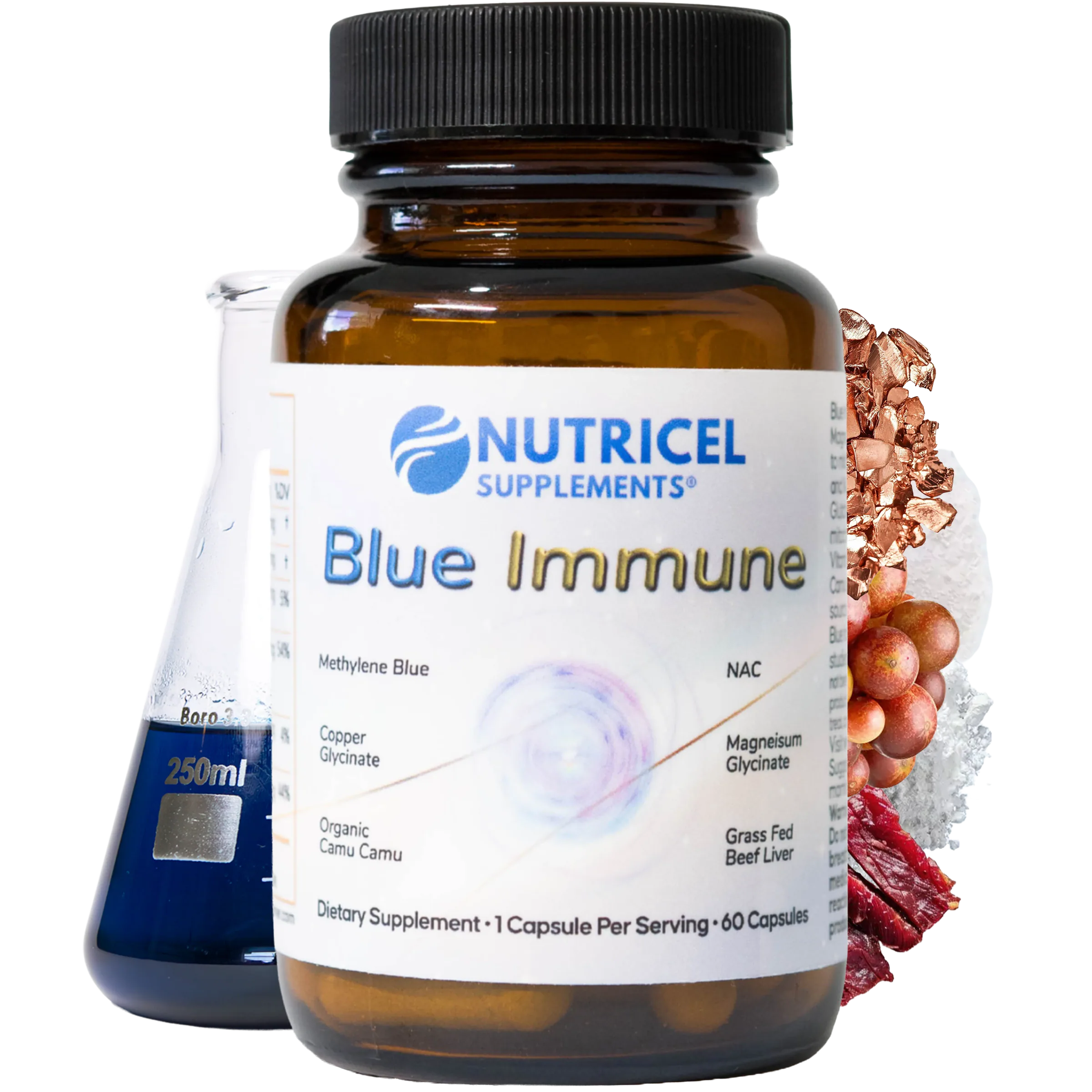
Blue Immune combines methylene blue with copper, magnesium, NAC, grass-fed beef liver, and camu camu for cellular and immune function support.
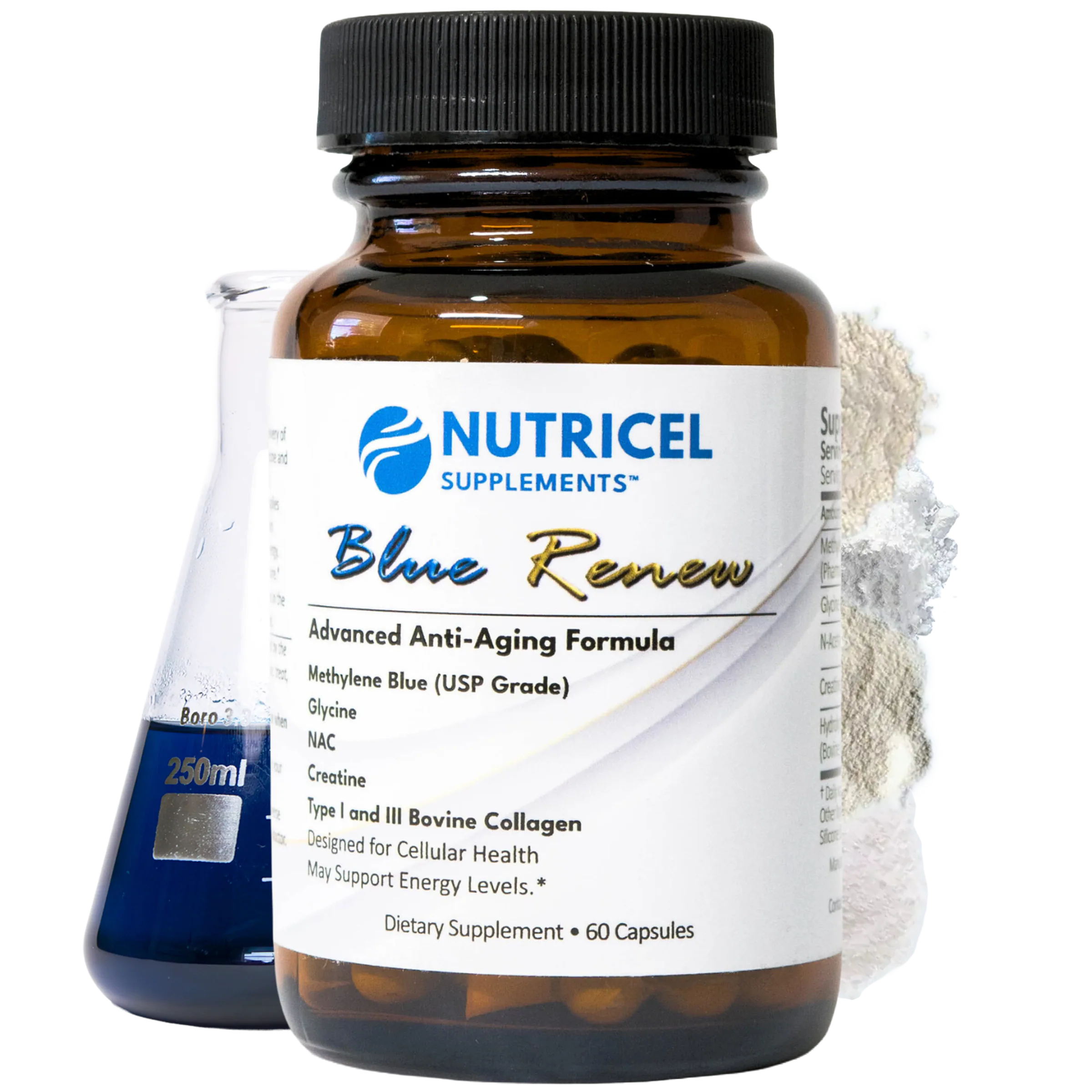
Blue Renew is built around GlyNAC (glycine and N-acetyl cysteine) with collagen and creatine, for healthy aging and brain support.
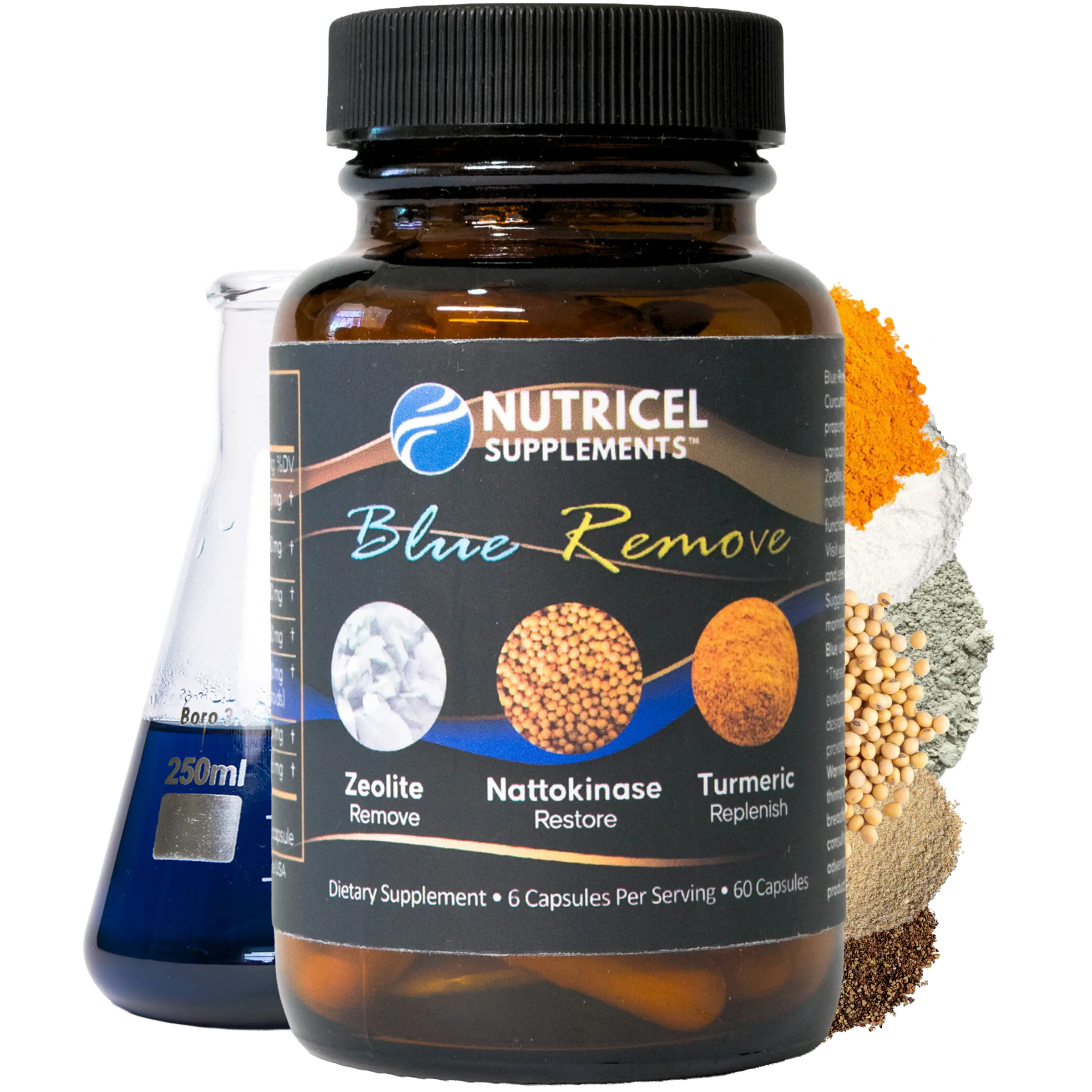
Blue Remove combines zeolite, curcumin, and nattokinase with methylene blue for detox and inflammatory response support.
The Bottom Line
The research on methylene blue and alcohol is small and mostly decades old. The rat work looked promising, the one human study found nothing, and the hangover claims have no studies behind them at all.
- No human evidence that methylene blue changes how you process alcohol.
- No studies on methylene blue for hangovers.
- An open lab question about acetaldehyde that has never been tested in people.
- The FDA label does not mention alcohol, but it does warn about dizziness, confusion, and serotonergic drugs.
- Check your medications against the adverse medications list before you start.
If you take methylene blue for daily focus and energy, Blue Boost is our core 12 mg capsule. Questions about drinking on it belong with your doctor.
Frequently Asked Questions
References
- Vonlanthen R, Beer JH, Lauterburg BH. Effect of methylene blue on the disposition of ethanol. Alcohol and Alcoholism, 2000. PMID 11022014.
- Ryle PR, Chakraborty J, Thomson AD. The effect of methylene blue on the hepatocellular redox state and liver lipid content during chronic ethanol feeding in the rat. Biochemical Journal, 1985. PMID 4091827.
- Helander A, Cronholm T, Tottmar O. Inhibition of aldehyde dehydrogenases by methylene blue. Biochemical Pharmacology, 1993. PMID 8274146.
- Cronholm T. Ethanol metabolism in isolated hepatocytes: effects of methylene blue, cyanamide and penicillamine on the redox state of the bound coenzyme and on the substrate exchange at alcohol dehydrogenase. Biochemical Pharmacology, 1993. PMID 8442754.
- Mackus M, van de Loo AJ, Garssen J, Kraneveld AD, Scholey A, Verster JC. The role of alcohol metabolism in the pathology of alcohol hangover. Journal of Clinical Medicine, 2020. PMID 33113870.
- Roberts E, Smith R, Hotopf M, Drummond C. The efficacy and tolerability of pharmacologically active interventions for alcohol-induced hangover symptomatology: a systematic review of the evidence from randomised placebo-controlled trials. Addiction, 2022. PMID 34972259.
- Pittler MH, Verster JC, Ernst E. Interventions for preventing or treating alcohol hangover: systematic review of randomised controlled trials. BMJ, 2005. PMID 16373736.
- Ramsay RR, Dunford C, Gillman PK. Methylene blue and serotonin toxicity: inhibition of monoamine oxidase A (MAO A) confirms a theoretical prediction. British Journal of Pharmacology, 2007. PMID 17721552.
- U.S. National Library of Medicine, DailyMed. PROVAYBLUE (methylene blue) injection prescribing information. Boxed warning on serotonin syndrome, section 5.6 (ability to drive and operate machinery), section 8.7 (hepatic impairment), G6PD contraindication.
- U.S. Food and Drug Administration. Drug Safety Communication: methylene blue and serotonergic psychiatric medications. July 2011 (archived).
PubMed searches for methylene blue with hangover, and with alcohol cravings or withdrawal, were run on November 4, 2026.
About the Author
Sam Carlson, Marketing Developer at Nutricel
Sam is a marketing developer at Nutricel who writes the Nutricel Insights series to help our customers understand methylene blue and make informed choices, translating the published research into plain language. Sam is not a medical professional, and these articles are intended as education rather than medical advice. Every figure in this piece is tied to the sources listed in the references. Always speak with your healthcare provider before starting any supplement.
These statements have not been evaluated by the Food and Drug Administration. This product is not intended to diagnose, treat, cure, or prevent any disease. This article is for general education and is not medical advice. Consult your healthcare provider before beginning any supplement, especially if you take medications, are pregnant or nursing, or have a medical condition.
| |||||||||||||||||||||||||||||||||||||||