

Methylthioninium Chloride, CI 52015, Methyl Blue: Which Names Mean Methylene Blue?
Written by: Sam Carlson
|
Published on October 28th, 2026
|
Time to read 11 min
Quick Answer
Methylthioninium chloride is methylene blue. It is the official international drug name, and it is the name on the European version of the injectable drug. Basic Blue 9, C.I. 52015, tetramethylthionine chloride, Methylenblau and CAS number 61-73-4 all point to the same molecule too, according to PubChem. Methyl blue is not methylene blue. It is a separate, much larger dye used to stain collagen in lab work. New methylene blue and azure B are close relatives of methylene blue, but they are also different compounds.
- One molecule, many labels. Drug regulators, dye makers, chemists and lab suppliers each use their own naming system, so the same compound picks up a long list of names.
- Brand names. In the US the FDA-approved IV drug is sold as ProvayBlue. The European Medicines Agency lists it as Methylthioninium chloride Proveblue.
- Watch the look-alikes. A listing that says methyl blue, new methylene blue or azure is selling a different dye, whatever the color looks like.
- A name is not a grade. Basic Blue 9 and C.I. 52015 are dye-industry names. They tell you what the compound is, not whether it was made for people to take.
Important: the FDA label for the methylene blue injection (ProvayBlue) carries a boxed warning about serotonin syndrome when it is combined with serotonergic drugs, and a different name on the bottle does not change the molecule. Review Nutricel's adverse medications list and talk to your healthcare provider before use, whatever brand you buy.
| |||||||||||||||||||||||||||||||||||||||
One Molecule, Many Names
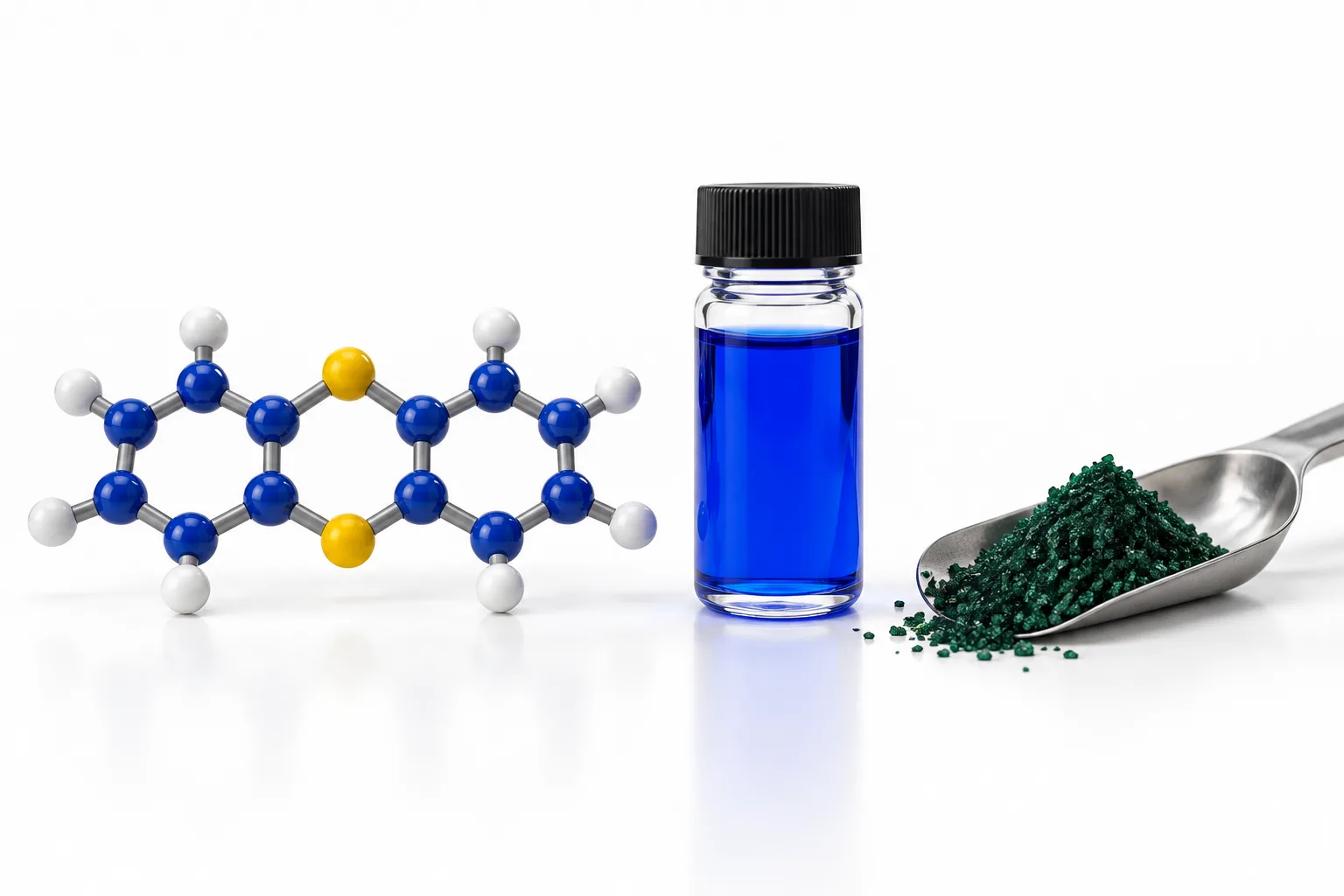
Methylene blue has been made for about 150 years, and over that time drug agencies, dye makers and chemists all gave it a name that fit their own system. PubChem, the National Library of Medicine's chemistry database, files more than 200 synonyms under one entry, compound 6099. Its formal chemical name is [7-(dimethylamino)phenothiazin-3-ylidene]-dimethylazanium chloride, its formula is C16H18ClN3S, and it weighs 319.9 grams per mole (PubChem).
Here are the names you are most likely to run into, and where each one shows up:
| Name | What kind of name | Where you see it |
|---|---|---|
| Methylene blue | Common name | Supplement labels, everyday use |
| Methylthioninium chloride | International drug name (INN) | European drug labels, international references |
| Tetramethylthionine chloride | Older chemical name | Chemistry texts, older references |
| Basic Blue 9 / C.I. 52015 | Colour Index dye names | Dye and lab supply catalogs |
| 61-73-4 | CAS registry number | Chemical supplier listings, safety sheets |
| ProvayBlue / Proveblue | Drug brand names | IV drug labels (US / EU) |
| Methylenblau / bleu de methylene | German / French | Imported products, older papers |
| Leucomethylene blue | Reduced form | Pharmacology papers, drug labels |
Source: PubChem compound 6099 synonym list, the ProvayBlue prescribing information on DailyMed, and the European Medicines Agency. Checked October 2026.
Where the Name Came From
The long name describes the structure. Methylene blue belongs to a family of dyes built on a three-ring core called phenothiazine. A related dye, thionine, has the same core with a plain amino group on each end (formula C12H10ClN3S). Methylene blue carries two methyl groups on each of those nitrogens, four in all, which is where the older name tetramethylthionine chloride comes from. Methylthioninium chloride says the same thing in modern form: a methylated thionine, paired with chloride.
The compound itself started out as a textile dye. According to a 2011 history in Parasitology Research, Heinrich Caro synthesized methylene blue in 1876 at BASF, the German chemical company, and six years later Robert Koch used it when he discovered the tuberculosis bacterium (Krafts et al., 2011). A 2011 review from the University of Heidelberg calls it the first synthetic drug (Schirmer et al., 2011).
That history explains the two naming tracks. Dye makers catalog it in the Colour Index as Basic Blue 9, number 52015. Drug regulators use the international nonproprietary name, methylthioninium chloride, which PubChem lists with the [INN] tag. In the US the common name stuck, and the FDA-approved drug label simply says methylene blue.
You will also see leucomethylene blue in research and on drug labels. It is not a different product. The ProvayBlue prescribing information explains that inside the body, methylene blue is first converted to leucomethylene blue, a reduced form. Switching between those two forms comes up again and again in research on how methylene blue works in cells, and it is part of why urine color can change.
Brand Names: ProvayBlue and Proveblue
When people search for a methylene blue brand name, they are usually looking for the prescription drug. Per its label on DailyMed, ProvayBlue is an FDA-approved methylene blue injection, first approved in 2016 and given by IV, for treating acquired methemoglobinemia. The label gives the chemical name as 3,7-bis(dimethylamino)phenothiazin-5-ium chloride hydrate, with a formula of C16H18ClN3S.xH2O. The xH2O part means the solid can hold water, and PubChem's synonym list includes both anhydrous and trihydrate forms.
In Europe the same kind of injection goes by the international name. The European Medicines Agency lists Methylthioninium chloride Proveblue, says it contains the active substance methylthioninium chloride, and describes it as an antidote for methaemoglobinaemia caused by certain medicines or chemicals.
PubChem's synonym list also includes older trade names such as Urolene Blue and Swiss Blue, so you may see those in older papers.
None of these drug names belong on a supplement. A supplement can share the molecule with ProvayBlue, but not its FDA approval, so a supplement label should not borrow the drug's name.
Methyl Blue and Other Look-Alike Dyes
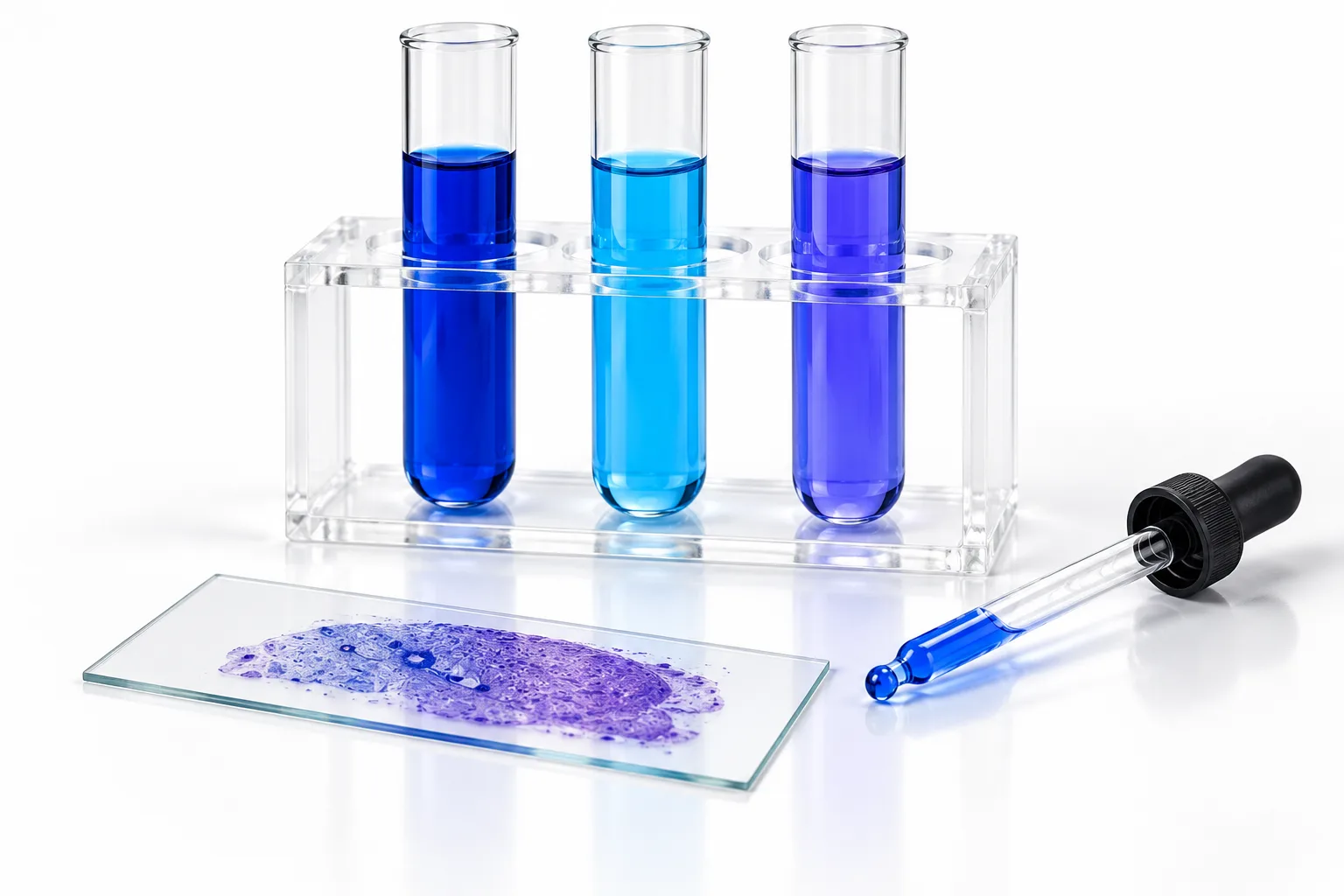
A few dyes have names close enough to cause real mix-ups in search results and on marketplace listings. They are not interchangeable with methylene blue.
Methyl blue is the biggest source of confusion, and it is a completely different compound. PubChem lists it as Acid Blue 93, Colour Index 42780, a sulfonated dye with a molecular weight around 800, more than twice the size of methylene blue. The European Bioinformatics Institute's ChEBI database describes it as a histological dye used to stain collagen in Masson's trichrome and Mallory's connective tissue method. It is not a phenothiazine, and it is sold as a lab stain.
New methylene blue sounds like an updated version, but it is a separate dye. PubChem lists it as Basic Blue 24, C.I. 52030. It has ethylamino groups where methylene blue has dimethylamino groups, plus two extra methyl groups on the ring. Labs use it as a supravital stain to count reticulocytes, the young red blood cells, as a 2022 study in Diagnostics describes (Pan et al., 2022).
Azure B is methylene blue with one methyl group removed. Per PubChem, it is used in azure eosin stains for blood smears and is an active metabolite of methylene blue. A 2012 study in Toxicology and Applied Pharmacology described azure B as the major metabolite the body makes from methylene blue, and in lab tests it blocked the MAO-A enzyme about 6 times more strongly than methylene blue did (Petzer et al., 2012). The Krafts history adds that in 1886 a chemist named Bernthsen made a dye he called methylene azure by breaking down methylene blue, and Giemsa's famous blood stain later depended on demethylating methylene blue on purpose.
| Dye | Other names | Formula | Main use |
|---|---|---|---|
| Methylene blue | Basic Blue 9, C.I. 52015 | C16H18ClN3S | The compound in this article |
| New methylene blue | Basic Blue 24, C.I. 52030 | C18H22ClN3S | Lab stain for young red blood cells |
| Azure B | Methylene azure B | C15H16ClN3S | Blood smear stains; main metabolite of methylene blue |
| Methyl blue | Acid Blue 93, C.I. 42780 | Large sulfonated dye, about 800 g/mol | Collagen stain in histology |
Source: PubChem compound records 6099, 73518, 68275 and 76956083, ChEBI 87472, Pan et al. 2022 and Petzer et al. 2012.
Reading the Name on a Label

Names matter most when you are shopping, because methylene blue is sold in three very different worlds: supplements, lab chemicals and aquarium treatments. The name on the listing usually tells you which world it came from.
- Supplement labels usually just say methylene blue, often with a grade such as USP. Our guide to USP grade methylene blue covers what that grade means.
- Chemical and lab listings tend to use Basic Blue 9, C.I. 52015, CAS 61-73-4, or words like reagent and for microscopy. That is the right compound, but those terms describe a lab product. Our breakdown of powder, liquid and capsule grades explains why reagent on a label matters.
- Aquarium treatments use the name methylene blue too, but they are made for fish tanks, not people.
- Any listing that says methyl blue, new methylene blue or azure is a different dye, even if the photo shows the same deep blue.
Color is no help here. Methylene blue, new methylene blue, azure B and methyl blue all make blue solutions, which makes them easy to mix up. Look at the name, the grade and the Supplement Facts panel instead, and look for a brand that posts third-party lab reports you can read for yourself. Our lab-testing database shows how products in this category have tested, and this guide walks through other red flags on listings.
Who It Is Not For
Whatever name is on the label, do not take methylene blue without talking to your healthcare provider first if you:
- Take SSRIs, SNRIs, MAOIs or any other serotonergic medication
- Take a prescription stimulant such as Adderall or Vyvanse
- Have G6PD deficiency, or are pregnant or nursing
Review the full adverse medications list and consult your healthcare provider before starting methylene blue in any form.
Which Nutricel Product Is Right for You
Every Nutricel formula is made with USP grade methylene blue, the same molecule PubChem files under methylthioninium chloride, Basic Blue 9 and C.I. 52015.
Our capsules' third-party lab reports are on our lab tests page, so you can see the measured results, not just the name on the label.
If you and your provider decide methylene blue fits, this is how our products differ:
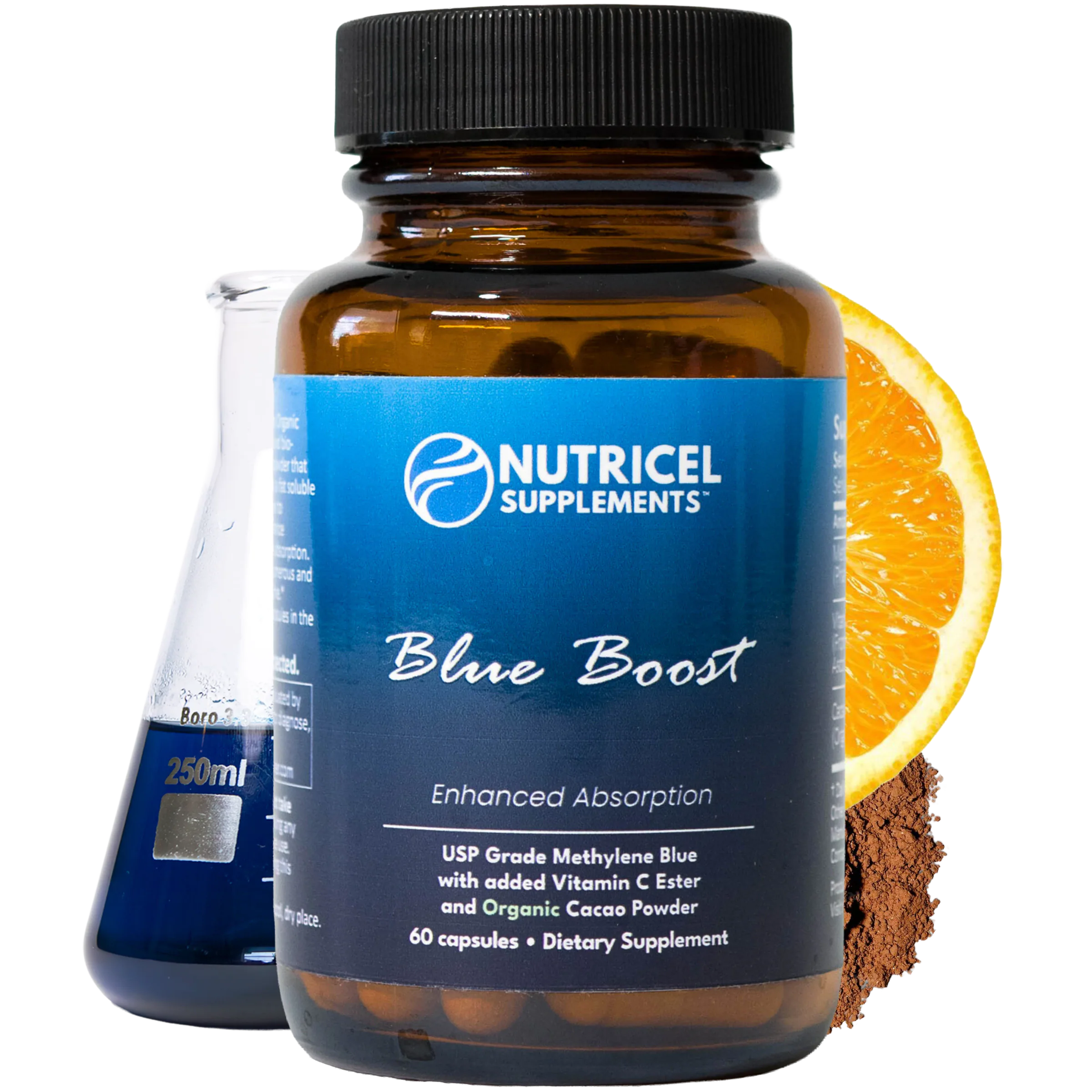
Blue Boost is Nutricel's core formula, a methylene blue capsule built around absorption and cellular energy.
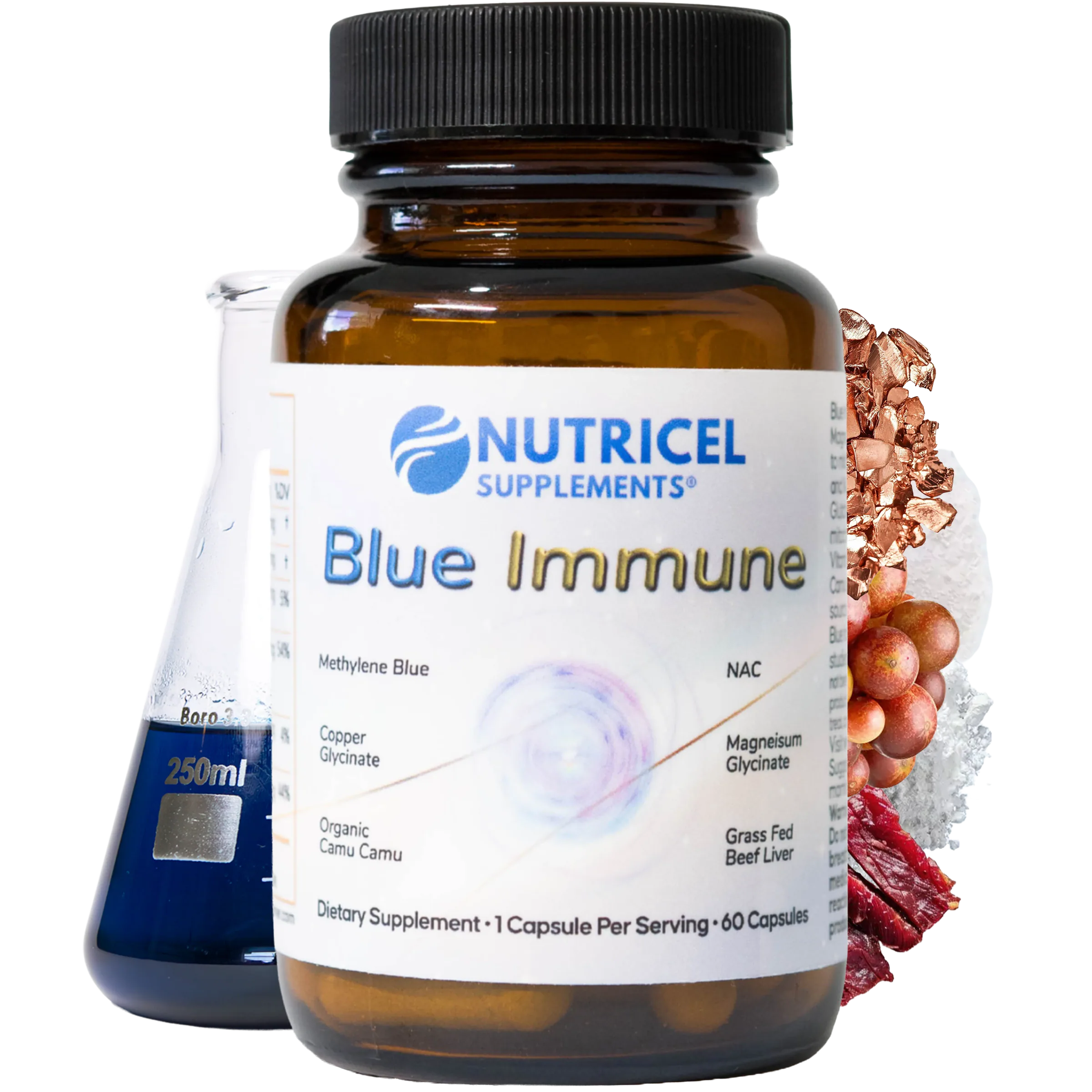
Blue Immune combines methylene blue with copper, NAC, grass-fed beef liver, and vitamins A, C, and E.
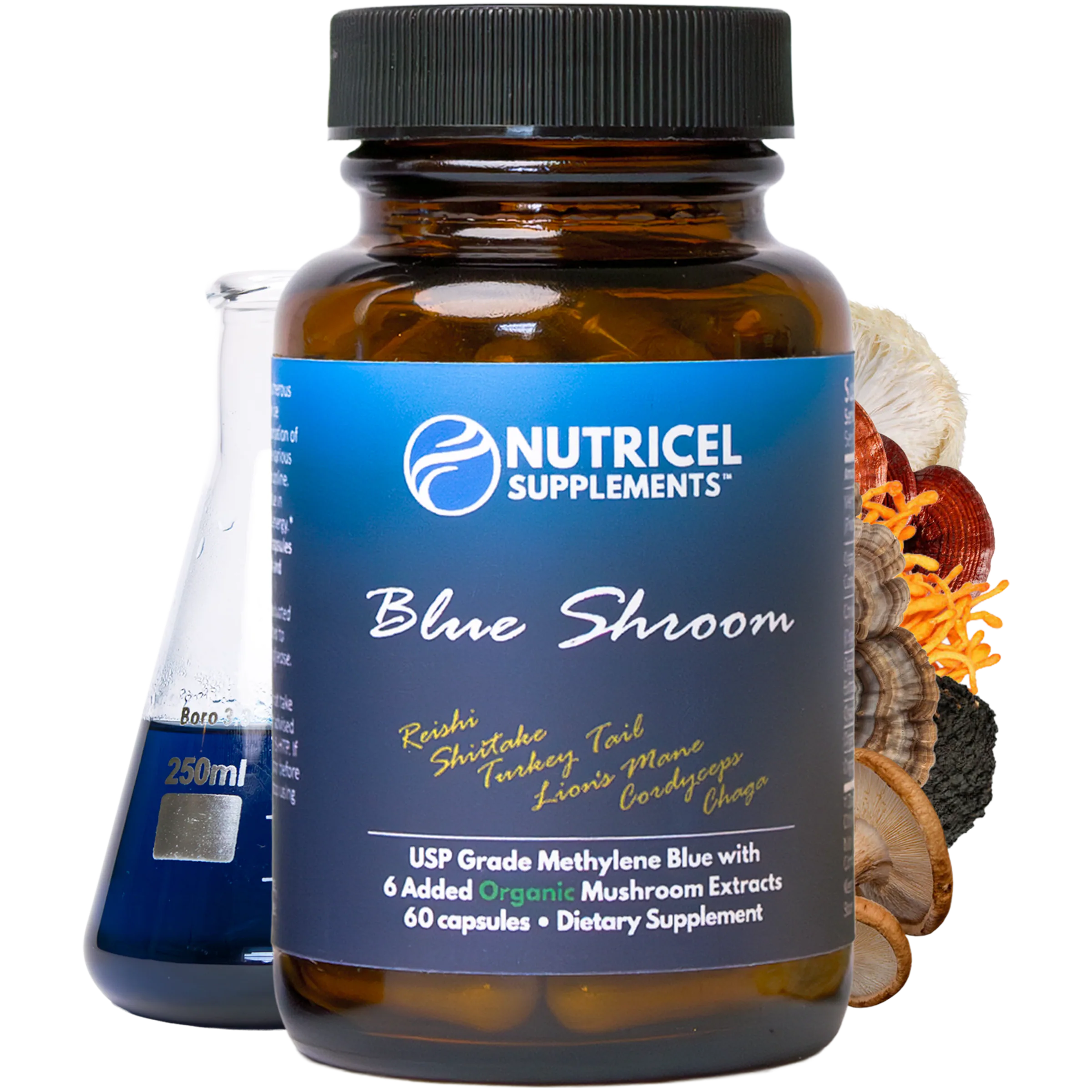
Blue Shroom pairs methylene blue with six organic mushroom extracts including lion's mane, reishi, cordyceps, chaga, shiitake, and turkey tail.
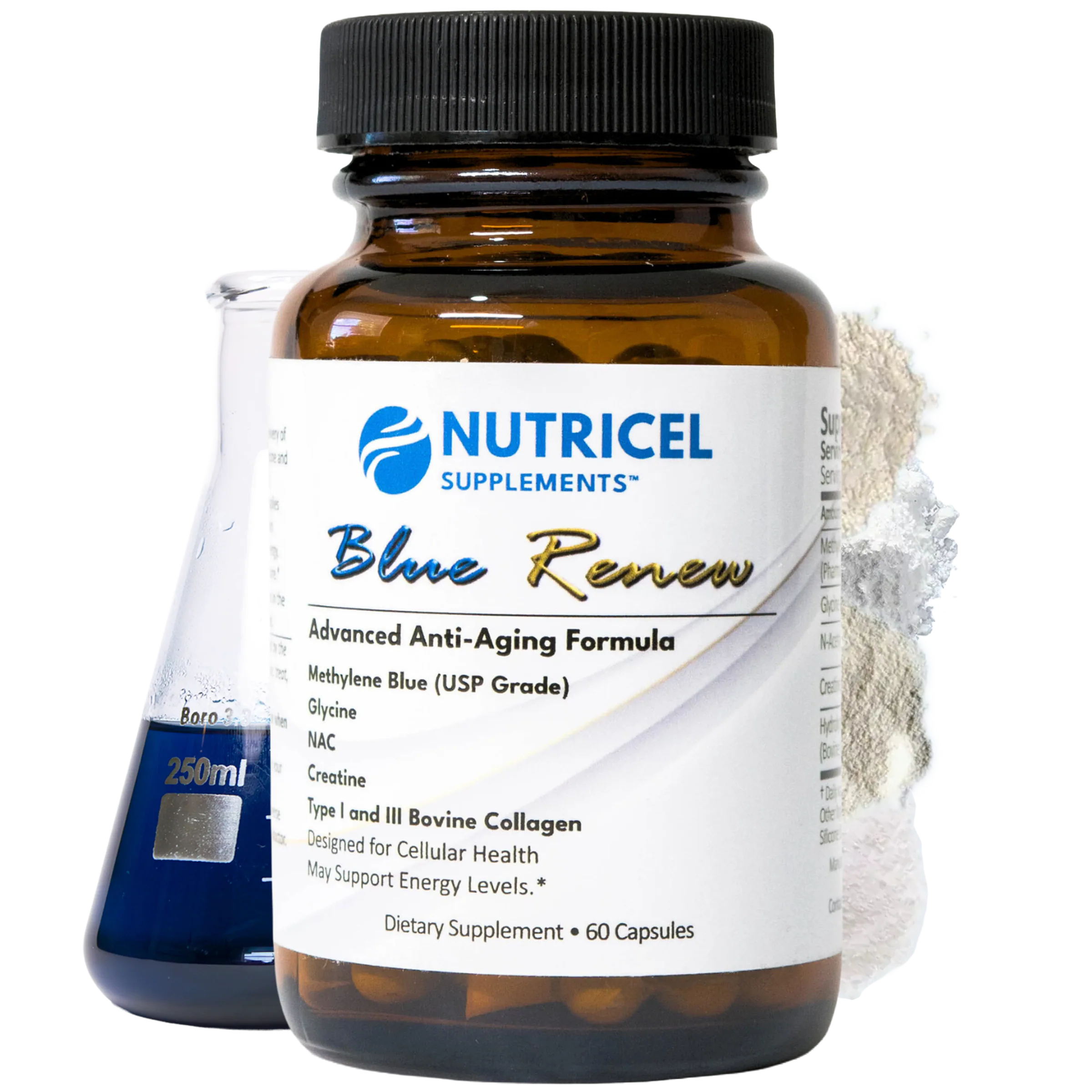
Blue Renew is built around GlyNAC (glycine and N-acetyl cysteine) alongside methylene blue.
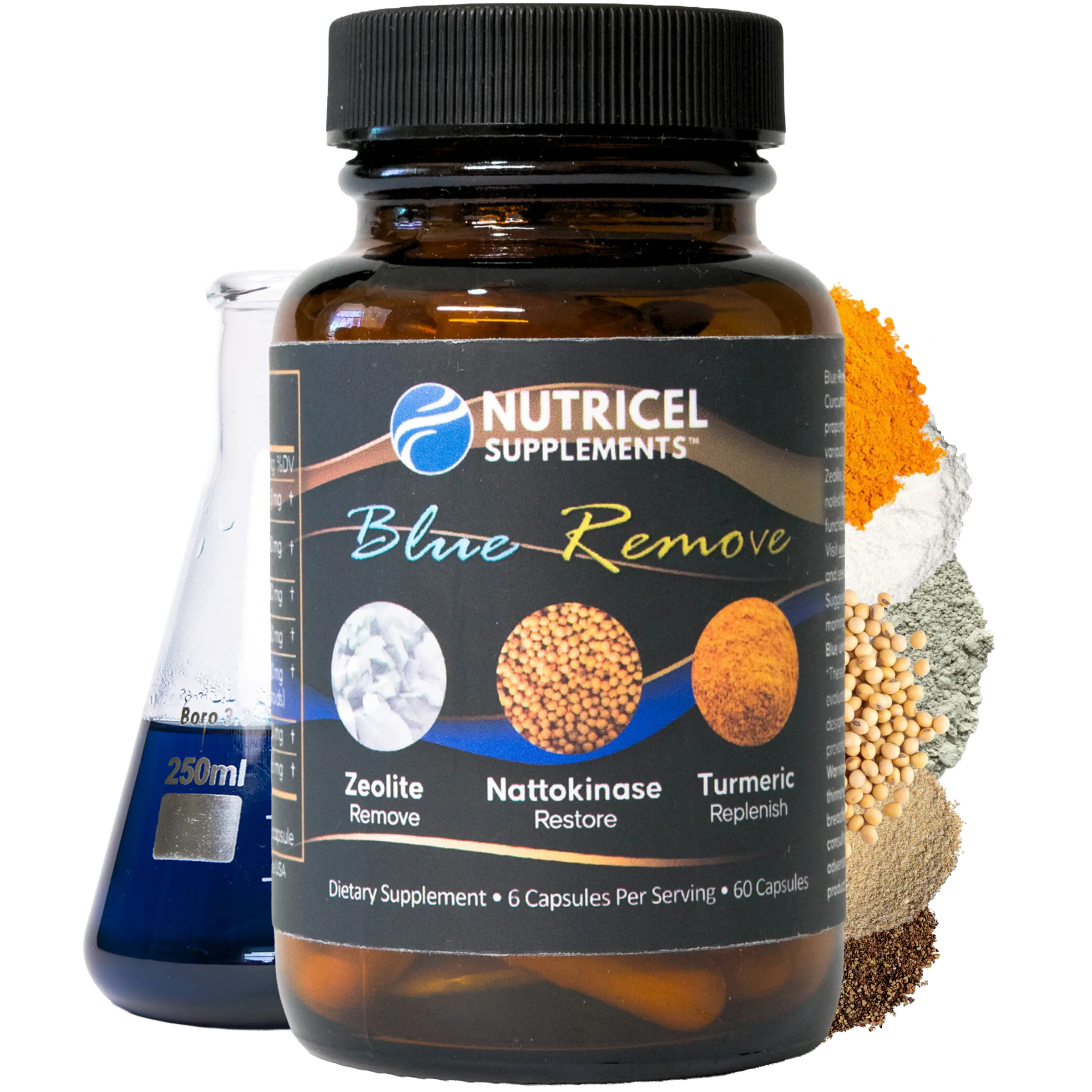
Blue Remove combines zeolite, curcumin, and nattokinase with methylene blue.
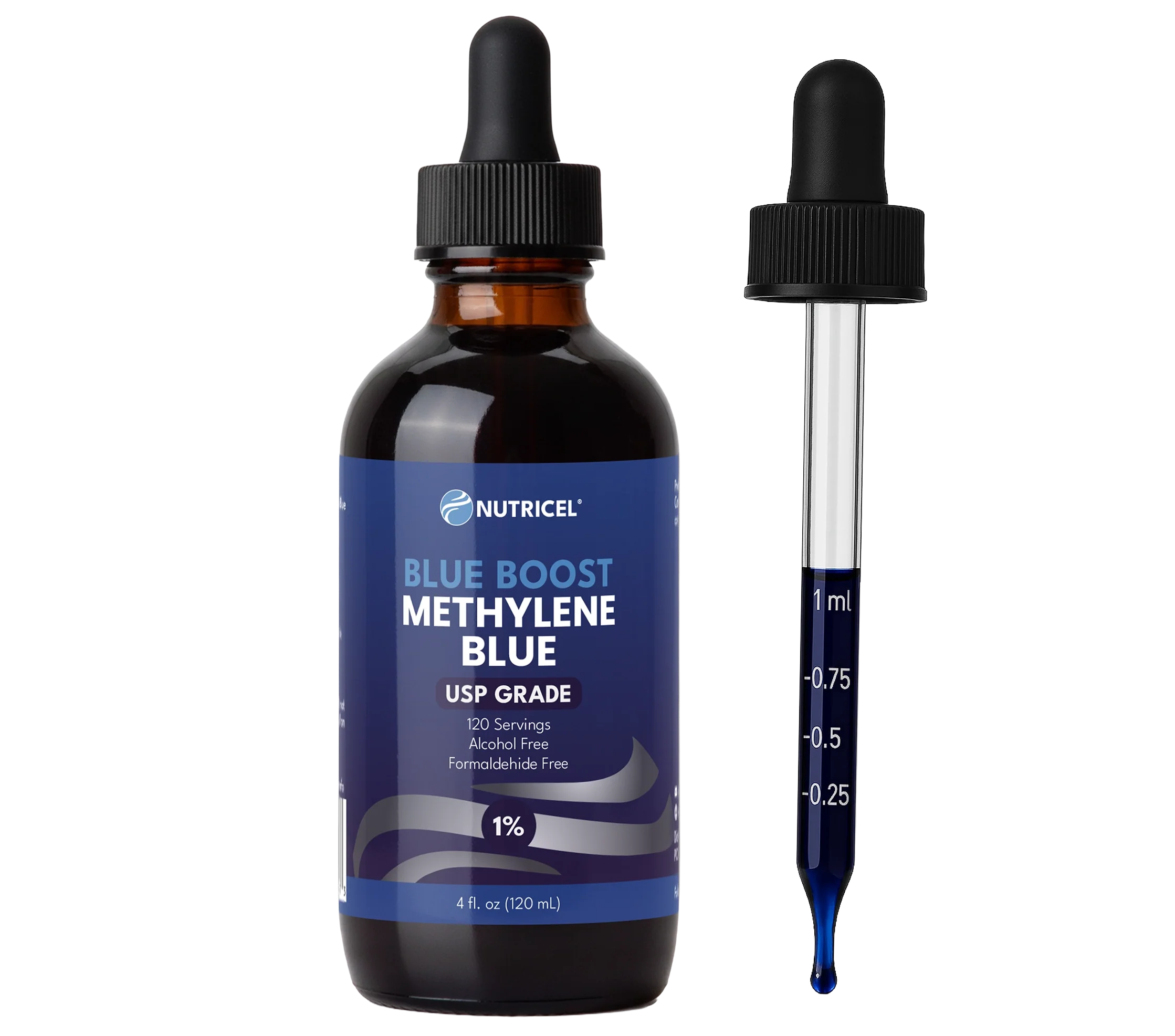
Blue Liquid delivers USP-grade methylene blue in a dropper bottle for liquid format.
The Bottom Line
Methylene blue, methylthioninium chloride, tetramethylthionine chloride, Basic Blue 9, C.I. 52015 and CAS 61-73-4 are all the same molecule. ProvayBlue and Proveblue are brand names for the IV drug. Methyl blue is a different dye entirely, and new methylene blue and azure B are related but separate compounds.
The name tells you what the compound is. It does not tell you the grade or who it was made for, so check the grade and the lab reports before you buy, and check your medications before you take it.
Frequently Asked Questions
References
Chemical Databases
Drug Labels and Regulators
Research
Further Reading
About the Author
Sam Carlson, Marketing Developer at Nutricel
Sam is a marketing developer at Nutricel who writes the Nutricel Insights series to help our customers understand methylene blue and make informed choices. The names, formulas and identifiers in this piece come from PubChem, ChEBI, the FDA-approved ProvayBlue label on DailyMed and the European Medicines Agency, and every study is linked in the references above. Sam is not a medical professional, and this article is education, not medical advice.
These statements have not been evaluated by the Food and Drug Administration. This product is not intended to diagnose, treat, cure, or prevent any disease. This article is for general education and is not medical advice. Consult your healthcare provider before beginning any supplement, especially if you take medications, are pregnant or nursing, or have a medical condition.
| |||||||||||||||||||||||||||||||||||||||