

Methylene Blue and Adderall: What the Drug Labels Actually Say
Written by: Sam Carlson
|
Published on October 23rd, 2026
|
Time to read 8 min
Quick Answer
Not without your prescriber signing off. The FDA-approved labels for Adderall and Vyvanse both say not to take the drug if you are on a monoamine oxidase inhibitor (MAOI), or stopped one in the last 14 days, and both name intravenous methylene blue as an example. A 2007 lab study found that methylene blue strongly blocks the MAO-A enzyme, which is how it ends up in that group. The labels were written with the hospital IV drug in mind, and no published study has looked at low-dose oral methylene blue taken with a stimulant, so nobody has shown a safe amount.
- Why it gets flagged. MAOIs slow down how the body breaks down amphetamine. The Vyvanse label says this can cause headaches and other signs of a hypertensive crisis, a dangerous spike in blood pressure.
- A second warning. The Adderall label also warns about serotonin syndrome when amphetamines are combined with drugs that affect serotonin, and MAOIs are on that list.
- Ritalin has the same rule. Its label lists MAOI use within 14 days as a contraindication, though it does not mention methylene blue by name.
- What to do. Bring the supplement bottle to your prescriber or pharmacist before combining anything. Do not stop or skip a prescription on your own to make room for a supplement.
Important: Nutricel's adverse medications list marks amphetamine (Adderall) as a major interaction with methylene blue, along with serotonergic medications such as SSRIs. Review it before use, whatever brand you buy.
| |||||||||||||||||||||||||||||||||||||||
Why Methylene Blue Gets Flagged With Stimulants
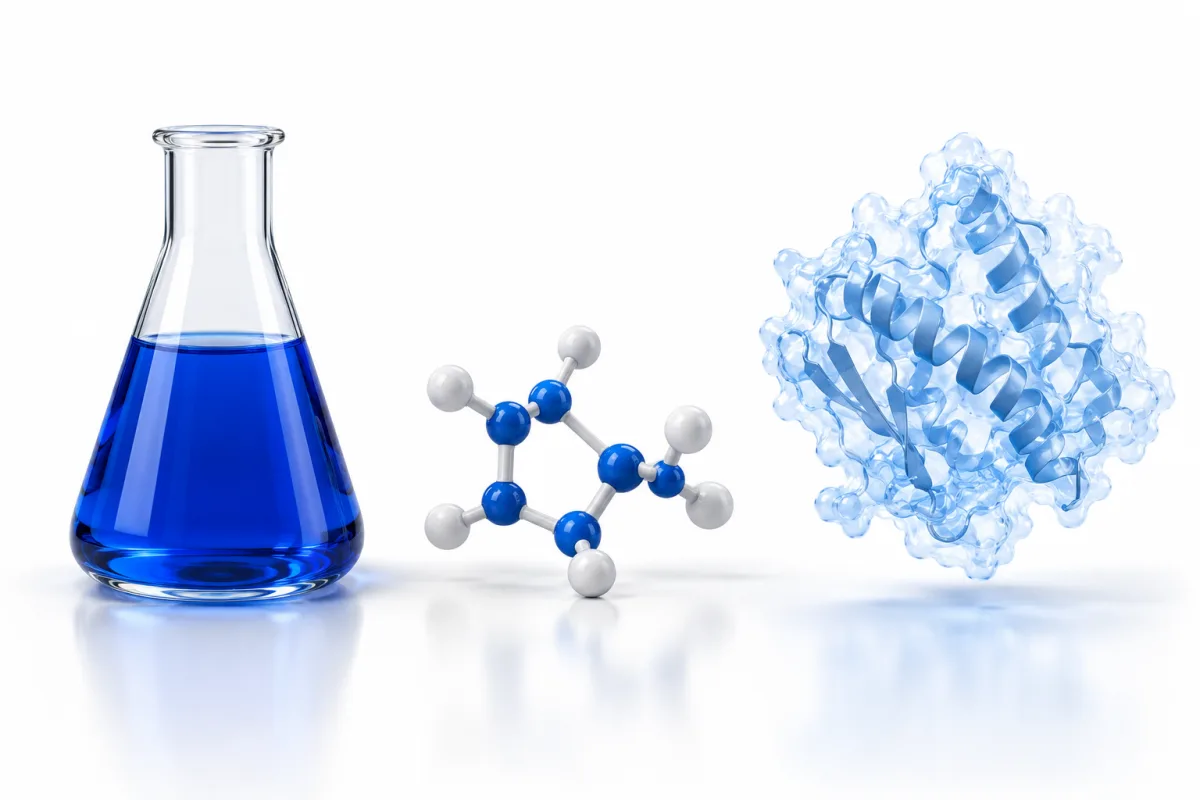
Methylene blue is sold as a supplement, but hospitals use it as an IV drug, mainly for a blood condition called methemoglobinemia. It also blocks an enzyme, and that is what matters here.
In a 2007 study in the British Journal of Pharmacology, researchers at the University of St Andrews tested methylene blue against purified human monoamine oxidase. They described it as a potent, reversible inhibitor of MAO-A, and found it blocked MAO-B too, but only at much higher concentrations (Ramsay et al., 2007).
Monoamine oxidase is one of the main ways your body clears dopamine, norepinephrine and serotonin. Amphetamine works by pushing out more of those same chemicals. The Vyvanse label explains the problem in its drug interaction table: MAOI antidepressants slow amphetamine metabolism, which increases amphetamine's effect on norepinephrine release.
Methylene blue is not a stimulant itself. It gets flagged because of that enzyme.
What the Adderall Label Says
The current Adderall prescribing information on DailyMed lists, under Contraindications, patients taking MAOIs or within 14 days of stopping them "(including MAOIs such as linezolid or intravenous methylene blue), because of an increased risk of hypertensive crisis."
The drug interaction section says the same thing more bluntly: do not give Adderall at the same time as an MAOI or within 14 days after stopping one. The label lists possible outcomes of a hypertensive crisis, including stroke, heart attack and aortic dissection.
There is a separate warning about serotonin syndrome. Per the label, it can happen when amphetamines are used with other drugs that affect serotonin, and MAOIs are named first. The Medication Guide, the version written for patients, tells people not to take Adderall if they are taking, or took within the past 14 days, an MAOI, "including the antibiotic linezolid or the intravenous medicine methylene blue."
| Medication | Active ingredient | Label names methylene blue? | MAOI rule on the label |
|---|---|---|---|
| Adderall | Mixed amphetamine salts | Yes (IV methylene blue) | Do not use during or within 14 days of an MAOI |
| Vyvanse | Lisdexamfetamine | Yes (IV methylene blue) | Do not use during or within 14 days of an MAOI |
| Ritalin | Methylphenidate | No | Do not use during or within 14 days of an MAOI |
Source: FDA-approved prescribing information for each drug, as posted on DailyMed in October 2026. Labels change, so check the current version.
Vyvanse, Ritalin and Other ADHD Medications
Vyvanse (lisdexamfetamine) turns into dextroamphetamine in the body, and its label carries the same contraindication word for word, naming linezolid and intravenous methylene blue. Its interaction table adds that MAOIs can cause headaches and other signs of hypertensive crisis when combined with amphetamines.
Ritalin (methylphenidate) works differently from amphetamine, but its label also lists MAOI use, or stopping one within 14 days, as a contraindication because of the risk of hypertensive crises. It does not mention methylene blue. Nutricel's adverse medications list includes methylphenidate and dexmethylphenidate (Focalin) along with amphetamine, dextroamphetamine and lisdexamfetamine, each linked to its Drugs.com interaction page.
If your ADHD medication is not covered here, the Contraindications and Drug Interactions sections of its label are the place to look. A pharmacist can pull them up in a minute.
Does a Small Oral Dose Change Anything?
The labels name intravenous methylene blue, the hospital form, which is dosed by body weight. A 2011 review in the Journal of Psychopharmacology lists IV doses of 1 to 7.5 mg per kg for its hospital uses (Gillman, 2011). For a 70 kg adult, 1 mg per kg is 70 mg in one dose. Oral supplements are usually a fraction of that. Blue Boost, for example, lists 12 mg of methylene blue per serving.
A smaller dose does not mean the warning goes away. Here is what the research shows about oral methylene blue:
- It gets absorbed. In 16 healthy adults given 500 mg by mouth, absolute bioavailability averaged 72.3 percent (Walter-Sack et al., 2009).
- It lands in different places. In a Swiss study, a 100 mg oral dose produced much lower blood levels than the same dose by IV, and in rats, oral dosing left more methylene blue in the gut wall and liver and less in the brain (Peter et al., 2000).
- The gut matters too. The St Andrews team noted that MAO-A inhibition has implications for how amines are absorbed from the gut when methylene blue is taken by mouth (Ramsay et al., 2007).
- The 2011 review concluded that all proposed uses of methylene blue appear to reach levels that block monoamine oxidase.
What has not been published is a study of low-dose oral methylene blue taken with Adderall, Vyvanse or Ritalin. Without one, there is no tested safe amount, and the IV label is the closest guidance anyone has. That is why we will not tell you a small dose is fine.
What to Bring to Your Prescriber

Your prescriber or pharmacist can only weigh this if they know exactly what you are taking. Before the appointment, gather:
- The bottle or a photo of the Supplement Facts panel. They need the milligrams of methylene blue per serving, not just the product name.
- How often you take it. Daily, a few times a week, or only occasionally.
- Everything else you take. The Adderall label lists St. John's Wort and tryptophan among the serotonergic products that raise serotonin syndrome risk, so supplements count.
- Your stimulant's exact name and dose. Brand, form and dose all matter, so give the exact one, for example Adderall XR 20 mg.
Good questions to ask: Does the 14-day MAOI rule on my label apply to a supplement? If I already took both, what should I watch for? For context, the label for the methylene blue injection (ProvayBlue) tells patients not to take serotonergic drugs within 72 hours after the last dose.
Do not stop, skip or cut back a prescription on your own to fit a supplement in. That decision belongs to the person who prescribed it.
Warning Signs the Labels List
If you have already taken methylene blue and a stimulant together, these are the symptoms the Adderall label describes for serotonin syndrome:
- Mental status changes such as agitation, hallucinations, delirium or coma
- Fast heart rate, blood pressure swings, dizziness, sweating, flushing or high body temperature
- Tremor, muscle stiffness or twitching, overactive reflexes, poor coordination, or seizures
- Nausea, vomiting or diarrhea
For MAOI combinations, the Vyvanse label points to headaches and other signs of a hypertensive crisis. The Adderall label tells patients to contact their healthcare provider or go to the emergency room if signs of serotonin syndrome appear. If symptoms are severe, call 911.
Who It Is Not For
Do not take methylene blue, from any brand, without your prescriber reviewing it if you are using:
- Adderall, Vyvanse, Ritalin, Focalin or another prescription stimulant
- SSRIs, SNRIs, MAOIs or any other serotonergic medication
- If you are pregnant, nursing, or have G6PD deficiency, speak with your healthcare provider first
Review the full adverse medications list and consult your healthcare provider before starting methylene blue in any form.
Which Nutricel Product Is Right for You
If you take Adderall, Vyvanse, Ritalin or another prescription stimulant, the honest answer is none of them until your prescriber has looked at it. That goes for every methylene blue product, ours included.
Our capsules' third-party lab reports are on our lab tests page, so you can show your prescriber the measured amount, not just the label.
If you are not on a stimulant and you and your provider decide methylene blue fits, this is how our products differ:
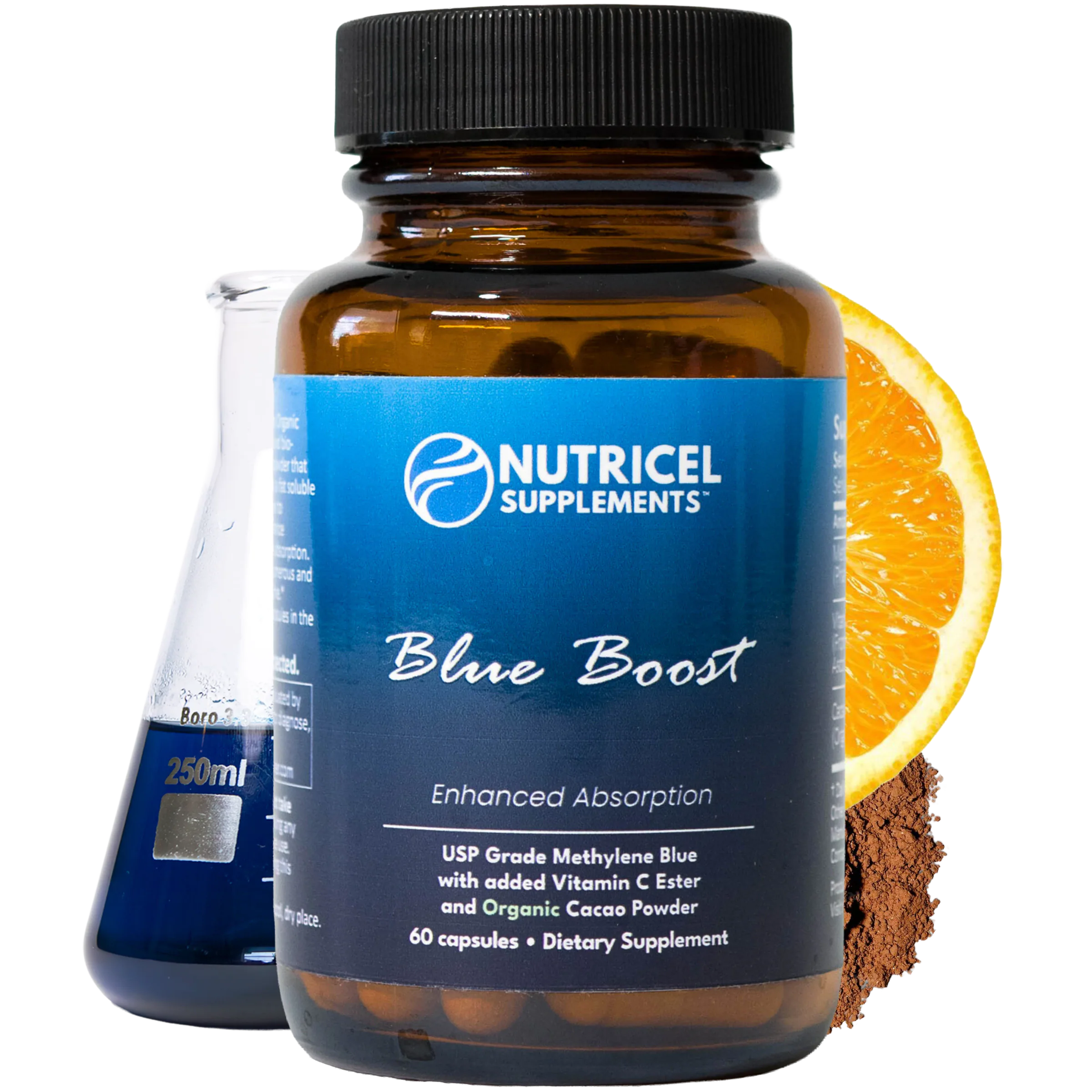
Blue Boost is Nutricel's core formula, a methylene blue capsule built around absorption and cellular energy.
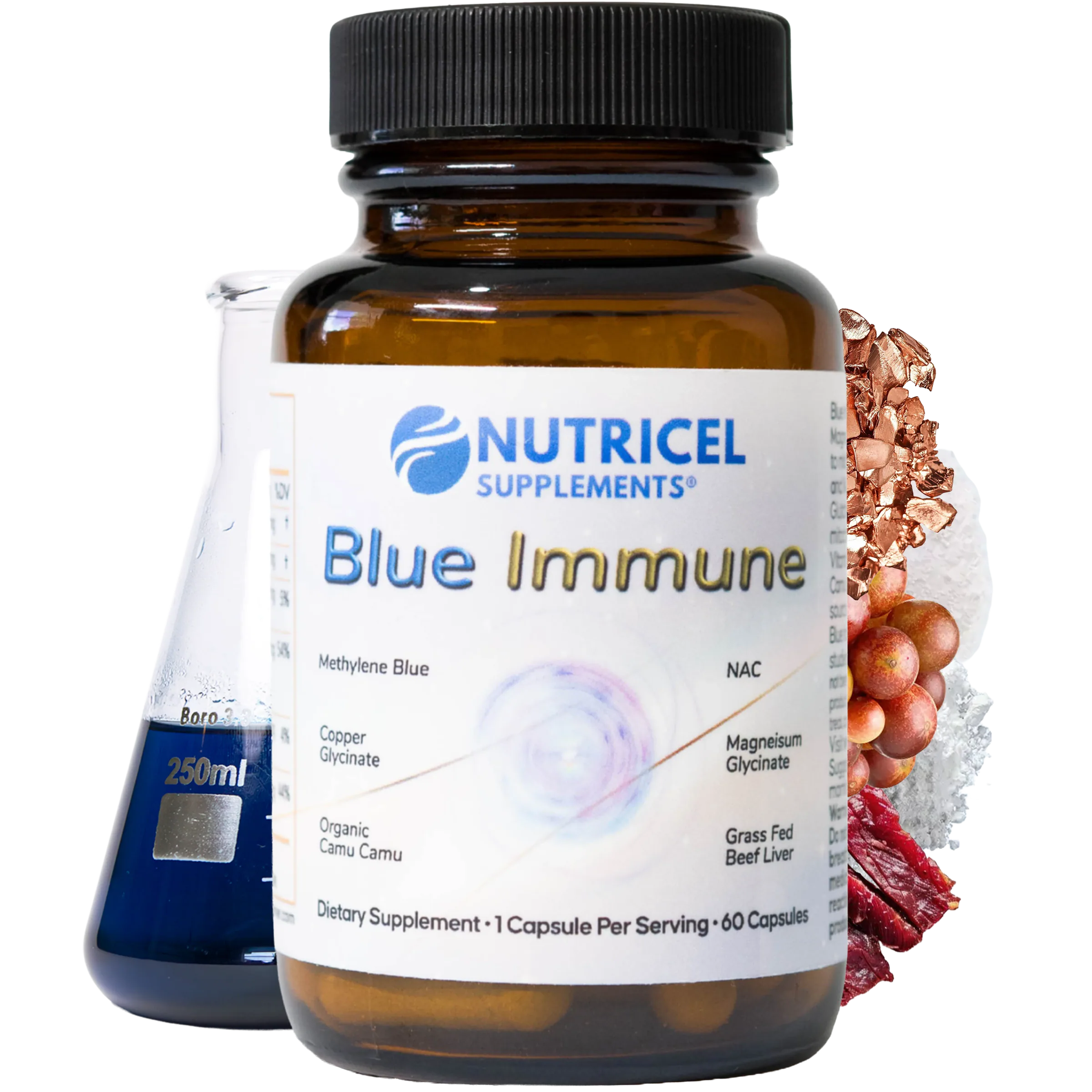
Blue Immune combines methylene blue with copper, NAC, grass-fed beef liver, and vitamins A, C, and E.
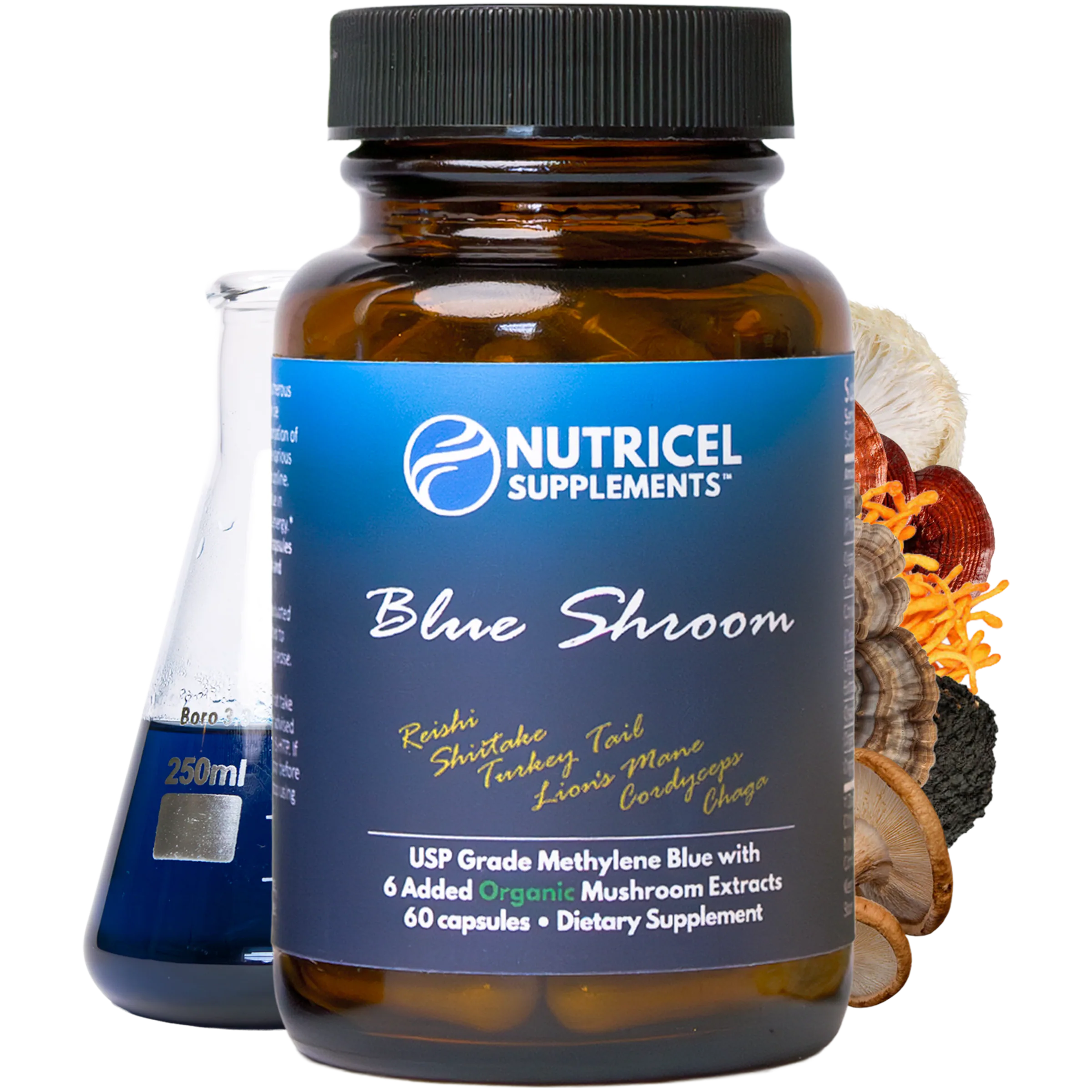
Blue Shroom pairs methylene blue with six organic mushroom extracts including lion's mane, reishi, cordyceps, chaga, shiitake, and turkey tail.
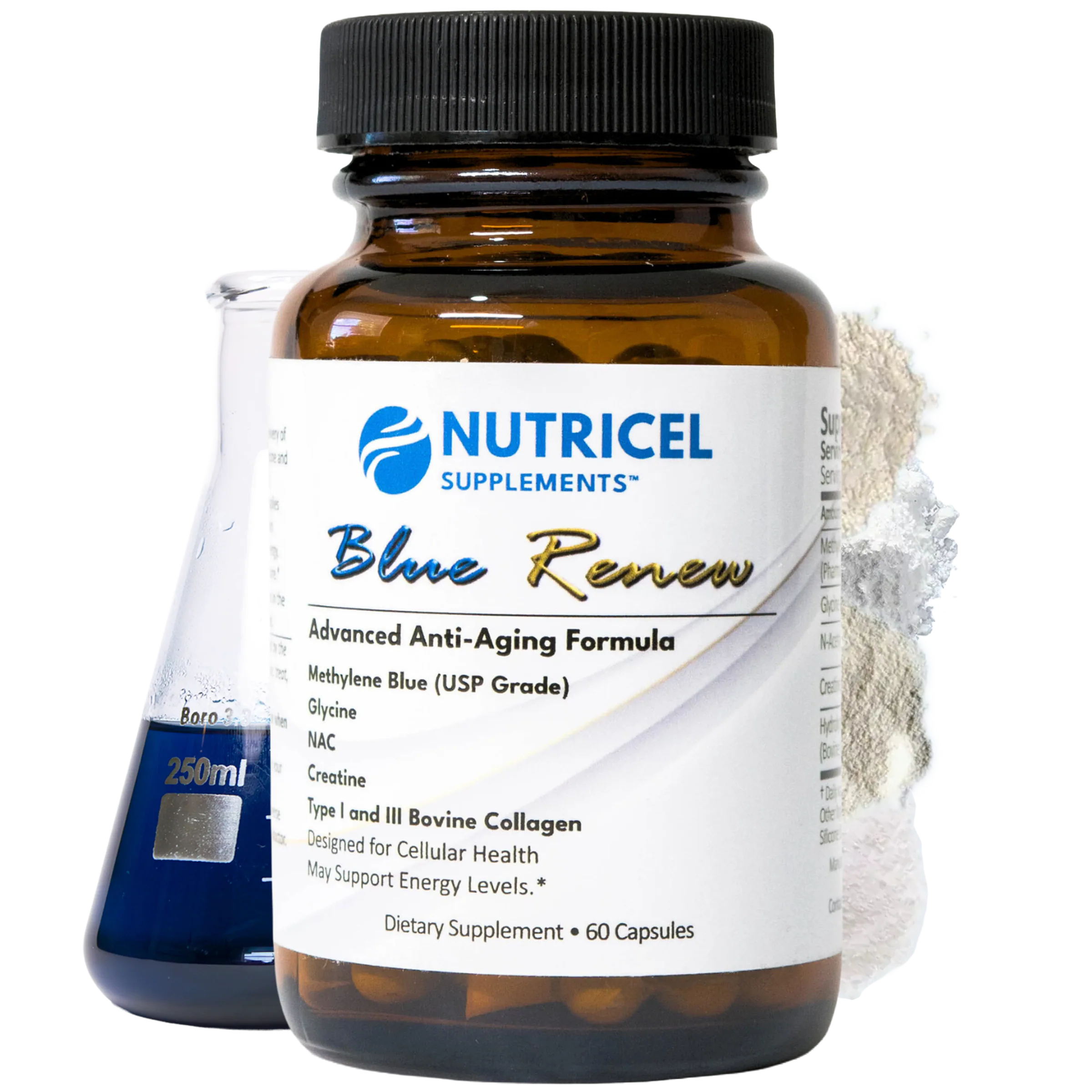
Blue Renew is built around GlyNAC (glycine and N-acetyl cysteine) alongside methylene blue.
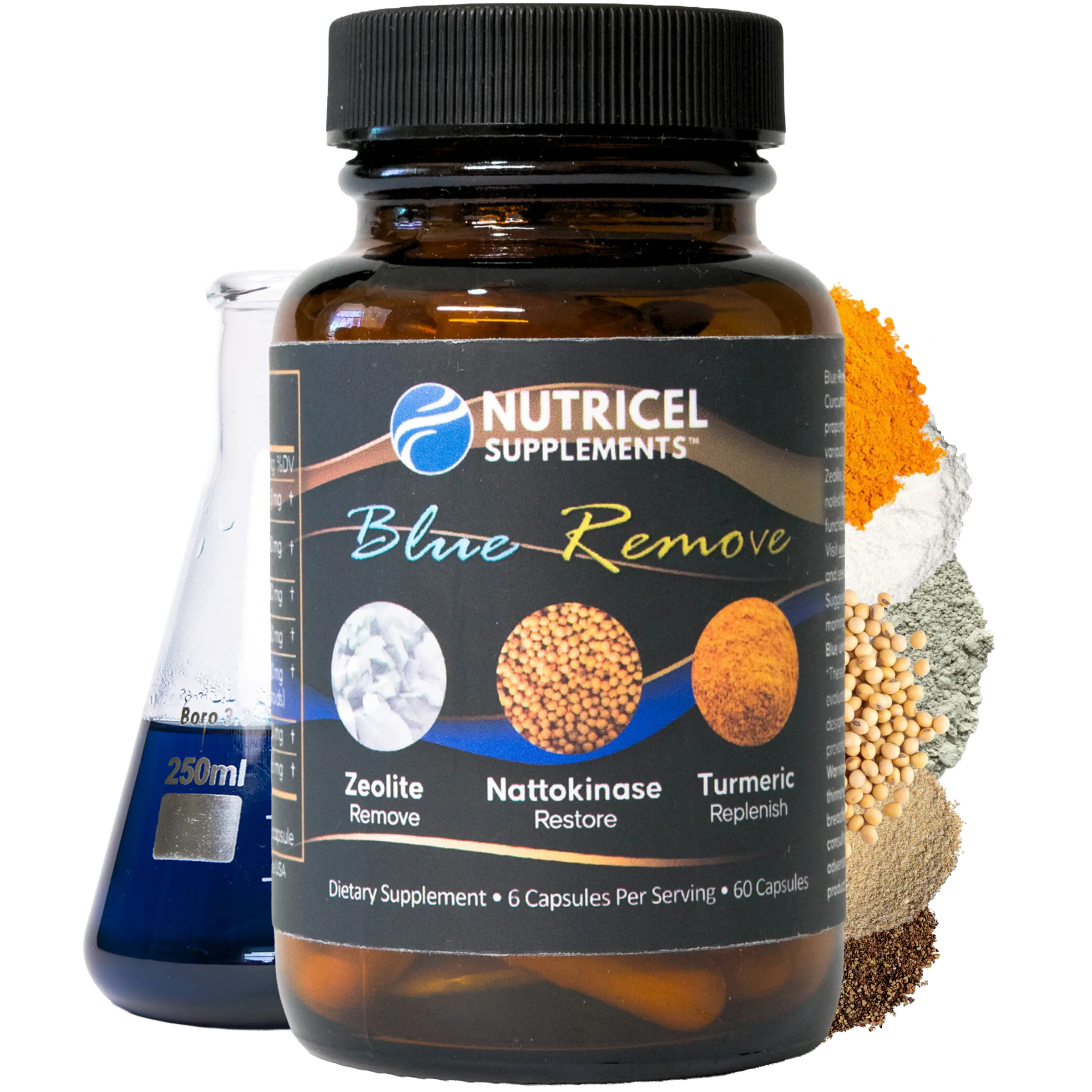
Blue Remove combines zeolite, curcumin, and nattokinase with methylene blue.
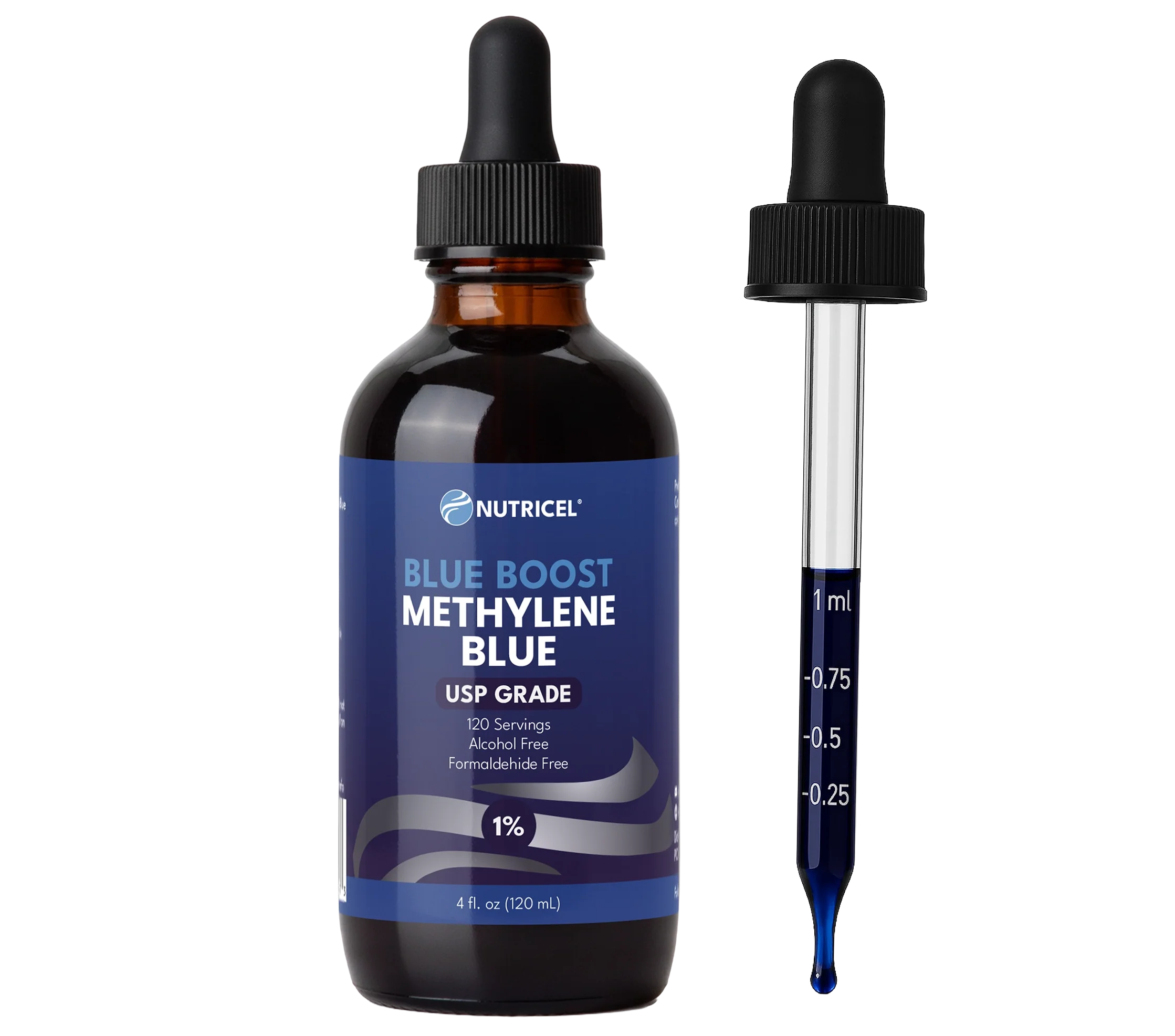
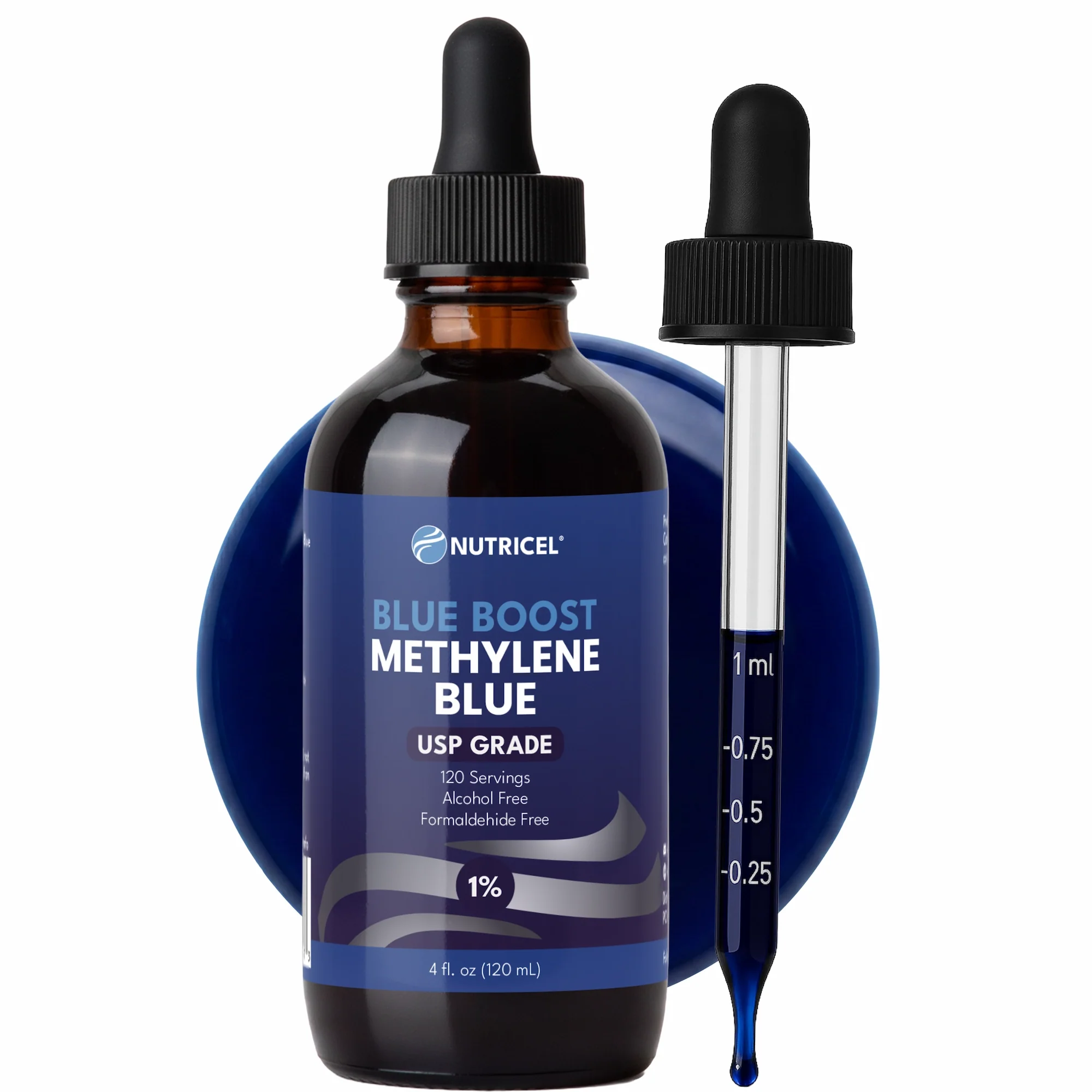
Blue Liquid delivers USP-grade methylene blue in a dropper bottle for liquid format.
The Bottom Line
The Adderall and Vyvanse labels name methylene blue in their MAOI warning, and the Ritalin label has the same 14-day MAOI rule. Those warnings were written for the IV drug. Nobody has studied the smaller oral amounts in supplements alongside stimulants, so no safe dose has been shown.
That gap is a reason to ask first. Take the bottle to your prescriber or pharmacist and let them make the call.
Frequently Asked Questions
References
Drug Labels (FDA, via DailyMed)
Research
Further Reading
About the Author
Sam Carlson, Marketing Developer at Nutricel
Sam is a marketing developer at Nutricel who writes the Nutricel Insights series to help our customers understand methylene blue and make informed choices. Every label statement in this piece comes from the FDA-approved prescribing information posted on DailyMed, and every study is linked in the references above. Sam is not a medical professional, and this article is education, not medical advice. Always speak with your prescriber or pharmacist before combining a supplement with a prescription.
These statements have not been evaluated by the Food and Drug Administration. This product is not intended to diagnose, treat, cure, or prevent any disease. This article is for general education and is not medical advice. Consult your healthcare provider before beginning any supplement, especially if you take medications, are pregnant or nursing, or have a medical condition.
| |||||||||||||||||||||||||||||||||||||||