

How to Take Methylene Blue Drops: In Water, Under the Tongue, and Without Staining
Quick Answer
The simplest way to take methylene blue drops is to measure them with the dropper, stir them into a full glass of water, and drink the whole glass, then rinse your mouth with plain water. That is the form published absorption research used, and diluting the dye is also the easiest way to keep it off your teeth and tongue.
- Water is the standard. A 2009 study in the European Journal of Clinical Pharmacology measured about 72 percent absolute bioavailability for methylene blue given as an aqueous oral formulation. Cleveland Clinic's monograph for prescription methylene blue tablets says to take each dose with a full glass of water.
- Under the tongue is unproven. We could not find a published study on sublingual methylene blue absorption, and holding a drop in your mouth gives it the most time to stain.
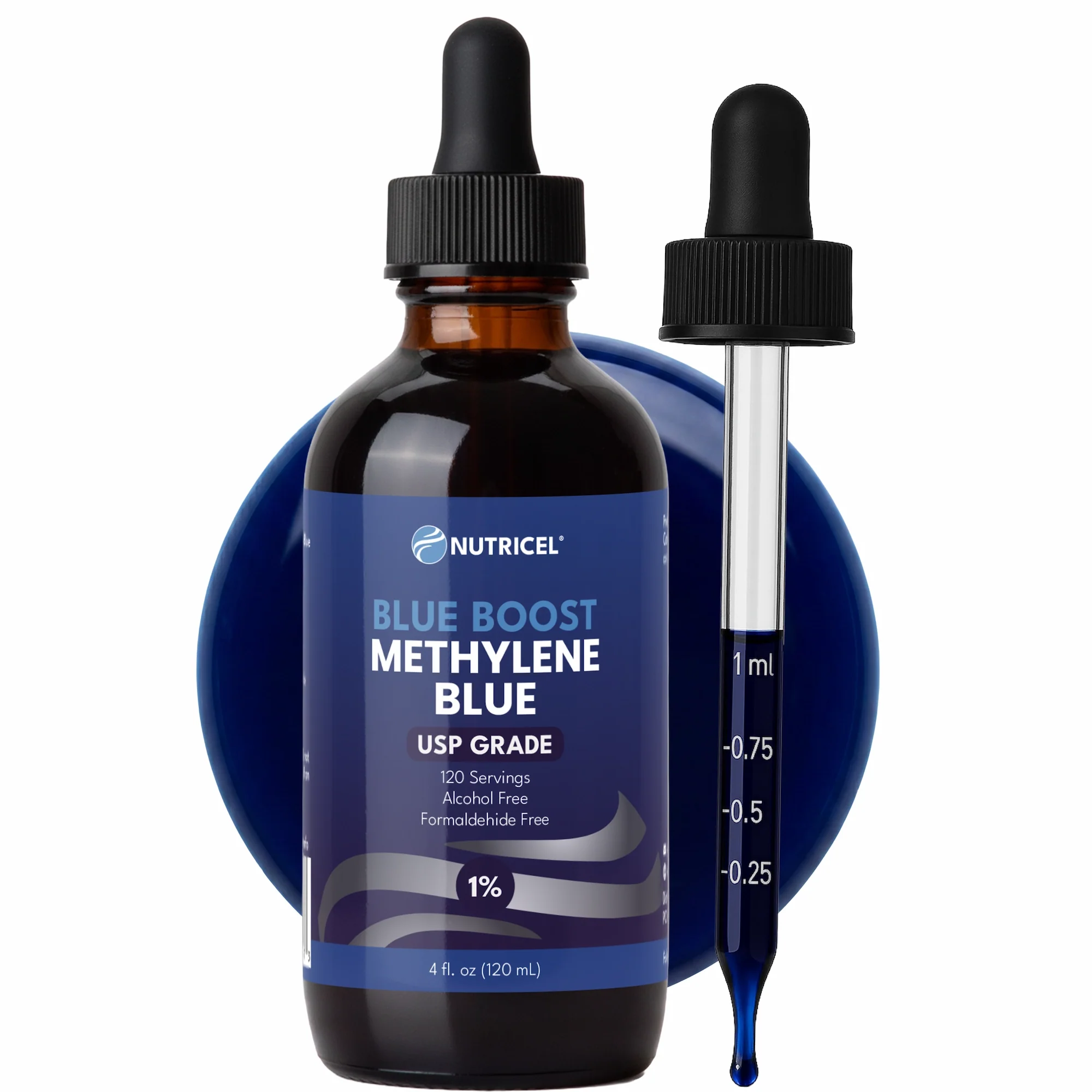
- Read the dropper, not just the drops. At 1% (10 mg per mL), one drop is about 0.5 mg and 1 mL (about 20 drops) is about 10 mg. There is no FDA-established serving for oral methylene blue, so these are conversions, not a recommendation.
- Stains are a measuring habit problem. Measure over the sink, keep the bottle off light fabric, use a straw, and wipe drips right away.
Important: The FDA label for methylene blue injection (Provayblue) carries a boxed warning about serotonin syndrome with serotonergic drugs, including SSRIs and MAOIs, and lists G6PD deficiency as a contraindication. Review the full adverse medications list before use.
Article Outline
| |||||||||||||||||||||||||||||||||||||||
How to Take Methylene Blue Drops in Water

Mixing drops into water is the most common way to take a methylene blue liquid, and it is the one with research behind it. In a 2009 study of 16 healthy adults, researchers gave methylene blue as an aqueous oral formulation and measured an absolute bioavailability of about 72 percent, which they described as high (Walter-Sack et al., European Journal of Clinical Pharmacology, 2009). An earlier study found lower blood levels after oral dosing than after IV dosing and linked the difference to how methylene blue distributes into tissues like the liver and intestinal wall (Peter et al., European Journal of Clinical Pharmacology, 2000). Neither study tested drops under the tongue, in juice, or in coffee.
On the practical side, Cleveland Clinic's monograph for prescription methylene blue tablets says to take the medicine by mouth with a full glass of water. Those directions were written for a prescription tablet, not a supplement, but a full glass makes sense for drops too: it dilutes the dye before it reaches your teeth and tongue.
How much water? No source sets a specific amount for drops. A full glass (about 8 ounces) is the easy default because it matches the tablet directions above and gives the color plenty of room to spread out. Do not be surprised when even a few drops turn the whole glass a deep blue. That is just how strong the dye is.
Tip: Add the drops to the water, not the water to the drops. Filling the glass first means the dropper never has to come near the rim, and a quick stir with a spoon mixes it evenly.
How to Use the Methylene Blue Dropper
The dropper is where most of the accuracy (and most of the mess) happens. Blue Liquid is a 1% solution, which is 10 mg of methylene blue per mL. The product page lists a 0.05 mL graduated dropper and about 0.5 mg per drop, based on 20 drops per mL. The table below is unit conversion only.
| Dropper Reading | Approx. Drops | Approx. Methylene Blue (1%) |
|---|---|---|
| 0.05 mL | 1 drop | ~0.5 mg |
| 0.25 mL | 5 drops | ~2.5 mg |
| 0.5 mL | 10 drops | ~5 mg |
| 1 mL | 20 drops | ~10 mg |
Drop volume varies with dropper angle, squeeze pressure, and how full the dropper is. The mL marks are more consistent than counting drops.
A few habits make the reading more reliable:
- Check the strength first. 1% is common, but 0.5%, 2%, and 5% liquids are sold too, and the same number of drops from those is a very different amount.
- Hold the dropper straight up and down at eye level when you read the line, the same way every time.
- Squeeze slowly and let each drop fall on its own. A fast squeeze makes bigger drops and more splashes.
- Put the dropper straight back in the bottle instead of setting it on the counter, where it will leave a ring.
How many drops to take is a separate question, and there is no FDA-established serving for oral methylene blue. For the published numbers and the drop-to-milligram math in detail, see our methylene blue drops guide and the dosage chart by body weight.
Can You Take Methylene Blue Drops Under the Tongue?
You will see people online hold methylene blue drops under the tongue, usually on the idea that it absorbs faster. We searched PubMed and could not find a published study on sublingual methylene blue absorption in people. The research on oral methylene blue that we found looked at swallowing it, not holding it in the mouth, so there is no evidence that under the tongue works better than drinking it in water.
What is clear is the staining. The Provayblue label on DailyMed lists blue staining of the urine, the skin, and the mucous membranes among reported effects, and holding a concentrated drop under the tongue gives the dye the most time against the inside of your mouth. That is how you end up with the blue tongue from our TikTok blue tongue post.
Our take: If you want to try it anyway, that is your call and your provider's. For most people, swallowing the drops in a glass of water is simpler, has the research behind it, and leaves a lot less blue behind.
Mixing Methylene Blue Drops With Juice, Coffee, or Tea
Water is the default, but plenty of people want something with more flavor. We did not find any study that tested methylene blue mixed into juice, coffee, or tea, so we cannot tell you whether those drinks change how it works. What we can say is practical:
- Taste is a real reason people switch. RxList lists an altered sense of taste among the common side effects of methylene blue, and a flavored drink can make that less noticeable.
- Finish the whole drink. Whatever you mix it into, use an amount you will drink in one sitting so you get the full measured amount, not half a mug that goes cold on your desk.
- Dark drinks hide the color, not the dye. Coffee or dark juice makes the blue less obvious, but it still stains a white mug, a straw, or your teeth the same way.
- Check what you are mixing. If the drink contains other supplements or ingredients, look them up on the full adverse medications list first. Some herbal products like St. John's Wort appear there.
Best Time to Take Methylene Blue Drops, and With or Without Food
Timing questions come up a lot, and we already have full posts on both. The short version: Cleveland Clinic's monograph for prescription methylene blue tablets says to take them after meals, and the Blue Liquid product page notes that taking it in the evening may affect sleep. That is why many people take drops with or after breakfast.
For the research on fasted versus fed, see Can You Take Methylene Blue on an Empty Stomach?. For morning versus afternoon, see our best time to take methylene blue guide. And because drops sit in a bottle between uses, keep it capped and away from heat and light, as covered in how to store methylene blue.
How to Take Methylene Blue Drops Without Staining

Methylene blue is a strong dye. A drop on a white towel can survive the wash, and a drip on a porous countertop can leave a ring. None of the tips below are medical advice. They are just habits that keep the blue where you want it.
Teeth and tongue
- Dilute it. A full glass of water spreads the dye out before it touches your mouth. Straight drops on the tongue stain the most.
- Use a straw. Drinking through a straw keeps most of the liquid off your front teeth and the tip of your tongue.
- Rinse right after. Swish and spit with plain water once you finish the glass.
- Brush later, gently. A tongue or lip tint usually fades on its own within a few days as you eat, drink, and brush.
Sink, counter, and clothing
- Measure over the sink, not over a wood counter, carpet, or a white bathroom mat.
- Keep a paper towel ready and wipe any drip right away, before it dries.
- Rinse the sink with plenty of water after you measure, so a stray drop does not sit in the basin.
- Dress after, not before. If you take drops in the morning, do it before you put on a light-colored shirt.
- Treat fabric fast. Rinse a fresh spot under cold running water from the back of the fabric. Skip the dryer until the spot is gone, because heat can make a stain harder to lift.
If staining is a dealbreaker, a capsule avoids it completely. Blue Boost holds the methylene blue inside the shell until you swallow it, so it never touches your teeth or tongue. Our capsules vs liquid comparison covers the tradeoffs.
The Best Way to Take Methylene Blue Drops, Step by Step

Put together, a clean routine looks like this:
- Check the label strength (Blue Liquid is 1%, 10 mg per mL) and check your medications against the adverse medications list.
- Fill a glass with about 8 ounces of water and set it in the sink.
- Draw the liquid into the dropper and read the mL line at eye level.
- Release the drops into the water, then put the dropper straight back in the bottle and cap it.
- Stir, then drink the whole glass, through a straw if you want to limit staining.
- Rinse your mouth with plain water and rinse the glass and sink.
- Write down the amount and time, so you measure the same way each day.
Your urine may turn blue or green afterward. The Provayblue label lists blue staining of the urine among reported effects, and our blue urine post explains why.
Who Methylene Blue Is Not For
Read this part first, whether you use drops or capsules. The FDA label for methylene blue injection (Provayblue) carries a boxed warning that it may cause serious or fatal serotonin syndrome when used with serotonergic drugs and opioids, and the FDA issued a Drug Safety Communication in 2011 about serious reactions in people taking serotonergic psychiatric medications.
Do not take methylene blue if you are currently using:
- SSRIs, SNRIs, or MAOIs (the FDA label warns of serotonin syndrome)
- Tramadol, linezolid, bupropion, trazodone, or other serotonergic medications
- Opioids, which the Provayblue boxed warning also names
- St. John's Wort, 5-HTP, or SAMe
The Provayblue label also lists glucose-6-phosphate dehydrogenase (G6PD) deficiency as a contraindication because of the risk of hemolytic anemia, so people with G6PD deficiency should not take it. It is also not for pregnant or nursing women or for children.
Review the full adverse medications list and our drug interactions guide, and consult your healthcare provider before starting methylene blue in any form.
Which Nutricel Product Is Right for You
Every Nutricel product uses USP-grade methylene blue and is manufactured in an GMP certified facility in the United States. Lab reports for our capsule formulas are published on our certs page. The difference between the products is the format and what is built in alongside the methylene blue.
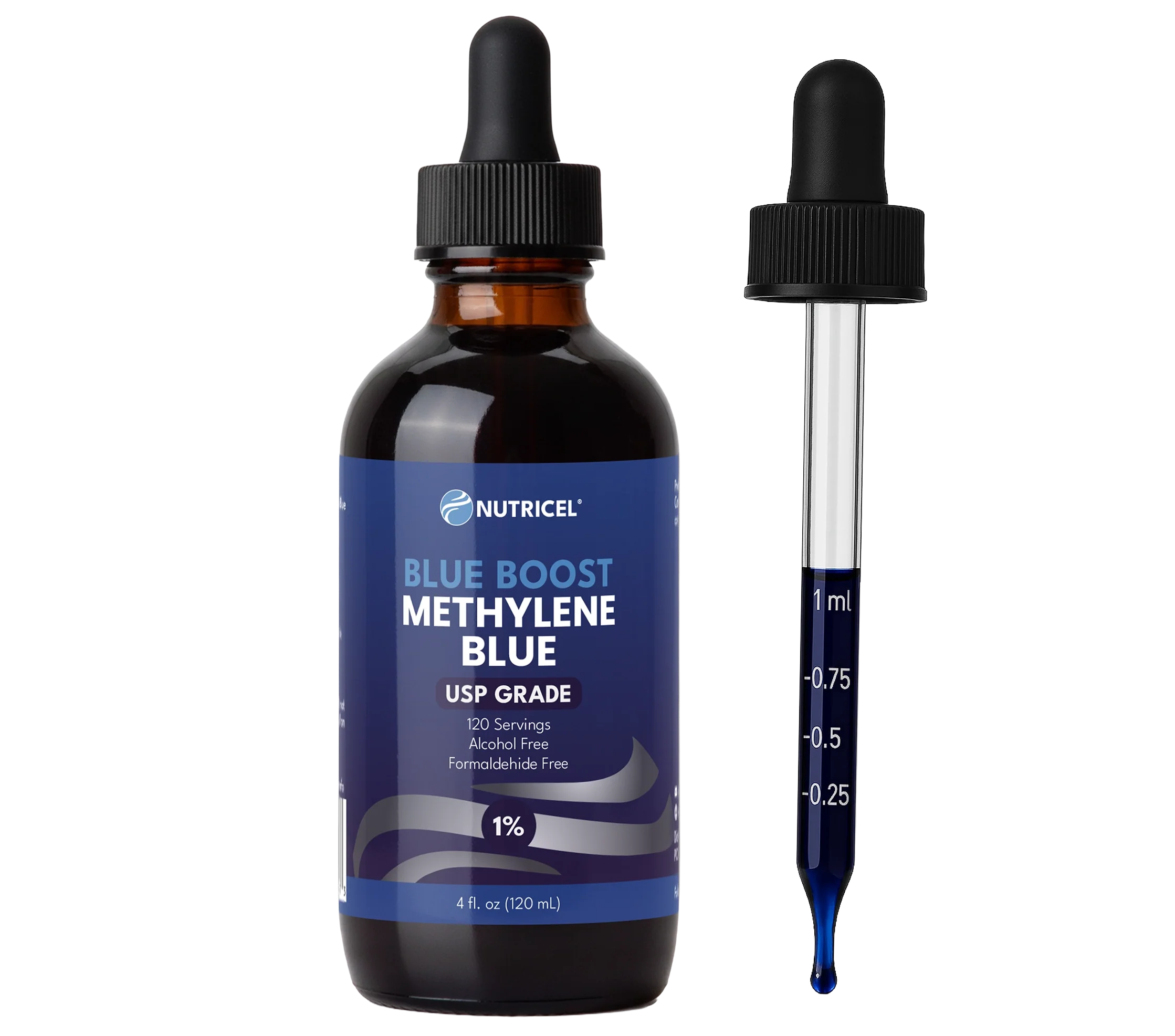
Blue Liquid is a 1% solution (10 mg per mL) in purified water, in a 120 mL amber plastic bottle with a graduated dropper, for people who want to measure their own amount.
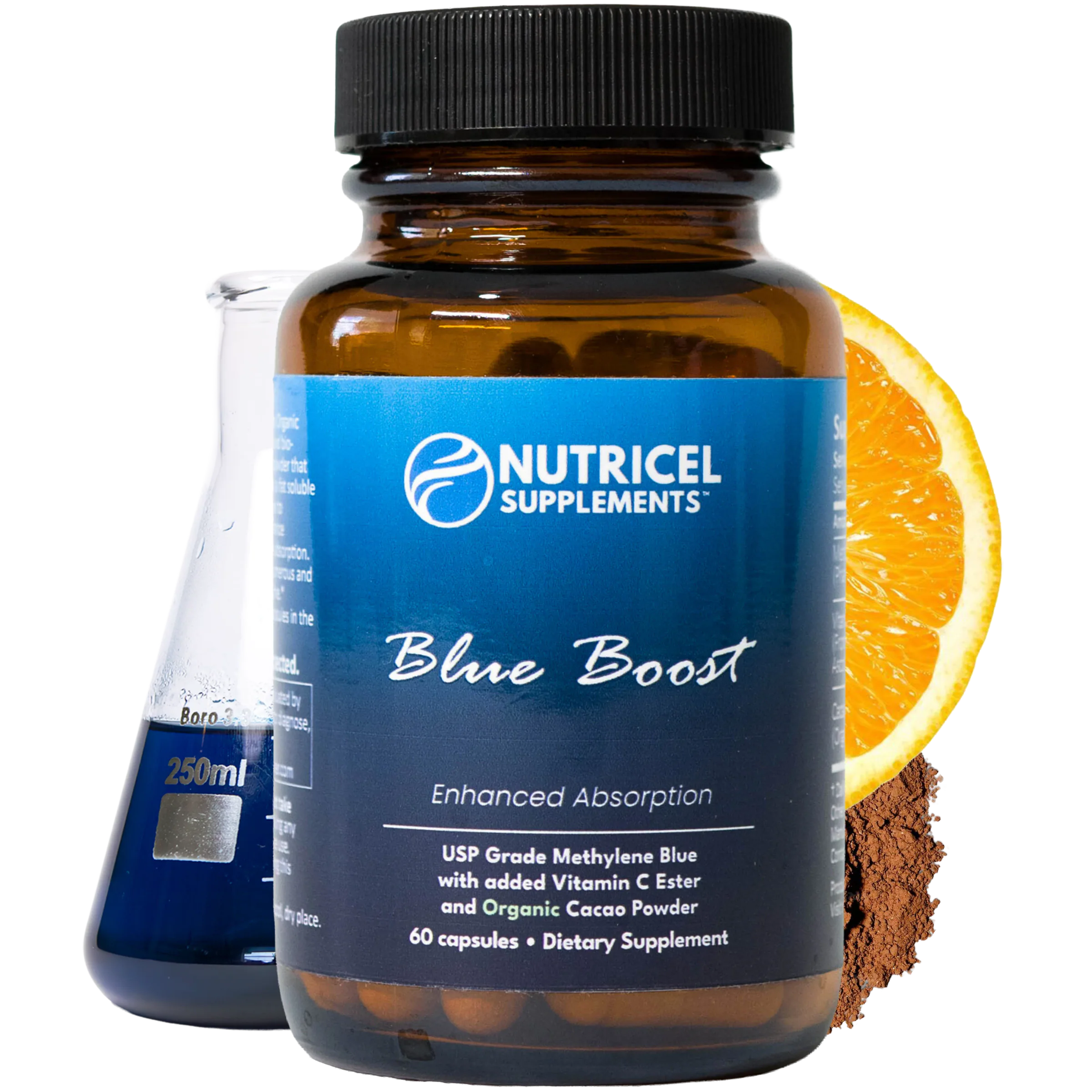
Blue Boost is Nutricel's core formula: 12 mg of methylene blue per capsule with vitamin C ester and organic cacao. No measuring and no staining.
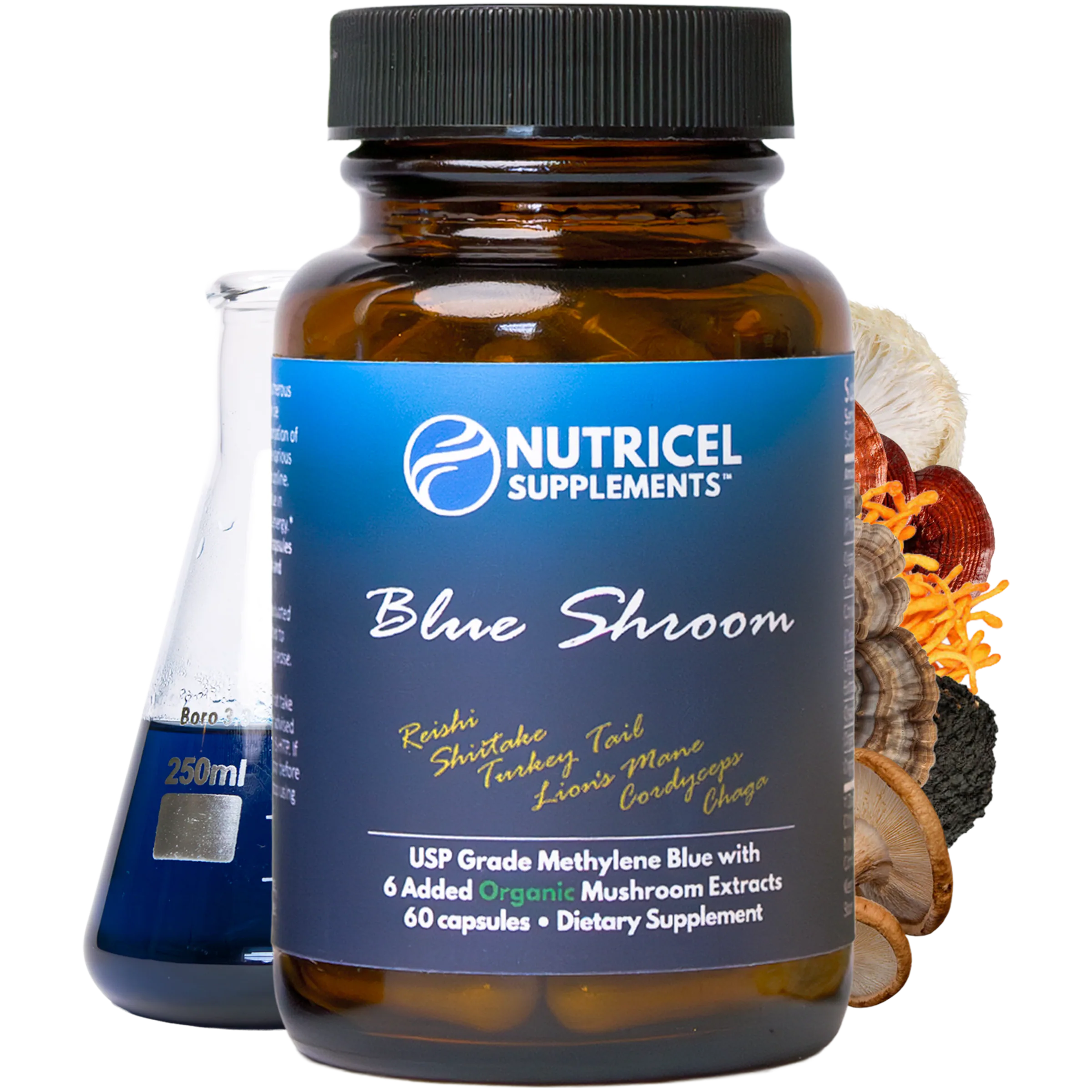
Blue Shroom pairs methylene blue with six organic mushroom extracts including lion's mane, reishi, cordyceps, chaga, shiitake, and turkey tail.
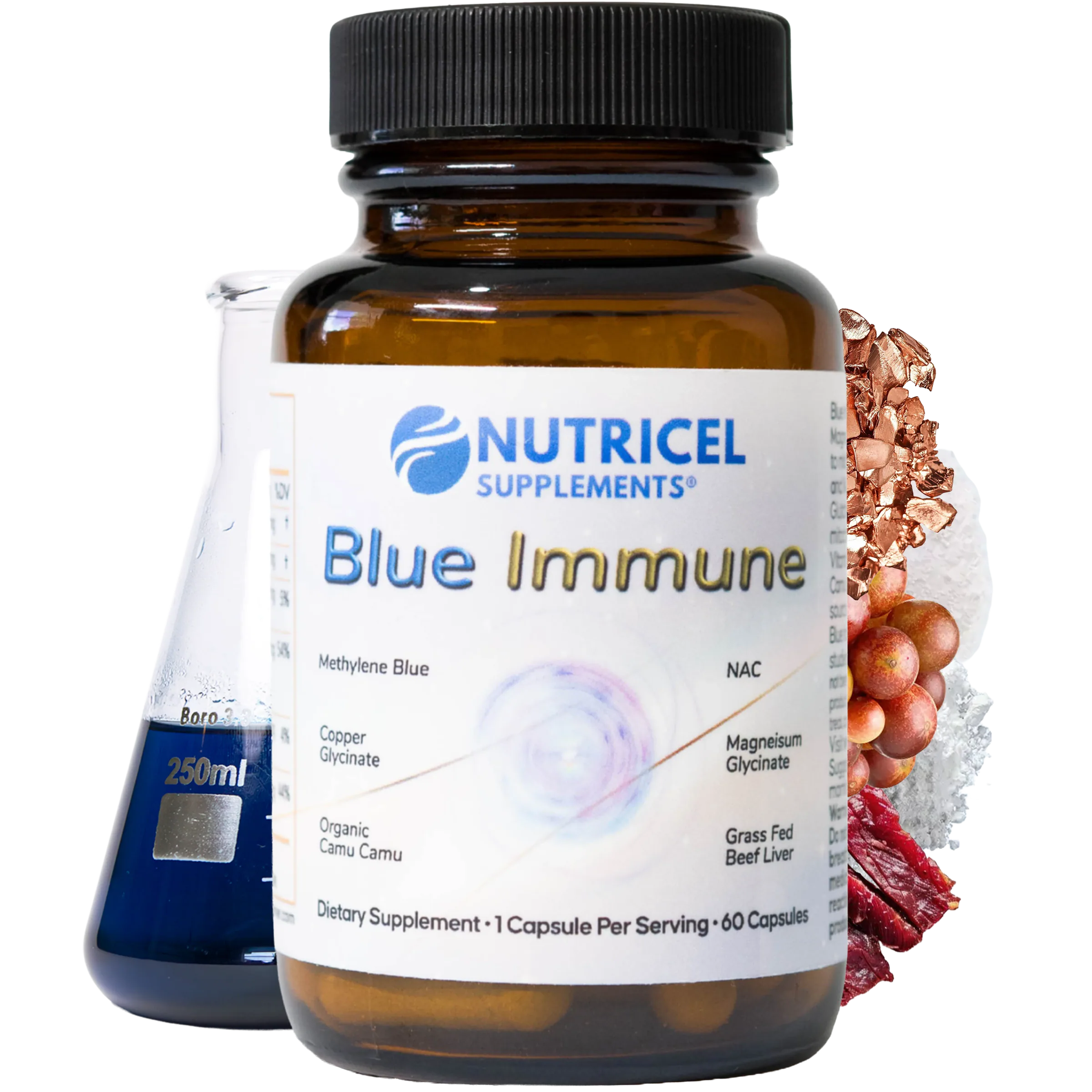
Blue Immune combines methylene blue with copper, magnesium, NAC, grass-fed beef liver, and camu camu for cellular and immune function support.
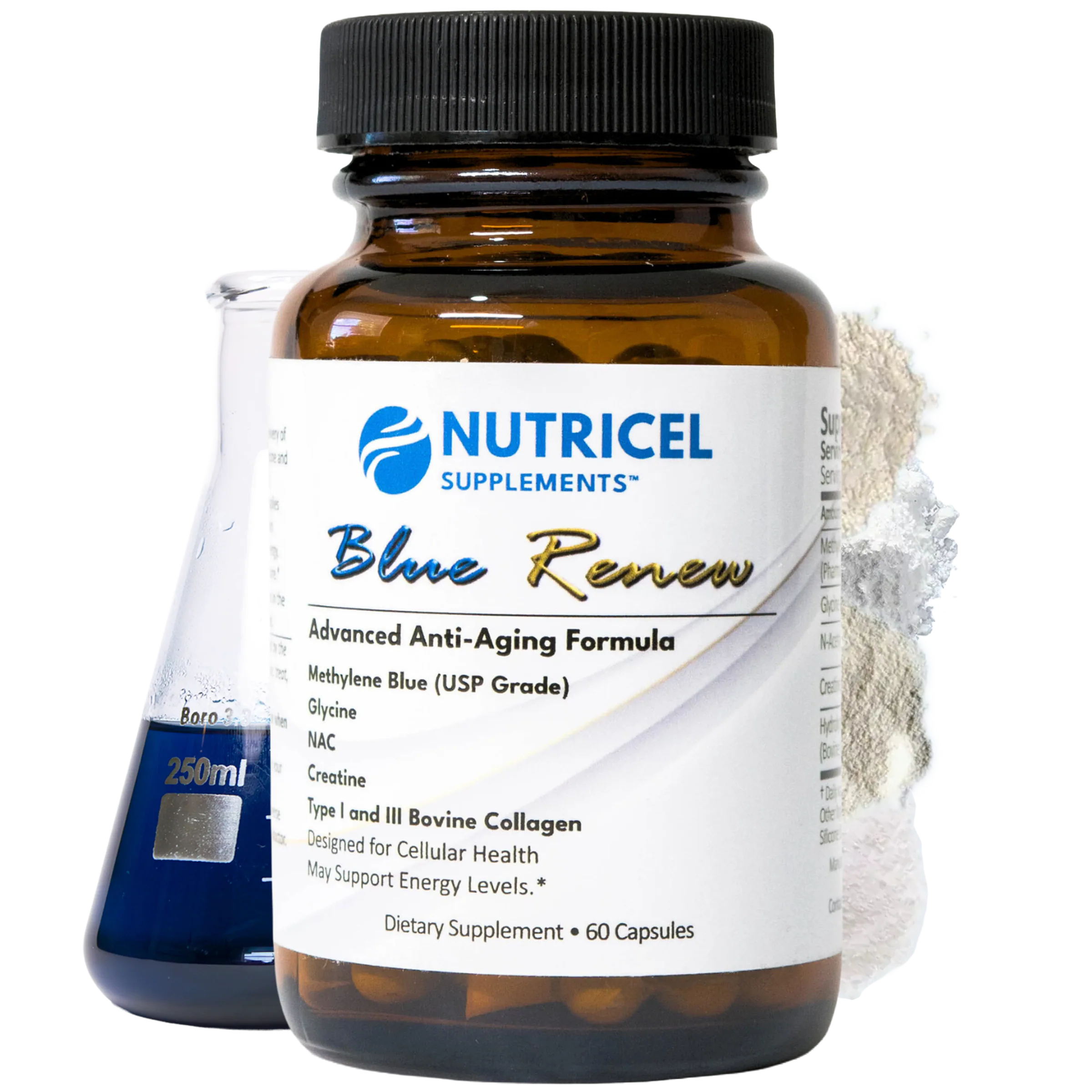
Blue Renew is built around GlyNAC (glycine and N-acetyl cysteine) with collagen and creatine, for healthy aging and brain support.
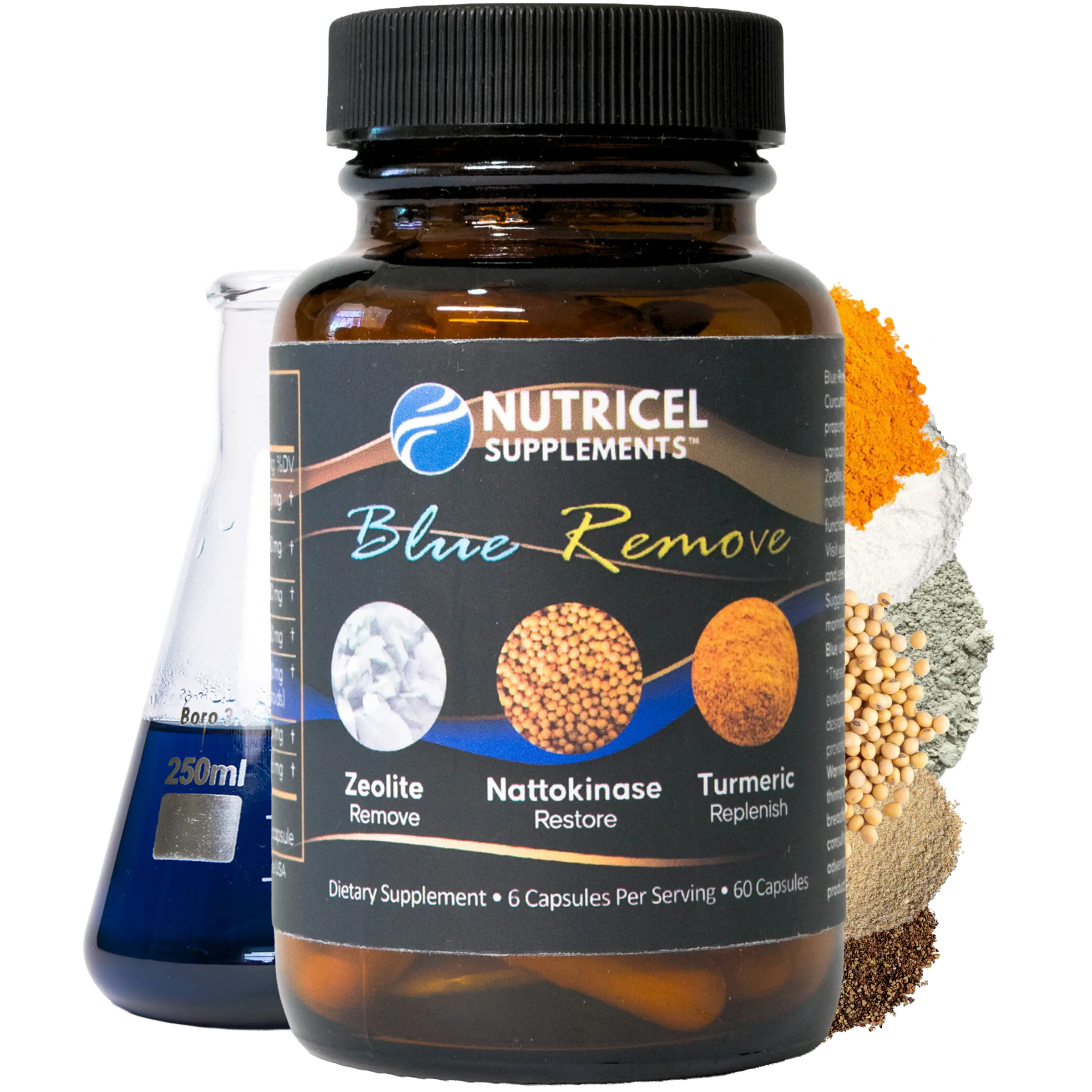
Blue Remove combines zeolite, curcumin, and nattokinase with methylene blue for detox and inflammatory response support.
The Bottom Line
Taking methylene blue drops well comes down to a few habits more than any trick. Measure with the dropper, mix it into a full glass of water, drink it all, and rinse. That covers absorption, accuracy, and most of the staining at once.
- Water first. Swallowing it in water is the form published research has measured.
- Under the tongue is unproven and stains more.
- Read the mL line. At 1%, 1 mL is about 10 mg and one drop is about 0.5 mg.
- Measure over the sink and wipe drips right away.
- Check your medications against the adverse medications list before you start.
If you would rather skip the dropper entirely, Blue Boost capsules give you a fixed 12 mg with nothing to measure or wipe up.
Frequently Asked Questions
References
- Walter-Sack I, Rengelshausen J, Oberwittler H, et al. High absolute bioavailability of methylene blue given as an aqueous oral formulation. European Journal of Clinical Pharmacology, 2009. PMID 18810398.
- Peter C, Hongwan D, Kupfer A, Lauterburg BH. Pharmacokinetics and organ distribution of intravenous and oral methylene blue. European Journal of Clinical Pharmacology, 2000. PMID 10952480.
- U.S. National Library of Medicine, DailyMed. PROVAYBLUE (methylene blue) injection prescribing information. Boxed warning on serotonin syndrome, G6PD contraindication, blue staining of urine, skin, and mucous membranes.
- U.S. Food and Drug Administration. Drug Safety Communication: methylene blue and serotonergic psychiatric medications. July 2011 (archived).
- Cleveland Clinic. Methylene Blue tablets. Patient monograph for prescription tablets: take by mouth with a full glass of water, after meals.
- RxList. Methylene Blue: Side Effects, Uses, Dosage, Interactions, Warnings. Lists altered sense of taste and blue or green urine among common side effects.
- Nutricel. Blue Liquid, Methylene Blue 1% Solution product page. Concentration, dropper graduation, bottle, and label notes, viewed November 3, 2026.
About the Author
Sam Carlson, Marketing Developer at Nutricel
Sam is a marketing developer at Nutricel who writes the Nutricel Insights series to help our customers understand methylene blue and make informed choices, translating the published research into plain language. Sam is not a medical professional, and these articles are intended as education rather than medical advice. Every figure in this piece is tied to the sources listed in the references, and the staining tips are general household habits, not medical guidance. Always speak with your healthcare provider before starting any supplement.
These statements have not been evaluated by the Food and Drug Administration. This product is not intended to diagnose, treat, cure, or prevent any disease. This article is for general education and is not medical advice. Consult your healthcare provider before beginning any supplement, especially if you take medications, are pregnant or nursing, or have a medical condition.
| |||||||||||||||||||||||||||||||||||||||