

Nano MitoBlue Methylene Blue: What Our Lab Test Found
Written by: Sam Carlson
|
Published on November 2nd, 2026
|
Time to read 8 min
Quick Answer
Nano MitoBlue is a methylene blue tablet made by Nano Colloidals, labeled 10 mg per tablet. In Nutricel's independent testing it passed the water test with a deep blue color, but the lab assay found 17.93 mg of methylene blue per tablet against the 10 mg on the label, which is 79.3 percent more than claimed. Current verdict in Nutricel's lab-test database: Avoid.
- Passed the water test, failed the lab test. The color was deep blue, so methylene blue is present, but the amount is nearly double the label.
- A real company, not a ghost seller. Nano Colloidals runs an operating website with policies. Our database notes no physical address, phone number, or named leadership.
- Dose accuracy is the issue. 17.93 mg is not a hospital-level dose, but a label that is off by almost 80 percent makes careful dosing impossible.
Disclosure: Nutricel sells methylene blue and runs this database, so we are not a neutral party. The result applies to the sample we tested. If Nano Colloidals has lot-level lab reports showing a different result, send them to us and we will review them and update the entry.
Important: Methylene blue has documented interactions with serotonergic medications including SSRIs and MAOIs. Review the full adverse medications list before use, regardless of brand.
| |||||||||||||||||||||||||||||||||||||||
Who Is Nano MitoBlue?
Nano MitoBlue is the methylene blue line from Nano Colloidals, a company whose own site, nanocolloidals.com, mainly sells colloidal liquid mineral supplements. Its methylene blue product is MITOBLUE Methylene Blue USP Grade 10mg Tablets, sold on the brand's site and on Amazon (capsule-style listing ASIN B0DY1Y54QN, 60 count).
Here is what the brand's own product page says, as of November 2, 2026: 10 mg per tablet, 99.9+ percent purity, third-party tested, made in North America, and a suggested start of 1 tablet daily, increasing to 2 as needed. The listed ingredients are USP-grade methylene blue, microcrystalline cellulose, maltodextrin, and magnesium stearate. One small thing to know when comparing listings: the Amazon listing we tested is titled as capsules, while the brand's own site sells the product as tablets.
This is not an anonymous seller. The site has an About page, an FAQ, and posted shipping, refund, subscription, terms, and privacy policies. Nutricel's database rates its brand credibility as Good, with transparency gaps: no physical business address, no phone number, and no named founder or leadership team. The Amazon seller itself is Not Rated in our database.
What the Testing Found
Nutricel's database uses two independent checks. A water test dissolves the product and checks for the deep blue color genuine methylene blue produces. A lab test sends the product to a third-party lab to measure the actual milligram content against the label. Nano MitoBlue was run through both.

| Check | Result | Detail |
|---|---|---|
| Water test | Pass | Deep blue color, as expected from methylene blue |
| Lab test | Fail | 17.93 mg detected per tablet vs 10.00 mg claimed (+79.3%) |
| Verdict | Avoid | Label does not match the measured dose |
In plain terms, one tablet delivered about 18 mg when the bottle says 10 mg. The brand's own directions allow 1 to 2 tablets a day. At 17.93 mg each, 2 tablets would be about 36 mg in a day, while the label implies 20 mg.
Limits of this result: This describes the sample Nutricel tested. A different lot could measure differently, higher or lower. Only lot-level third-party lab reports from the brand can show how consistent the product is from batch to batch.
For comparison, every Nutricel product in the database has passed both the water test and an independent lab assay, and Blue Boost measured 12.83 mg against its 12 mg claim, about 7 percent over. Nutricel commissioned that testing itself, so check it against the third-party lab reports on our lab reports page.
Why More Than the Label Still Matters
Be clear about scale first. StatPearls, the clinical reference on the NCBI Bookshelf, describes methylene blue as generally well tolerated below 2 mg/kg and says adverse effects become markedly more likely above 7 mg/kg. Those figures come from medical use, not supplements. For a 75 kg adult, 17.93 mg works out to about 0.24 mg/kg, roughly one eighth of the lower figure. This is not an emergency-level finding.
The problem is that the label is how people dose. A few ways an inaccurate label causes real trouble:
- Titration. The brand itself suggests starting with 1 tablet and adjusting, and says a tablet can be split for a lower dose. A person halving a tablet to get 5 mg would actually be taking closer to 9 mg.
- Sensitivity. People who feel jittery, flushed, or nauseated at higher doses are the ones most likely to be counting milligrams carefully.
- Medications. The FDA's Drug Safety Communication on methylene blue describes the risk of serotonin syndrome with serotonergic drugs. Nutricel's adverse medications list says not to combine them, and a label that understates the dose gives no extra margin.
- Consistency. You cannot compare notes across weeks if the number on the bottle is not the number in the tablet.
That is why a failed lab result in either direction earns an Avoid in our database, even when the color looks right.
What the Brand Publishes
The product page says the tablets are third-party tested. When Nutricel looked on November 2, 2026, we did not find a lab report linked from the product page. That does not mean none exists. It means a shopper checking the page would not be able to confirm the claim.
A lab report worth trusting names the lab, the method (for methylene blue, typically HPLC), the batch or lot number, and the measured milligrams per unit. A claim of 99.9+ percent purity is a purity statement. It does not tell you the dose per tablet, which is the number the lab found to be off here.
Where Nano MitoBlue Sits in Our Database
Nutricel's database scores each product on brand credibility, Amazon seller credibility, and test results, then assigns a verdict of Recommended, Not Tested, or Avoid.
| Field | Entry |
|---|---|
| Verdict | Avoid |
| Brand credibility | Good (real company, some transparency gaps) |
| Amazon seller credibility | Not Rated |
| Test score | Fail (water pass, lab fail) |
| Claimed vs detected | 10.00 mg vs 17.93 mg per unit (60 count) |
| FDA label compliance | Issues found: label dose does not match lab result |
This entry's Avoid verdict rests on the lab result. It does not rely on fake-review or listing-violation reports, which is a different footing from some other brands in the database.
A Deep Blue Color Is Not Enough
Nano MitoBlue is a good reminder of why the water test is only half the check. A deep blue color tells you methylene blue is in the product. It does not tell you how much. Here is a short routine that catches both problems:

- Read the dose per unit. Find the milligrams of methylene blue per tablet, capsule, or serving, not just the bottle total.
- Look for a lab report with a measured value. It should name the lab, the method, the lot number, and the detected milligrams, not only a purity percentage.
- Run a water test. Dissolve one unit in a glass of water. Genuine methylene blue gives a deep blue. A pale or greenish result is a warning sign.
- Search the database by brand. Check the verdict and the claimed versus detected amounts before you buy or reorder.
If a brand passes the water test but cannot show you a measured dose, you are trusting the label alone.
What We Could Not Verify
A few things are outside what one lab result can tell you:
- Whether other lots measure the same. We tested one sample.
- Whether Nano Colloidals holds lot-level lab reports that are not published on the product page.
- Whether the Amazon product and the tablets sold on the brand's own site are the same formulation, given the capsule versus tablet wording difference.
If Nano Colloidals sends us third-party lab reports from independent labs, we will review them and update the database entry.
How to Check Any Brand Before You Buy
Nutricel's full lab and water test database covers more than 160 methylene blue products and lets you search by brand name, filter by product type or seller country, and see the current verdict, along with water test result, lab test result, and claimed dose, for each one. Before you buy or reorder any methylene blue product, including Nano MitoBlue or any brand mentioned here, search for it by name and check its current verdict, since testing and listing status can change over time.

Who It Is Not For
Do not take methylene blue, from any brand, if you are currently using:
- SSRIs or MAOIs (risk of serotonin syndrome)
- Any serotonergic medication
Review the full adverse medications list and consult your healthcare provider before starting methylene blue in any form.
Which Nutricel Product Is Right for You
Every Nutricel product uses USP-grade methylene blue, is manufactured in an FDA-registered, GMP certified facility in the United States, and is tested by independent third-party labs. The difference between them is what they are built to support alongside the methylene blue itself.
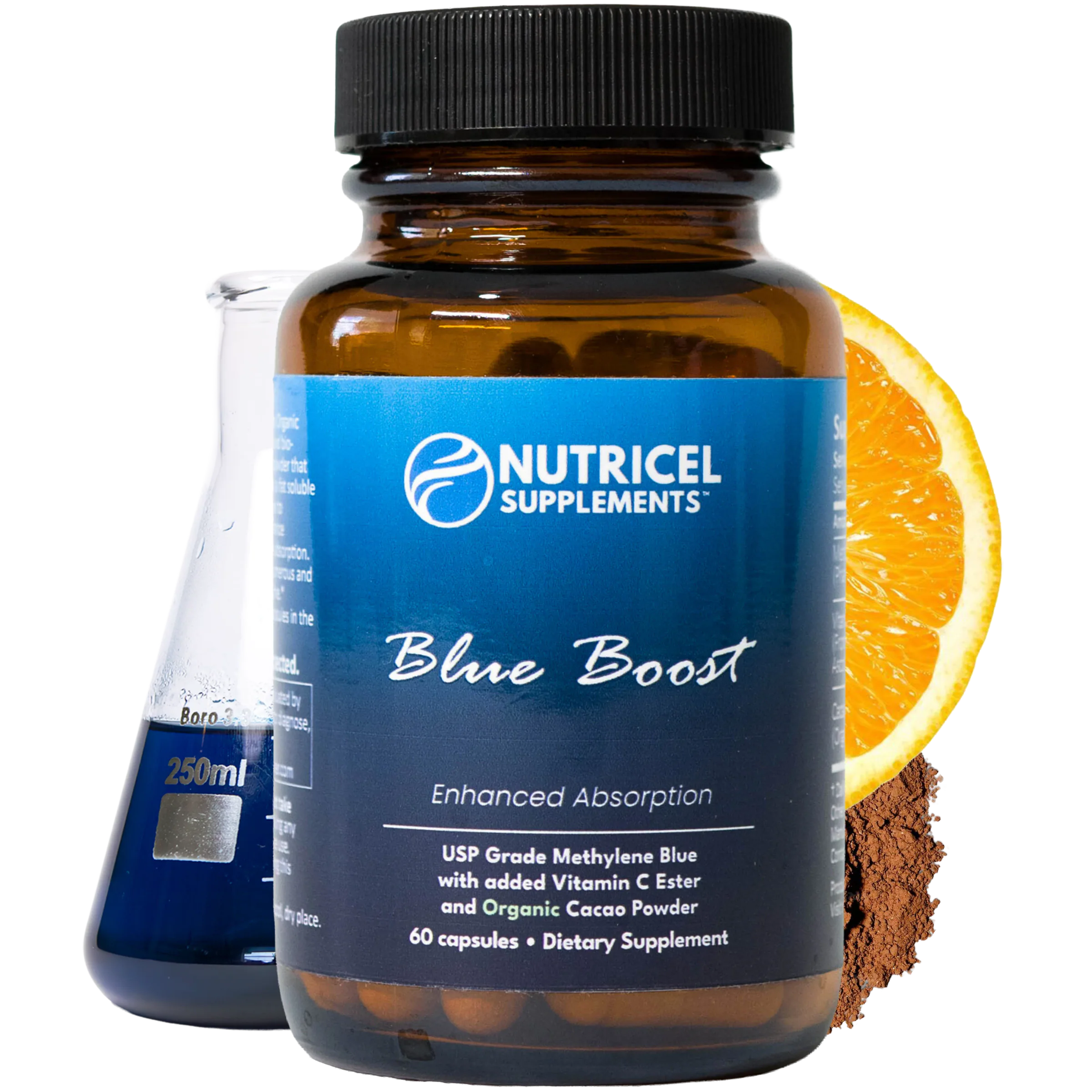
Blue Boost is Nutricel's core formula. If your focus is methylene blue itself and you want a clean, research-backed capsule built around absorption and cellular energy, this is it.
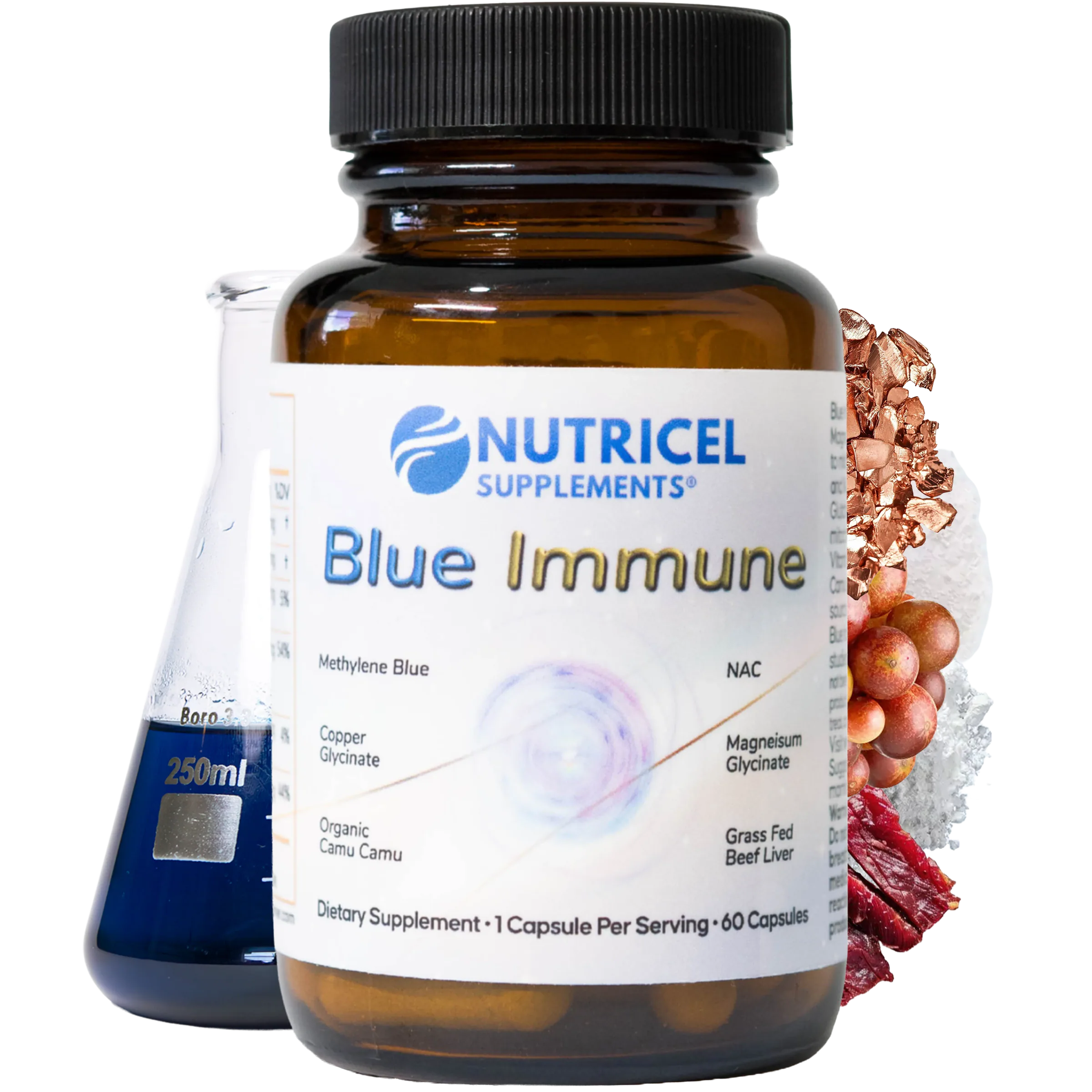
Blue Immune combines methylene blue with copper, NAC, grass-fed beef liver, and vitamins A, C, and E for cellular and immune function support.
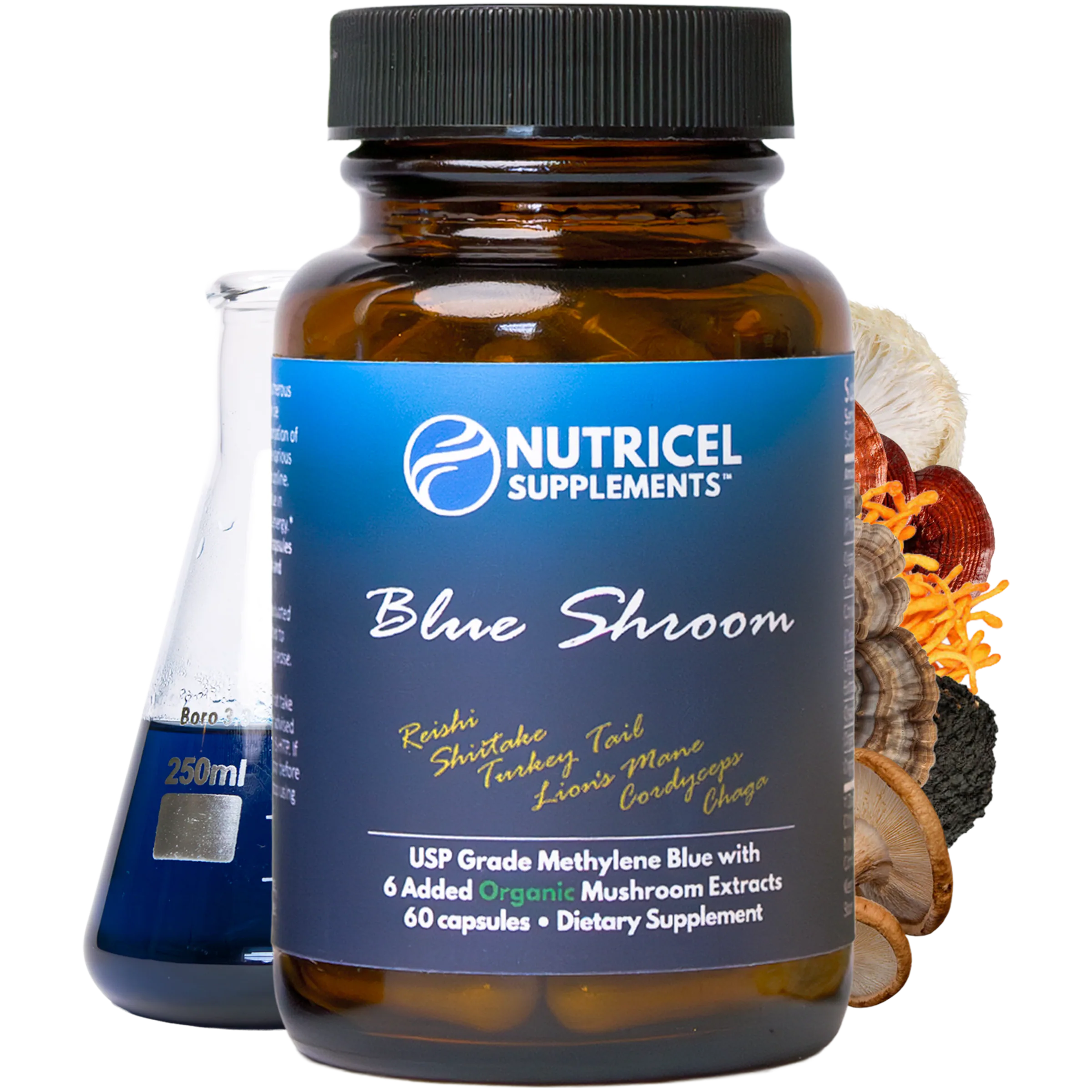
Blue Shroom pairs methylene blue with six organic mushroom extracts including lion's mane, reishi, cordyceps, chaga, shiitake, and turkey tail.
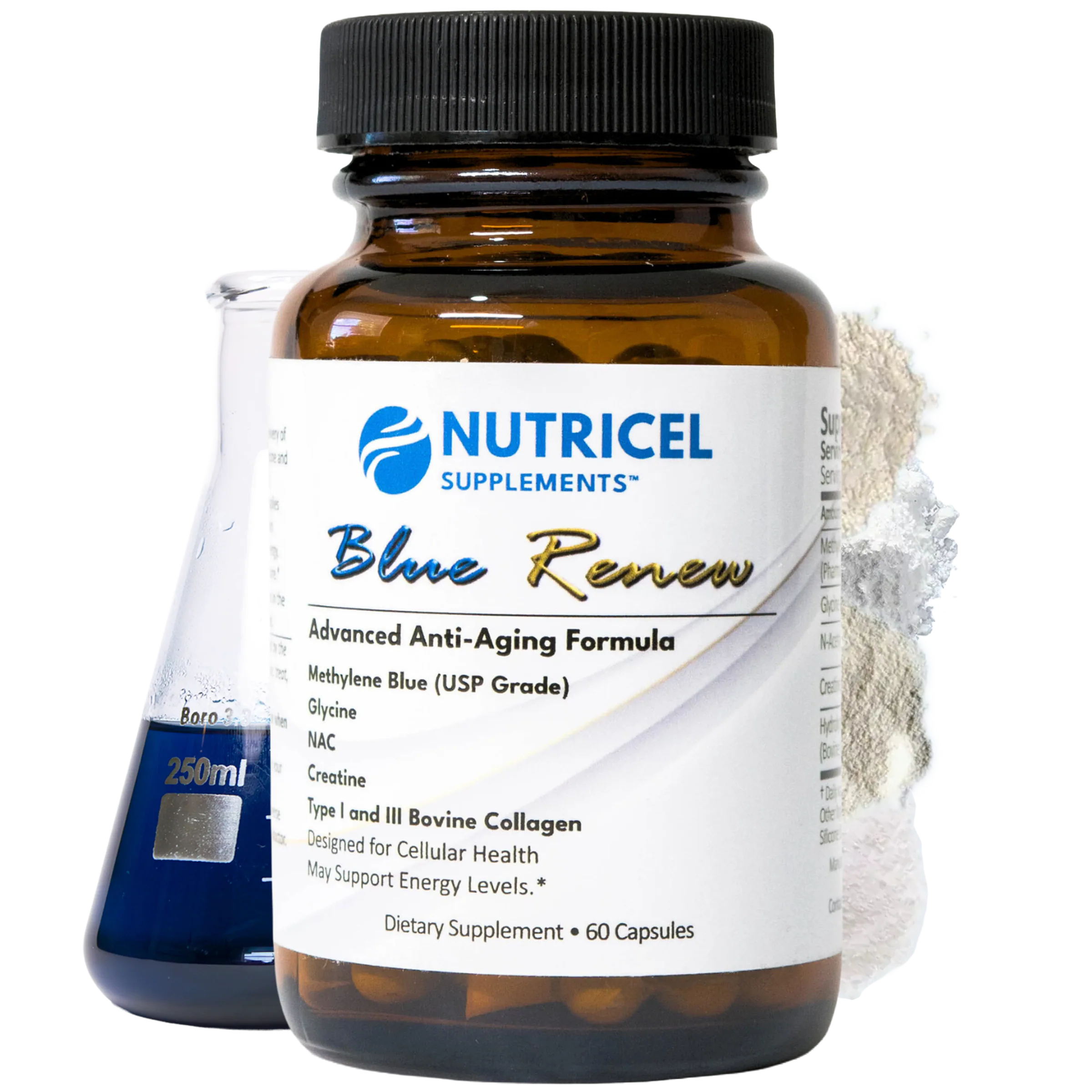
Blue Renew is built around GlyNAC (glycine and N-acetyl cysteine), studied for supporting glutathione levels and brain function in aging populations.
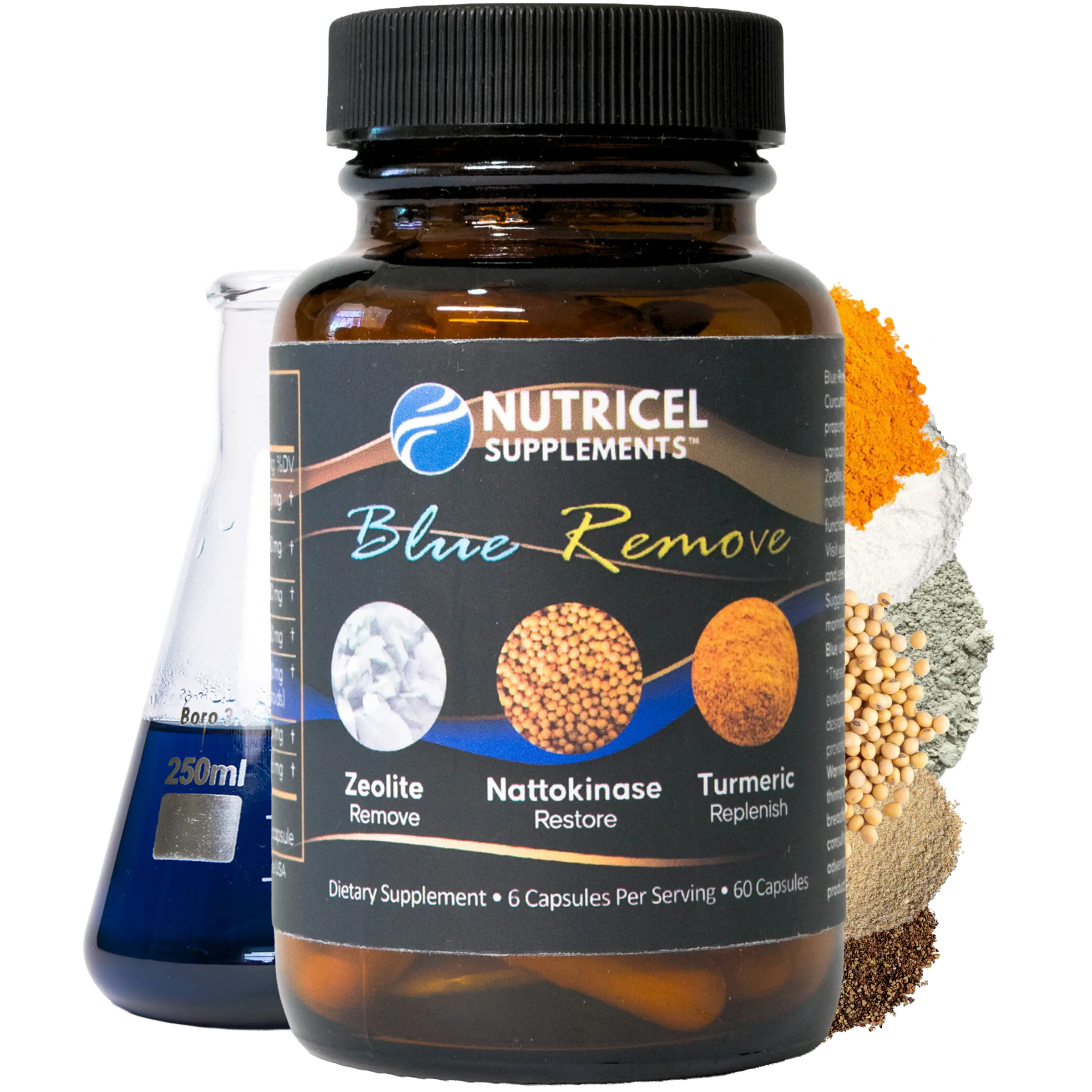
Blue Remove combines zeolite, curcumin, and nattokinase for cellular detox, circulatory, and inflammation support.
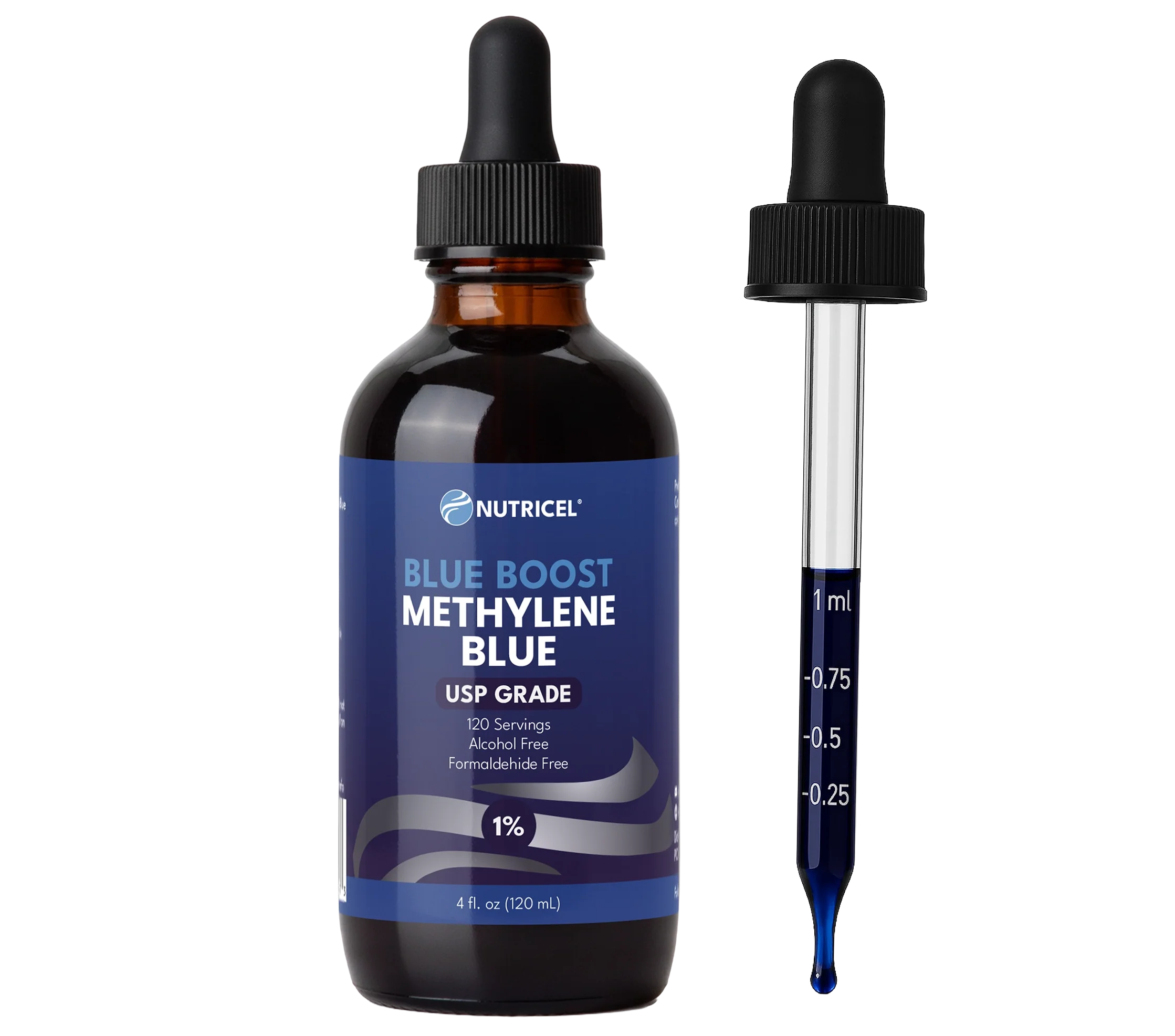
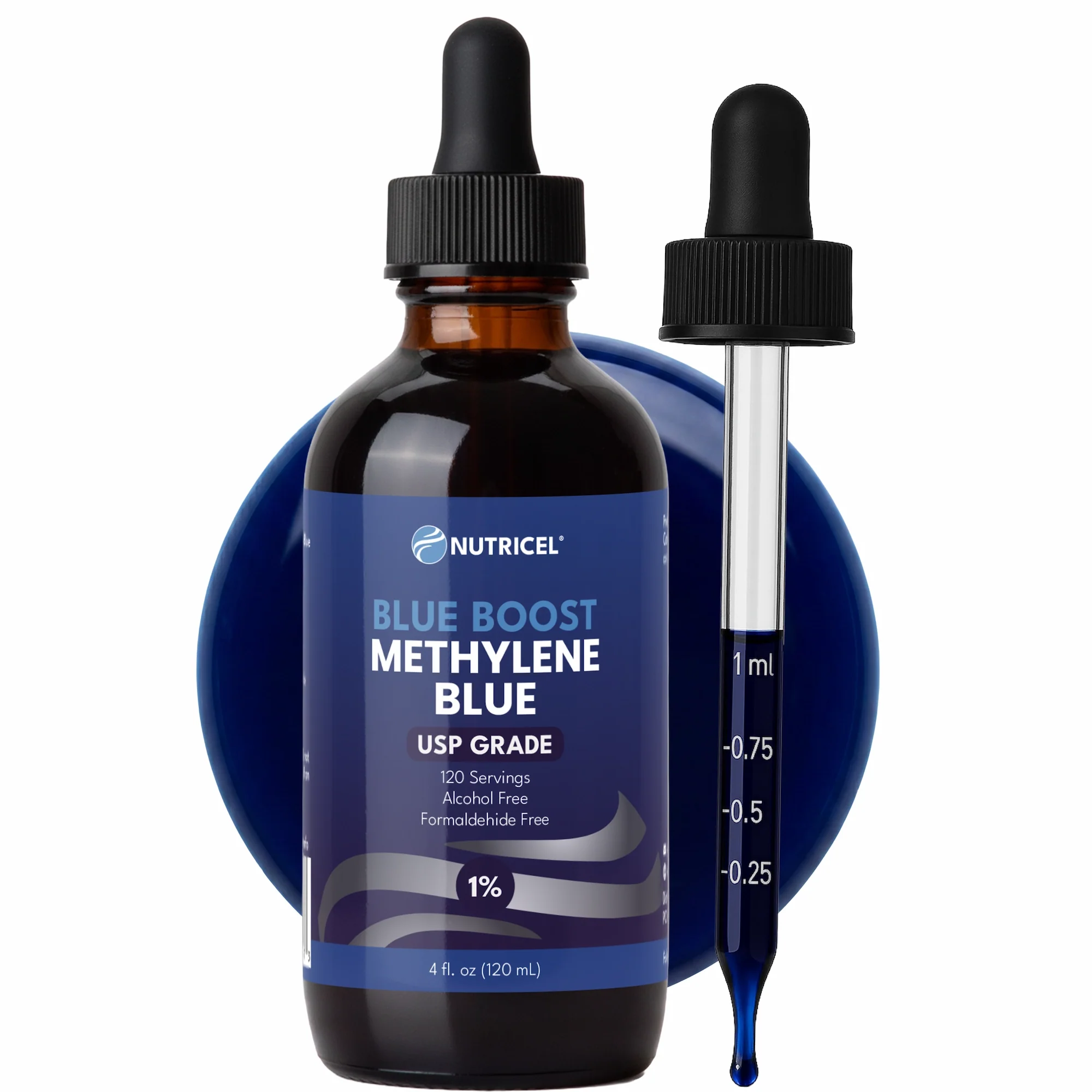
Blue Liquid delivers USP-grade methylene blue in a precise dropper bottle for those who prefer liquid format and flexible dosing.
Frequently Asked Questions
References
- Nutricel. Methylene Blue Lab and Water Test Database, Nano MitoBlue entry. Methodology and per-product results. Nutricel runs this database and sells methylene blue.
- Nano Colloidals. MITOBLUE Methylene Blue USP Grade 10mg Tablets product page. Brand label claims, ingredients, and directions, viewed November 2, 2026.
- StatPearls. Methylene Blue. NCBI Bookshelf. Clinical dose thresholds and adverse effects.
- U.S. Food and Drug Administration. Drug Safety Communication: methylene blue and serotonergic drugs (archived).
About the Author
Sam Carlson, Marketing Developer at Nutricel
Sam is a marketing developer at Nutricel who writes the Nutricel Insights series to help our customers understand methylene blue and make informed choices. Test figures in this piece come directly from Nutricel's public lab test database, and brand statements come from the brand's own product page, linked in the references above. Sam is not a medical professional, and this article is intended as education rather than medical advice. Always speak with your healthcare provider before starting any supplement.
These statements have not been evaluated by the Food and Drug Administration. This product is not intended to diagnose, treat, cure, or prevent any disease. This article is for general education and is not medical advice. Consult your healthcare provider before beginning any supplement, especially if you take medications, are pregnant or nursing, or have a medical condition.
| |||||||||||||||||||||||||||||||||||||||